Biola University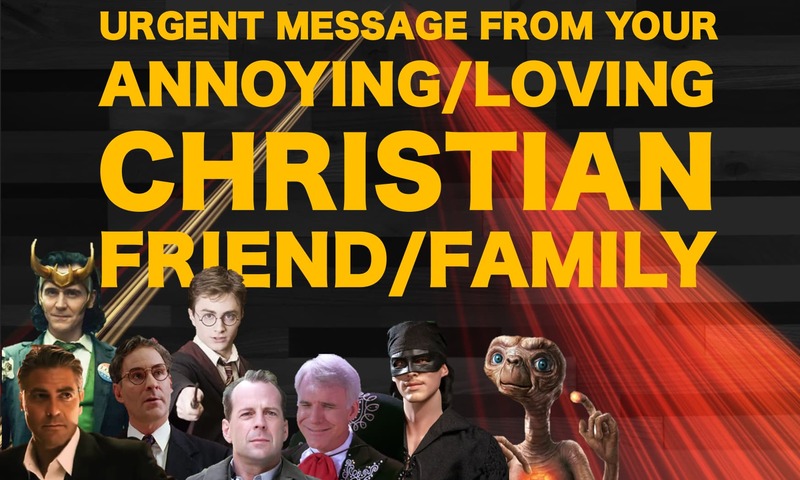
Can We Build a Case Using only Non-Christian Scholars and Seven Hollywood Hits?
[A video of Dr. Williams presenting this case can be found here. The research presented comes from his book Reflecting the Son (Zondervan, 2026), available for pre-order here.]
What happened that first Easter Sunday? For fun, let’s see if we can explain the possibilities in terms suited for our entertainment age. Let’s limit ourselves only to movies that have grossed over, say, 30 million dollars, moving backward in cinematic history to explain each hypothesis.
1. The Loki Hypothesis (or Muslim Theory)
A particular character from Marvel mythology captures the essence of Islamic perspectives on Jesus. Loki, the shapeshifting god of Norse lore, appears to die on no less than three occasions in the Marvel Universe, but never truly dies. Speaking of Jesus, the Qur’an states that “they neither killed nor crucified him — it was only made to appear so” (Surah 4:157). Some follow Al-Ghazali, believing the death of Jesus to be an allegory or that his body was just an illusion. You can’t hammer an illusion to the cross any more than you could put a projection of Loki in handcuffs. Some propose that a bait-and-switch took place, such as Loki appearing as the King of Asgaard. On this view, the crucifixion occurred, but someone other than Jesus ended up dying that Good Friday — possibly Simon of Cyrene, or possibly, in a more mainstream Muslim view, Judas Iscariot.
2. The Harry Hypothesis (or Mystery Religions Theory)
For our second hypothesis we turn to “the boy who lived.” The Harry Potter movie franchise builds up to The Deathly Hallows (2011), in which [spoiler alert] Harry makes the ultimate sacrifice, dying to strip Lord Voldemort of power. Our bespectacled savior comes back to life to enjoy the fruits of his redemptive labor.
Over a hundred years ago, a movement emerged in central Germany calling itself the “History of Religions School.” They uncovered myths of ancient mystery religions that seemed to feature mythological dying and rising gods. In the same way, we might read or watch Harry Potter and find parallels to the Christ-story — a maniac trying to kill Harry as a baby, King’s Cross, the willful acceptance of the Killing Curse (Avada Kedavra!), the smiting of a snake, the resurrection stone, and so on. When the History of Religions scholars found what they took to be parallels between ancient mystery religions and early Christianity, they concluded that the New Testament Jesus was a copycat, largely plagiarized from the stories of Mithra, Osiris, Attis, Adonis, Dionysus, Tammuz and other mythical characters.
3. The Oceans 11 Hypothesis (or Stolen Body Theory)
Our third hypothesis resembles the 2001 box office hit, Oceans 11, a remake of a 1960 film by the same title. Notorious con man Daniel Ocean (George Clooney) recruits his dream team of skilled criminals to pull off an epic heist, stealing a treasure from a highly protected vault in the Las Vegas Bellagio Hotel and Casino. Perhaps after Jesus was entombed after his untimely execution, the remaining disciples hatched a plan to retrieve the body of Jesus. That way, the Jesus movement didn’t have to die with its founder. With the corpse stolen and secretly discarded, the disciples could dupe the world into believing that their messiah, unlike the many other permanently dead messiah figures of the first century, miraculously triumphed over the grave. It was the most successful heist in history.
4. The Sixth Sense Hypothesis (or Hallucination Theory)
Continuing our backward journey through film history, we reach the 1999 M. Night Shyamalan thriller known for one of the greatest plot twists ever seen on the silver screen, The Sixth Sense. A child psychologist named Malcolm (Bruce Willis) is shot by a disturbed former patient named Vincent. Months after the incident, Malcolm begins working with a troubled child named Cole, who delivers one of the most chilling lines ever — “I see dead people.” The plot twist that had everyone talking around the water coolers in the late 1990s comes in the final minutes when we learn that Malcolm himself had died in the opening sequence.
“I see dead people” is an apropos line for the hallucination theory. Jesus died on Good Friday and his followers “saw” him afterward, though not because he was physically resurrected. He remained dead. This hypothesis comes in many forms. Perhaps they consumed psychedelics, had a grief-induced hallucination, or maybe encountered some actual spirit-being. What unites the different versions is that the disciples, along with Paul, saw not a resurrected Jesus, but some non-physical version of a dead person.
5. The Dave Hypothesis (or Twin Theory)
In 1993, a political comedy (and if there’s anything worth laughing at, it’s politics) called Dave dropped with critical acclaim. The President of the United States, named Bill, falls into a coma, only to be replaced by a lookalike named Dave who runs the country in his stead. The Dave Hypothesis claims that Jesus had a look-alike or body double, who, after the crucifixion, manages to present himself convincingly as the resurrected messiah.
6. The Princess Bride Hypothesis (or Swoon Theory)
The 1987 adventure comedy The Princess Bride stands the test of time as a classic of American cinema for good reason. Inigo Montoya, the vengeful swordsmith, and Fezzik the rhyming giant, recover the body of their friend Westley, after he had endured unspeakable torture at the hands of the villainous Count Rugan. They take Westley for dead. It was Miracle Max, a tree-dwelling, wise-cracking Dwarf (Billy Crystal) who examines Wesley’s body and declares him “mostly dead.” “There’s a big difference between mostly dead and all dead…. Now mostly dead is slightly alive.”
The Princess Bride Hypothesis — traditionally known as the “swoon theory” — originated in 1828 with a German atheist named Heinrich Paulus in his book Life of Jesus. Paulus’s notions found a fresh audience in the late 1960s, 1970s, and early 1980s with three international bestsellers, The Passover Plot (1965), The Jesus Scroll (1972), and Holy Blood, Holy Grail (1982). According to this hypothesis, Jesus was “mostly dead.” Perhaps revived by the aroma of burial spices or the cool tomb air, the “mostly dead” Jesus was, therefore, “slightly alive,” and went on to be misunderstood as a resurrected Lord rather than the resuscitated mortal he truly was.
7. The Three Amigos Hypothesis (or Wrong Tomb Theory)
In 1986, three comic legends — Chevy Chase, Martin Short and Steve Martin — teamed up to gift the world with The Three Amigos! Three failed Hollywood actors are beckoned to the remote Mexican village of Santa Poco to liberate the townsfolk from the oppression of the ruthless bandit El Guapo and his gang of miscreants. Mistaking the telegram as an invitation to star in a new movie, the amigos make their way to Santo Poco, thinking it is a movie set. It is not. It is an exploited Mexican village.
What if the disciples’ proclamation that Jesus rose from the dead was a similar case of mistaken destination? They went to an unoccupied tomb, thinking they were at Jesus’s tomb, which remained quite occupied somewhere across town. The true origins of Christianity, therefore, do not trace to a miraculous resurrection but a case of bad directions and mistaken destinations.
Four Facts
With seven hypotheses in hand, let’s turn to the facts surrounding that first Easter Sunday. Again, for fun, let’s limit ourselves to data that only non-Christian and even anti-Christian historians take to be factual. Consider four (though there are more).
Fact 1 — Jesus died by crucifixion. Sources not entirely friendly to the early Christian movement — including Josephus and Tacitus — testify to Jesus’s death by crucifixion. Outspoken critic of Christianity Bart Ehrman argues, “Since no one would have made up the idea of a crucified messiah, Jesus must have really existed, must really have raised messianic expectations, and must really have been crucified [2].” Scholars and staunch critics of Christianity say that Jesus death by crucifixion “is as sure as anything historical can ever be” (John Dominic Crossan) [3], “indisputable” (Gerd Ludemann) [4], and “historically certain” (Pinchas Lapine) [5].
Fact 2 — The disciples had experiences from which they concluded that Jesus rose bodily from the dead. Again, famous critic of Christianity Bart Ehrman contends, “We can say with complete certainty that some of [Jesus’s] disciples at some later time insisted that . . . he soon appeared to them, convincing them that he had been raised from the dead [6].” Ludemann echoes, “It may be taken as historically certain that Peter and the disciples had experiences after Jesus’ death in which Jesus appeared to them as the risen Christ [7].” Marcus Borg concurs, “For the early Christians, the living Christ was not an object of belief, but an element of experience. Some ‘saw’ him [8].”
To be clear, we must not automatically jump from Fact 2 to the conclusion, ‘Therefore, Jesus rose from the dead,” only that the early disciples believed Jesus rose from the dead based some kind of post-crucifixion experiences. Perhaps they ate some funny mushrooms. Whatever hypothesis we may craft, it is a well-stablished fact that the disciples had a devout belief in Jesus’s resurrection, so devout they were willing to be crucified, flayed, beheaded, impaled, stoned and otherwise tortured to death for that conviction. Not much to gain, everything to lose.
Fact 3 — Paul, an anti-Christian, became a willing-to-die Christian because he thought he encountered a risen Jesus. Famed critic of Christianity Shelbey Spong argues, “There is no question that Paul was a learned Jew…. Yet his conversion was total, dramatic and complete [9].” Atheist Richard Carrier agrees, “Paul is a witness to the resurrection [10].” Ludemann concludes that “a particular event made the persecutor a proclaimer, the enemy of Christ a disciple of Christ [11].”
It was unthinkable that the highly trained Ph.D. in Torah, feared persecutor of Christians, Paul from Tarsus would become a Christian. How absurd that this anti-Christian would go on to write thirteen books of the New Testament, travel the ancient world, serve prison time, endure public beatings, house arrest and decapitation for his belief that Jesus is the long-promised and resurrected Jewish messiah. But it happened.
Fact 4 — The tomb of Jesus was empty. Atheist scholar James Tabor places it beyond doubt that Jesus’s “temporary place of burial was discovered empty shortly thereafter [his death] [12].” Non-Christian historian Geza Vermes adds,
In the end, when every argument has been considered and weighed, the only conclusion acceptable to the historian must be that the opinions of orthodox, the liberal sympathizer, and the critical agnostic alike… are simply interpretations of the one disconcerting fact: namely that the women who set out to pay their last respects to Jesus found to their consternation, not a body, but an empty tomb [13].
Testing the Hypotheses
Now, to test our hypotheses against the facts.
Loki vs. the Facts
The various Muslim interpretations of Surah 4:157 contradict Fact 1, that Jesus died by crucifixion (much less the other three facts). Moreover, it would be shoddy historical research to take a seventh-century Muslim account as more authoritative than first-century Christian, Jewish and Roman accounts. Muslim scholar Ahmed Deedat agrees, “The Christian objects, ‘how can a man (Muhammad pbuh) a thousand miles away from the scene of a happening, and 600 years after the event, pronounce as to what transpired?’” Deedat answers, “The Christian plea is valid. Their logic is good [14].”
Harry vs. the Facts
The Harry Hypothesis that Christianity was borrowed from ancient myths of dying, rising saviors cannot account for any of the four facts as historical facts. Jesus did not die, nor was his tomb empty, in some fictional universe. Nor did the disciples believe in a resurrected messiah the way an Adonis devotee believed in the resurrection of their chiseled savior or the way Harry Potter fans believe Harry Potter lives on. Nor did Paul change from a Christian persecutor to a Christian persecute because he was swayed by a story cleverly cobbled together from non-Jewish mystery religions. The claims of Germany’s History of Religions School were so roundly refuted that it did not survive into the second half of the 20th century, though its spurious claims continue to make the rounds on atheist websites and among anti-Christian social media influencers.
Oceans 11 vs. the Facts
The Oceans 11 Hypothesis or stolen body theory, is the oldest of the seven hypotheses. We find it concocted in Matthew 28:11-15 in the first century, refuted by Justin Martyr in the early second century, Tertullian in the early third century, and reiterated in a fifth-century piece of anti-Christian propaganda called Toledot Yeshu. It was largely dismissed by the German higher critics of the 19th century and is rarely offered as a theory today. The stolen body hypothesis fails to survive Fact 3, given the disciples’ sincerity and willingness to face death for their convictions that Jesus rose. It also falters at Fact 4 since it was hardly an empty tomb that convinced Paul to become a Christian.
The Sixth Sense vs. the Facts
The most obvious obstacle for any version of the Sixth Sense Hypothesis to overcome is Fact 4. If the disciples had some kind of merely subjective or spiritual encounter with Jesus, then his tomb would still be occupied. But there is good evidence that the various forms of hallucination theories cannot account for Facts 2 and 3 either. Notably, the facts that the disciples and Paul’s actual experiences are multimodal, engaging several senses consistently and non-isolated, occurring among groups. Moreover, the disciples and Paul were first-century Jews who did not have a category of individual resurrection and would have most likely concluded they had encountered a ghost or some other phenomenon, not a physically resurrected Jesus.
Dave vs. the Facts
The Dave Hypothesis cannot account for Fact 4, the empty tomb. It also falters with Fact 2, the disciples’ belief that Jesus rose based on post-crucifixion experiences. If they really saw “Dave” some Jesus look-alike, then the moment Dave opened his mouth to speak, they would likely conclude, ‘You’re not Jesus, you’re Dave!” Famous non-Christian scholar Bart Ehrman described the twin theory as “highly unlikely,” adding “I don’t buy it for a second [15].”
Princess Bride vs the Facts
The Princess Bride Hypothesis (or swoon theory) gained popularity in the late 1800s under German liberalism but is scarcely argued anymore. It doesn’t survive Fact 1 that Jesus died by crucifixion, much less the other three.
The Three Amigos vs. the Facts
The Three Amigos Hypothesis fails to account for Facts 2 and 3, as the disciples and Paul’s beliefs in the resurrection were not based on the emptiness of the tomb, but what they believed to be encounters with Christ after the crucifixion. Moreover, it seems the Romans and Jews who rejected Christianity would have a high incentive to say, “Look you morons, the real tomb is over here and still very much occupied.”
A Final Hypothesis
Yet there is another hypothesis we might entertain. Let’s simply call it “the Resurrection Hypothesis.” Jesus actually, not apparently or allegorically, died on the cross. His body was not then heisted, imagined, impersonated or misplaced. It was resurrected. He resurrected, as Christians have believed for nearly 2000 years. This is the hypothesis proclaimed by human beings of all colors and cultures every Sunday around the globe, and celebrated by over two billion people every Easter. He is risen. He is risen indeed! I assure you, anything you might gain from acknowledging Christ as the risen Lord is infinitely better than whatever you think you stand to gain from pretending that he is just a myth, lost corpse, or trick-of-the-brain.
Notes
[1] See Salih-ud-din Khuda Bukhsh, “A Mohammedan View of Christendom” in Christianity: Some Non-Christian Appraisals, Ed. David McKain (New York: McGraw-Hill, 1964), 244-45.
[2] Bart Ehrman, Did Jesus Exist, 163-164.
[3] John Dominic Crossan, Jesus: A Revolutionary Biography (San Francisco: Harper-SanFrancisco, 1994), 145.
[4] Spong, Easter Moment, 90.
[5] Pinchas Lapide, The Resurrection of Jesus: A Jewish Perspective (Eugene, OR: Wipf and Stock, 1982), 32.
[6] Bart Ehrman, How Jesus Became God, 229.
[7] Ludemann, What Really happened to Jesus?, 80.
[8] Marcus Borg, “Thinking About Easter,” Bible Review 10, no. 2 (1994): 15.
[9] Spong, Easter Moment, 90.
[10] Richard Carrier, “The Spiritual Body of Christ and Legend of the Empty Tomb,” in The Empty Tomb: Jesus Beyond the Grave, eds. Richard Price and Jeffery Lowder (Amherst, NY: Prometheus, 2005), 151.
[11] Ludemann, Early Christianity According to the Traditions in Acts: A Commentary (London: SCM Press, 2012), 114
[12] James Tabor, The Jesus Dynasty: The Hidden History of Jesus, His Royal Family, and the Birth of Christianity (New York: Simon & Schuster, 2006), 230.
[13] Geza Vermes, Jesus the Jew: A Historian’s Reading of the Gospels (Philadelphia, PA: Fortress, 1981), 41.
[14] Ahmed Deedat, Crucifixion or Cruci-fiction? (Jedda: Abul-Qasim, 1984), 6.
[15] “Is There Historical Evidence for the Resurrection of Jesus?” a debate between William Lane Craig and Bart Ehrman at College of the Holy Cross in Worcester, MA, March 2006.