Biola University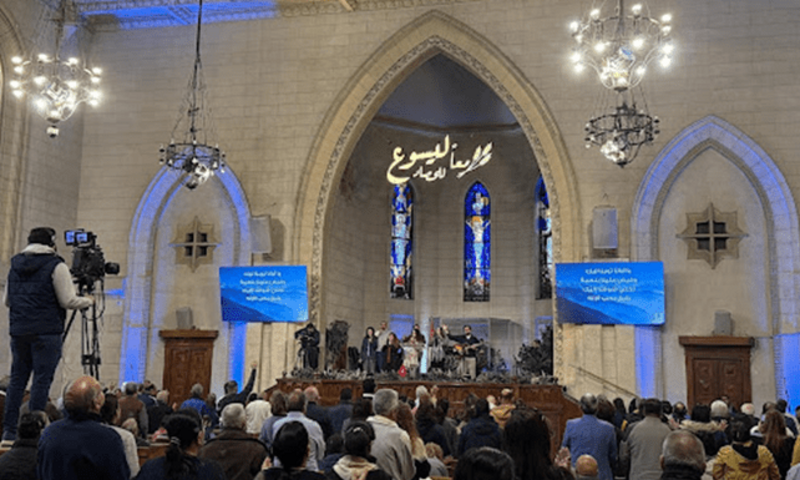
It was a joy to be with Kasr El Dobara (KDEC), an evangelical church in Cairo, Egypt, as well as with KDEC’s Senior Pastor Dr. Sameh Maurice (in February 2026).
The church is known around the Middle East for its broadcast ministry in addition to its local ministry in Cairo. It is also known in American circles as a gateway church, providing an opening for ministry partnership in Egypt. Many American churches and ministries have partnered with the church, and in doing so, they have invested resources that go through the church to various ministries. The church is self-supporting, and as a self-supporting church, it is able to funnel resources into Christian ministry throughout the Middle East.
As I said, I enjoyed seeing this work up close. Here are some of the highlights and takeaways from my time there.
The Amazing Story of Kasr El Dobara
Kasr El Dobara has 12,000 people who attend worship across nine services on a weekly basis. These numbers make KDEC the largest church in the Arabic-speaking world. In an even greater reach, the church’s broadcasts are heard in many restricted-access locations, making a great gospel impact. KDEC is also currently planting three different churches, ministering to those on the margins in Upper Egypt.
In gathering with their congregation, I was blessed to see an enthusiasm for the gospel from these Egyptian Christians. This congregation has grown in a singular, unprecedented way for a church in the Arabic-speaking world. Some of this growth can be traced back to a strong focus on prayer, and the church has maintained that emphasis through a recent 21 days of prayer emphasis. The church aims to preach the gospel and disciple believers, and they have led the way in those things for other churches in the region.
Kasr El Dobara gives 30% of the church’s income to mission, and the support they receive from outside partners mostly passes through to other ministries. “We are donors,” Pastor Sameh said. KDEC’s growth and establishment as a leading ministry has catalyzed the growth of other churches as well. A number of churches in the area now have hundreds or more in attendance for worship, including Heliopolis, which I will share about in another article.
Takeaways From My Time With the Church and Pastor Sameh
As part of my visit, I especially enjoyed spending time with Pastor Sameh. He had been a successful surgeon before entering into vocational pastoring, though he had long been involved in ministry. Yet, sensing God’s calling to the church full-time, he started on staff at KDEC in 1988. He was ordained in 1993, accepting the call to his current role in 2007. Over an authentic Egyptian meal with Pastor Sameh, Marihan Abdelmalek, and my own daughter Kristen, I loved hearing of his heart for the gospel and the ministry in his context. Several things stuck out to me in our conversation and in our time with KDEC, and I think they’re worth reflecting on.
First, Pastor Sameh longs for unity in the Egyptian church, specifically between the Orthodox Church and the evangelical church. He explained that Orthodox and evangelical Christians (like himself) have developed more partnerships recently, specifically citing the remarkable story of the Orthodox through the evangelical-like expression of The Cave Church. These partnerships developed through the growing influence of the evangelical church through media, and they were also catalyzed by key leaders within the Orthodox Church.
These leaders all paid a price for working together. Yet Pastor Sameh said he is more concerned with reaching people with the gospel than whether people formally identify as Orthodox or evangelical. This posture changed the minds of many Orthodox Christians and leaders, gaining a hearing for the gospel and leading to more unity.
Second, it struck me that KDEC’s leadership is focused on a key aspect of ministry: making true disciples through multiplying small groups. Pastor Sameh went so far as to say, “Without small groups, a church will not grow or have true disciples.” KDEC is leading the way in this area, and now many churches approach them for training in small group ministry and discipleship strategies. The fruit of this ministry has become evident to many, and churches of various denominations all over the region are now multiplying small groups as KDEC has done.
Third, KDEC embodies both the benefits and challenges of leveraging technology for ministry impact. Pastor Sameh lamented some of the same problems that the American church has experienced since the pandemic, with many people staying home and not returning to in-person worship. Many people simply watch the services at home. That said, the impact of the broadcast and media ministry of the church is undeniable, reaching many people in the Arabic-speaking world who would not otherwise hear the gospel.
Fourth, Pastor Sameh, and all the Christians in Egypt, embody a missional resilience that makes me think of Galatians 6:9, “Let us not get tired of doing good, for we will reap at the proper time if we don’t give up.” Pastor Sameh plowed the ground for a long time without much response, but eventually things broke through. Discipleship, multiplication of small groups, and unity in the Egyptian church started to happen. He explained, “Whatever you do in the name of Christ, you will find results, immediate results.”
Such expectancy of the work of God in gathering the harvest into the church has clearly motivated Pastor Sameh and the ministry of KDEC. And it should motivate us too.
In conclusion, I hope we will learn from this key church, working in a region where the gospel is making headway despite opposition. Let’s pray for Pastor Sameh and the work of KDEC, and let’s also pray that our own churches and leadership would mirror such a commitment to making the use of the tools and opportunities God has given to us in our day, while pursuing unity, discipleship and resilience in the gospel.
Note: KEDC is something of a gateway church for Western churches engaging Egypt. You can partner with them by contacting them here or by sending an email to Partners@kdec.net.
This post and other writings by Ed Stetzer can be found on Church Leaders.