Biola University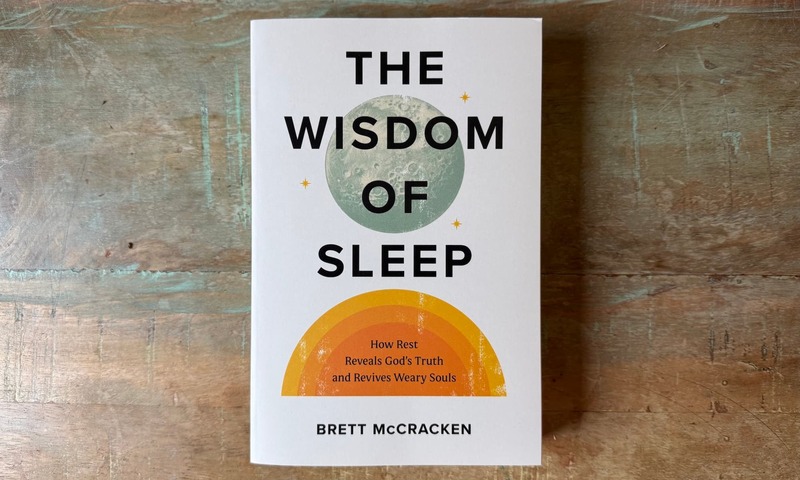
This past spring, when I learned that Brett McCracken had written a soon-to-be-released book about sleep, I knew that I had to read it as soon as it came out. (I read it in one day this past weekend.) The name of the book is: The Wisdom of Sleep: How Rest Reveals God’s Truth and Revives Weary Souls. Brett is one of my favorite authors, and sleep is a topic I have been thinking about since…well…since I knew enough to think about what I was doing every night of my life! I reached out to Brett to see if he would answer a few questions about sleep, with the hope that it might pique your curiosity about all the other wise and Christianly things Brett writes about in his new book.
Ken Berding (KB): When we started corresponding about this interview, you commented that the topic of sleep was one that you have long wanted to write about. What got you interested in writing about sleep?
Brett McCracken (BM): I was in the room for John MacArthur’s sermon on sleep at Together for the Gospel 2010, and it stuck with me. Over the years I kept coming back to it as a topic that piqued my intellectual and doxological curiosity. Why would God create us to sleep a third of our lives? He didn’t have to. Perhaps he wanted to give us a nightly reminder of who he is (the sovereign Creator) and who we are: limited, dependent creatures. I’ve seen a ton of good, helpful books on rest and Sabbath in the Christian world, but few on sleep particularly. I thought it would be a fun topic to tackle, with overlap in many ways with my previous books (The Wisdom Pyramid, Scrolling Ourselves to Death) on wisdom in the digital age.
Also: I’m a dad of four kids under the age of eight. If you know, you know! Weariness is a real thing in this stage of life, and sleep is fraught with many dangers, toils and snares! But this makes me appreciate it even more than ever. Watching my newborn son Witt (to whom I dedicated the book) sleeping peacefully in my arms, I can’t help but contemplate God’s grace and fatherly love for us, vulnerable and dependent little creatures that we are.
KB: Toward the end of the book you describe rest as a resistance to the spirit of the age. Why did you choose the metaphor of resistance for something as calm as sleep?
BM: Partially I chose “resistance” because of the play on the word that I use in that chapter, “Join the (Rest)istance.” Haha. But I also really do see the choice to prioritize sleep and rest as a countercultural choice — an act of resistance — in today’s optimization-oriented, always-on, hustle-and-grind culture. Some of the current mindset that demeans or avoids rest is just the age-old human pride that overestimates our own importance and places trust in ourselves more than in God. But some of it also stems from our technological environment, which is uniquely adept at colonizing every bit of our “free time” (including time we should spend resting without screens, or sleeping).
KB: What does sleep teach us about God?
BM: He is gracious and it’s in his nature to give: extravagantly, abundantly, more than we can ask or imagine. The more we learn about sleep’s multitude of benefits — which all come to us as gifts received, not rewards achieved — the more mind-blowing it is to think God would create us with this miraculous overnight process of whole-system renewal and recalibration. While we sleep, we heal. In the “death” of sleep, we get a new lease on life. God is an intentional designer and he made us so fearfully and wonderfully (Ps. 139:14). Sleep is a gift he gives, out of love (Ps. 127:2). And sleep also reminds us that he is sovereign and trustworthy! As we surrender to sleep each night, we’re invited to remember that a good God keeps watch (Ps. 121:3-4). We can sleep easier because God is awake. Just as my wife sleeps better when I’m beside her, and my kids sleep better when they know mom and dad are just one room away, so we can sleep at peace because we know God isn’t distant and checked out. He’s near. He’s present. He’s keeping watch.
KB: What does sleep teach us about ourselves?
BM: The best lessons in wisdom are the ones that remind us who God is and who we are. Knowledge of God and self, as Calvin would say. Sleep is one of our greatest “general revelation” teachers of wisdom in the sense that it powerfully reminds us we are limited beings. We are not God. We can’t stay awake. We can’t control much. We are frail, vulnerable, required to assume a corpse-like position for a third of each day. It’s humbling! It reminds us of our contingency and mortality. But these are great lessons in wisdom (Psalm 90).
KB: I’ve heard people say that the purpose of rest is just to prepare us to do the work that God has for us. Do you agree with this? How would you describe the relationship between rest and work?
BM: Treating rest in this way — as mere “fuel” for waking life — instrumentalizes it in a way that misses much of its beauty and meaning. Sleep and rest are so much more than just “battery recharge,” even as this energy-giving benefit is real and profound. God created work AND rest. He intentionally made humans to be awake AND to sleep (and to sleep for a fairly large chunk of each day!). We honor God when we receive both as gifts, not valuing one as the ultimate point of life and the other as a begrudging necessity. God designed beautiful complementary rhythms for us — work and rest, wake and sleep. These polarities aren’t at odds; they serve each other beautifully. When we lean into God’s design for this complementary pair, we tend to flourish. When we fight against God’s design, we usually suffer.
KB: At the end of your acknowledgments page you wrote, “And to all those in my life who struggle with sleep or find themselves desperate for rest – this one’s for you.” What counsel would you give to someone who struggles to get to sleep or who wakes up in the middle of the night and has trouble falling back to sleep?
BM: I have very specific people in my mind and heart when I write those words. I’ve never really struggled with sleep in my own life (thanks be to God!), but I have dear friends and family members who have. Millions of people around the world struggle with sleep, either for seasons or with lifelong sleep disorders.
For people who struggle with sleep: First, seek medical help! Great advances have been made in treating sleep disorders, and I know people who have basically been healed or significantly helped by medications or other treatments.
Second, pray! I believe sleep is a realm of intense spiritual warfare. Because it is such a good gift from God with such theological resonance, Satan loves to attack our sleep. He tends to go after the best gifts God gives (think about marriage/sexuality, and family, for example). Sleep is a big target for him. If he can make us exhausted, restless, grumpy and weary, so much more havoc can follow. So go into your sleep by diligently praying for God’s protection. Ask your church family to pray for your sleep. Cry out to the Lord of the Sabbath and appeal to his many promises related to rest (e.g. Matt. 11:28).
The final thing I would say to those who struggle with sleep: let the brokenness of rest now stir your longings all the more for the perfect rest to come in the “not yet.” We will experience perfect, eternal rest in God’s presence, and the thorns and thistles of our slumber in this life will be but a blurry memory. There remains a Sabbath rest for us, the people of God (Heb. 4:9). What a promise to remember in our sleepless nights! Also, as Paul so beautifully reminds us in many places in the NT, suffering and weakness in this life (including sleep struggles) has power to sanctify us and draw us closer to Christ. Every “light momentary affliction” also has eschatological power, orienting us heavenward and toward the eternal glory to come.
KB: Thank you, Brett, for doing this interview. I hope many people get a copy of your book and start to think more deeply about this gracious gift that God gave us when he thought up and designed sleep!
You can pick up a copy of Brett McCracken’s new book, The Wisdom of Sleep: How Rest Reveals God’s Truth and Revives Weary Souls: HERE and HERE.
This post and other resources are available at Kindle Afresh: The Blog and Website of Kenneth Berding.