Biola University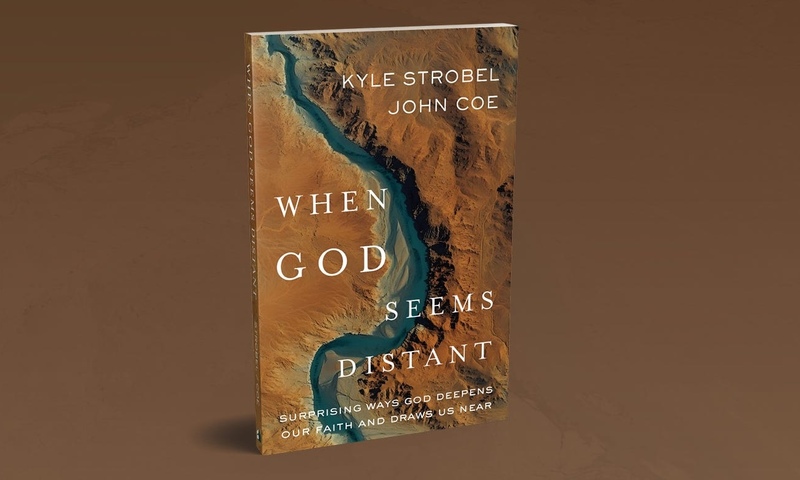
Perhaps the most confused notion in spiritual formation today is the idea that you can just give people things to do to grow, as if spiritual formation is the same thing as going to the gym to work out.
But that is what we always do in the flesh: we take spiritual things that require wisdom, and distill them into overly-simplified things we can mass-market, and are somehow surprised when people feel consumed, tired and lost.
The difficulty with teaching spiritual formation is that we need to shepherd people to Jesus in the truth of their life. As Christians, they are already in Christ — they have died and been raised with him — but they still have to abide and draw near. Just because we are in Christ does not mean that we will now magically grow, or that we can ignore our Christian life and expect to mature. The Christian life is like marriage; we don’t say, “Phew, finally, I got married. Now I don’t have to do anything.” That would be a failure to embrace the oneness of marriage. The same is true in the Christian life.
This is why, when John Coe and I sat down to map out a series of books on spiritual formation, we started with a book on prayer, Where Prayer Becomes Real. That book applies the gospel all the way into a life, down into the depths of prayer, where we discover that prayer is not a place to be good, it is a place to be honest, precisely because of who God is and what he has done for us in Christ Jesus. When the gospel shapes a life, we draw near trusting that Christ is both our righteousness and our sanctification, as Paul tells us in 1 Corinthians 1:30.
Too often introductions to spiritual formation simply map out activities and warn us against failure. Those are important things to do, certainly, but they are not enough. What is often missing in these books and teachings is the messy reality of life with God, and what it means to navigate that life. That means a good book on prayer needs to help me understand, not only prayer abstractly, but the actual reality of my praying. Why does my mind wander? Why do I fall asleep? Why don’t I seem to want to pray?
Instead, far too often, we are just given formulas for these things that seem insightful in the moment, but then, in the mess of prayer, they fall flat.
After introducing a gospel-shaped vision of spiritual formation that is governed by drawing near to Jesus, we knew that we needed to wade into territory that is often ignored. Typically, folks would jump into discussions of spiritual disciplines, but that isn’t what is needed next. I find that most Christians I know are meaningfully participating in the life of the church, they are meditating on Scripture, they are serving and they are praying. The problem is not laziness. The problem is not a lack of activity. The problem is certainly not that they haven’t embraced being a disciple. The problem is that they don’t see what is actually funding the things in their life, and they haven’t stopped to see how they are evaluating them.
In far too many of the books I’ve read on spiritual formation, I was left with the impression that if I just had the secret formula right then, things would work out. The authors admitted the mess of life, they often talked about it, but when it came to navigating it all I was left with were practices that promised to fix things. But they didn’t.
This gets to the heart of When God Seems Distant. What needs to be done after teaching people to draw near to the Lord in the truth (which was the focus of Where Prayer Becomes Real)? It seemed clear: We need to help people navigate life in the presence of the purifying fire, showing people how they are tempted to turn away from God rather than continually abiding in him.
It turns out that we have always talked about this. Christians broadly, and Protestants more narrowly, have always noticed that in our spiritual infancy we are filled with pleasure and passion for the things of God, but they also noticed that this season does not last forever. So what is God doing in that? Why does God infuse us with pleasure and passion even though, as spiritual infants, we don't have a mature Christian character to sustain it?
Why do we find ourselves, at various times, in the spiritual desert — when things seem dry as dust — and where the things that used to fill us with excitement and zeal now don’t seem to? Maybe more importantly, what are our temptations in these seasons? God always leads his people into these sorts of places, and so the question is not, “how can I fix this?” but is rather, “will I follow him into the dark?”
The way that John and I have come to talk about this book is that it is a developmental spirituality for Christian maturity. This does not mean that we are going to talk about the various stages of the faith that people walk through. While there can be some truth in that, I find that overly specifying “stages” tends to be helpful for some and alienating for others. Rather, what we find in Scripture and in our own tradition is that there are various seasons of the soul where God is doing a work to leads us to himself in the truth.
Think about it this way: While God is always leading us to himself in the truth, we interpret that leading in profoundly different ways based on how it feels. When we are filled with passion and pleasure in the things of God, that leading is easy to follow. Notice how new believers just leave behind things that used to entangle them and throw themselves so fully into church, Christian community and the things of God. But when God leads you to himself while you are in the desert that is a different experience, and that requires a different sorts of guidance.
One of the repeated refrains among the Puritans, about folks who find themselves in a season of what they called “spiritual desertion” (we have a discussion of this in the book), or what the broader church calls “the dark night of the soul,” is that Christians would not find wise guides to lead them through these seasons. But unlike them, we don’t even have teaching about this anymore. Think about that. Something that our own tradition thought was both 1. Normal in the Christian life, and 2. So profoundly confusing that they worried people would be lost and confused without someone to guide them, is something we don’t even talk about anymore. If they were worried that folks wouldn’t have someone to guide them, how much greater should our concern be?
It turns out that we do not need to learn tricks to maximize our spiritual lives or life-hacks to fix ourselves. That is not our call. Our call is to abide. Our call is to remain with Jesus. Through every season of the soul, we need to be shepherded back to our Lord, in whom and through whom we learn the obedience of love.
The invitation of When God Seems Distant is to abide in Jesus in the truth of your life, and not give into the temptation to abide elsewhere. I will say more about this in another post, but at the heart of this book is the claim that as we grow, Christians have a tendency to lose sight of the call to abide and we replace it with something lesser. We see this continually in the New Testament churches (it does not take generations for this problem to emerge in the church). We think you’ll see it in your life as well.
The good news is that Jesus will meet you right in these very places. But you have to draw near to him and abide in him.
This post and others can be found on Kyle Strobel’s Substack.