Biola University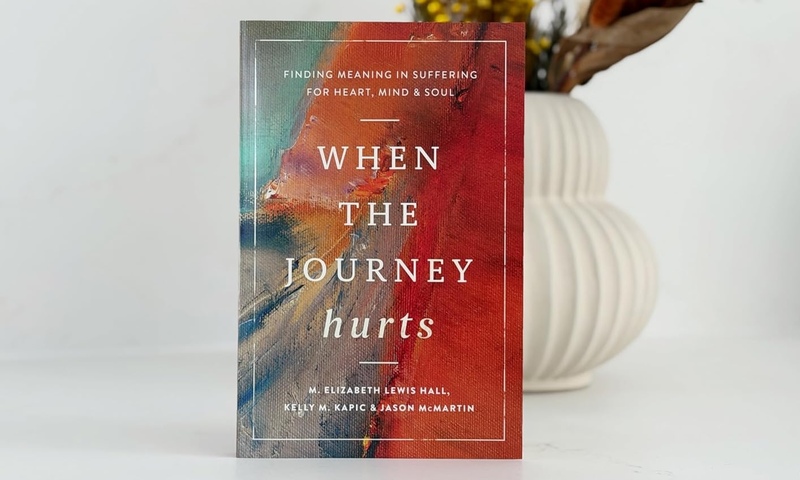
Suffering is an unavoidable part of life, yet many people instinctively try to avoid or minimize their pain. In her new book, When the Journey Hurts, Dr. Liz Hall, professor of Psychology in the Rosemead School of Psychology, and her coauthors explore how God can redeem suffering, drawing on six years of research that integrates theology, psychology and spiritual formation. Rather than offering easy answers, the book equips readers with seven practical, biblically grounded practices to help them navigate hardship faithfully, discover meaning in their pain and grow closer to Christ.
Keep reading to hear directly from Hall about the book-writing process.
Why does the topic of the book matter today?
Despite the fact that suffering is universal and inevitable, many Christians find themselves completely unprepared when it arrives, and the resources their churches offer often make things worse rather than better. We identified three patterns that recur throughout contemporary American Christian culture: theologies of suffering that are vague, offering little more than "God will work it out;" triumphalist, projecting an unrelenting positivity that leaves no room for expressing suffering; and defensive, focused almost entirely on why God allows suffering rather than how to actually get through it. Our research confirmed what my own cancer experience taught me: that's not what people in the trenches need. The rich resources the Christian tradition actually offers for suffering are largely going unused. This book exists to recover them.
What should readers take away from their experience reading the book?
We hope readers come away with two things working together: a richer theological framework for understanding what God is doing in their suffering, and concrete practices for actually navigating it. The book isn't simply meant to be read; it's meant to be lived. Lament, surrender, gratitude, forgiveness, testimony are all practices the Christian tradition has offered for centuries, and our research confirms they make a real difference for mental health and spiritual flourishing. Most of all, we want readers to leave with confidence that their suffering is not wasted and that they are not alone. God is present, active and purposeful even, and perhaps especially, during the hardest times.
Did any personal experiences shape the direction of the book?
My own breast cancer diagnosis at 45 was the turning point. Despite being a lifelong Christian, a psychologist and a regular Bible teacher, I found myself entirely unprepared. To make things worse, most of the resources I turned to felt irrelevant or even harmful. That experience redirected my research and, eventually, produced this book. [Coauthor] Kelly Kapic's wife, Tabitha, was diagnosed with cancer in 2008 and has since lived with chronic pain and fatigue. [coauthor] Jason McMartin has walked alongside communities facing poverty, immigration hardship and COVID. The questions we bring to this material are questions we've actually had to live with, which is part of why we wrote it for people in the trenches, not just people observing from the outside.
What is one example referenced in the book that you hope resonates?
One of our research participants, Monica, described the message she received from her church context during her cancer: "I was taught 'God works it all out for good, so praise Him in your troubles.' And if you don't praise Him through your troubles, you're missing the blessing... I kind of almost felt like there was this implied 'God is up there, and God has control over this. And if you're just good enough, He's going to come in and solve it.'" When I give talks related to the book, I'm consistently struck by the relief people express at hearing experiences like Monica's named and described. Many have felt the weight of these expectations, such as the pressure to skip straight to gratitude, to locate the silver lining immediately, but haven't had language for what was making their suffering harder rather than easier. That's part of what I hope the book does: name something people have already lived, and offer a better way forward.
When the Journey Hurts is available for purchase on Amazon. Rosemead School of Psychology integrates the science of human behavior with a Christian understanding of human nature. Learn more and apply to Biola, the number one Christian university for institutionalizing its mission.
Interview conducted by Sarah Dougher, strategic communication manager. For more information, email beacon@biola.edu.