Biola University
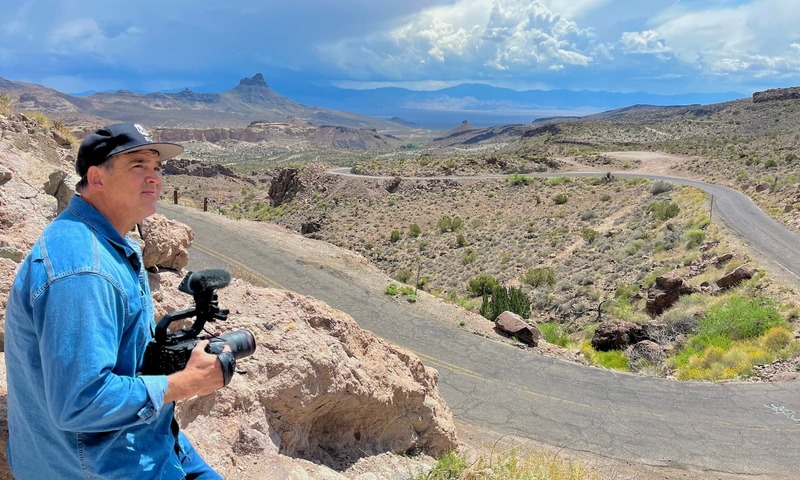
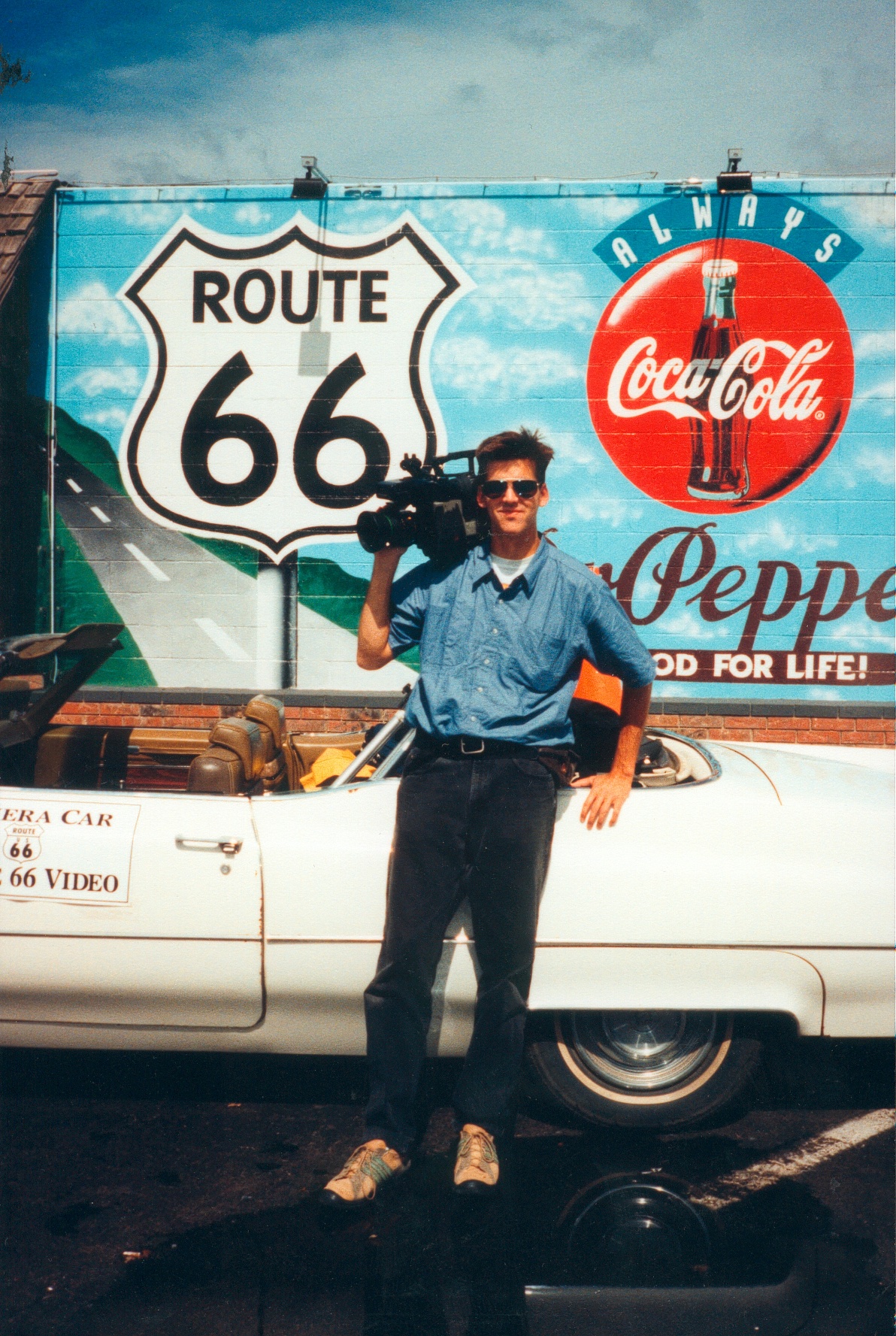
Just two years after graduating from Biola University, alumnus John Paget (B.A. ’92) made his first documentary about Route 66. Now, the landmark American road is celebrating its centennial, fittingly during the nation’s semi-quincentennial. Paget has spent the past three years working on a new documentary series, “ROUTE 66: THE MAIN STREET OF AMERICA.” Starting in September 2026, the series went on a roadshow, premiering in historic theaters across the country along the iconic route, concluding on Nov. 7 in Los Angeles at the Los Angeles Theatre.
The series travels the Mother Road, revealing a modern revival. From unexpected roadside attractions to revitalized main streets, each encounter reveals communities finding new life and purpose. Next year, the series will premiere on PBS.
Hear more from Paget about the filmmaking process and what brought him there.
What compelled you to develop a documentary series on the centennial of Route 66?
Route 66 turns 100 on November 11, 2026. But my connection to the road goes back much further. I made my first documentary about Route 66 in 1994, just two years after graduating from Biola.
The Mother Road is America's story in miniature: migration, dreams, hardship, entrepreneurship and hope. It was once the main highway west to California, the road to the Promised Land. Then the interstate freeway system made Route 66 obsolete. The highway was nearly forgotten, and many of its towns and Main Streets became ghost towns.
But Route 66 has come back as something different. Today, it's a 2,400-mile road of resilience, connecting people and places that fought to survive after the interstate freeways passed them by.
About 85% of the original highway is still drivable. And today Route 66 endures as a powerful reminder of the importance of small towns, what we have in common, and what it means to be American.
Are there any distinct highlights you could share about the process of making the series?
The scope was epic: 2,400 miles, eight states, 100 years of history. We set out to make a feature documentary, and the project quickly grew into a seven-part series. It consumed three intense years: one year researching and scouting, one year on the road filming and one year editing.
A highlight was sitting down with Angel Delgadillo, a barber in Seligman, Arizona. When Interstate 40 bypassed his town, Angel said it was "like somebody turned off a faucet." The town nearly died. But instead of leaving, he rallied his neighbors. Seligman became the birthplace of the Historic Route 66 movement, a renaissance that helped save many towns along the highway.
Again and again, we discovered that ordinary people carry extraordinary stories. And often, a town survives because somebody decides to stay and fight for it.
How has the roadshow experience been? What is special about ending in Los Angeles?
The Roadshow has been unlike anything I've ever done. We've screened the film in more than 40 towns from Chicago to Los Angeles. And I do a live Q&A with the audience after every show.
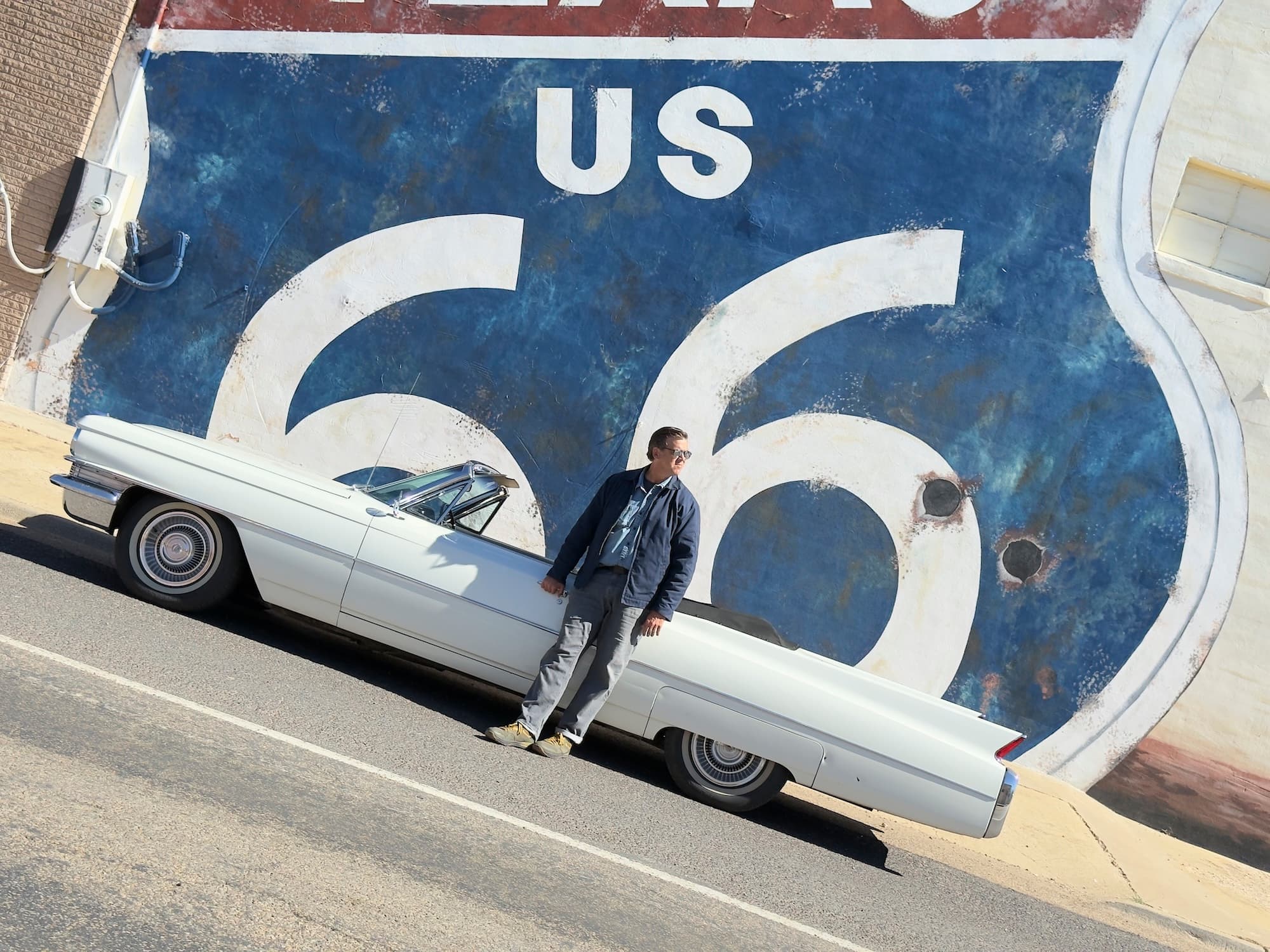
Night after night, people tell us that they are deeply moved by the film, and that it restored their faith in America, or rekindled their love for our country.
We opened on September 1 with a sold-out premiere at the Art Institute of Chicago, which sits right at the beginning of Route 66. We've had sellouts in St. Louis, Austin and Arizona, along with many standing ovations.
Ending in Los Angeles feels right because it's where Route 66 ends. Our grand finale on November 7 is at the historic Los Angeles Theatre, the spectacular 2,000-seat 1931 movie palace where Charlie Chaplin premiered City Lights. It's just one block from the original western terminus of Route 66.
One of the film's central themes is the fight to save beautiful old places. So it feels fitting to finish our journey inside one of America's great historic movie palaces, which was itself saved from demolition.
Through making a documentary like this, how did you see yourself living into your calling and faith?
I've come to believe my calling is to bear witness. To pay attention to people and places that are easily overlooked, and help them be seen.
That feels like a form of stewardship. Every community in this film has people who care for it. Someone who refused to let an old theater die. Someone who kept a diner open. Someone who believed in a town when it would have been easier to leave. A family determined to keep its business alive for another generation.
The film is a love letter to those people. My hope is that audiences come away believing that faithfulness to a place, and to one another, still matters.
I've always loved documentary filmmaking because we're not inventing stories so much as discovering them. We're finding, illuminating, and distilling the extraordinary stories all around us.
I think of Jesus' words about salt and light in Matthew 5. Eugene Peterson's The Message translates this as bringing out the "God-flavors" of the earth and the "God-colors" of the world.
That's a beautiful description of what documentary filmmaking can do. Through the lens and on the screen, we can help people see the beauty, dignity and meaning in the world around them.
How did your time at Biola prepare you to step into the work you’re doing now?
As an English major, you spend four years reading stories, discussing stories, and writing about stories. It turns out that's pretty good training for becoming a storyteller.
But I also took courses from all over the catalog, following whatever interested me: art, intercultural studies, philosophy, history. I spent a semester in Washington, D.C., through the American Studies Program.
By the end of four years, I had to figure out which degree I actually qualified for. It turned out to be English and Humanities!
I think curiosity is one of the most important qualities a documentary filmmaker can have. Biola gave me the freedom to explore a wide range of interests, ask questions and discover stories. That curiosity has stayed with me throughout my career.
Interview conducted by Sarah Dougher, associate director of public relations and strategic communications. For more information, email beacon@biola.edu.