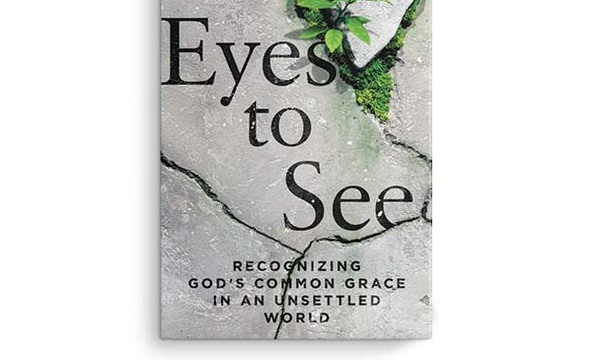
Tim’s newest book, Eyes To See: Recognizing God’s Common Grace in an Unsettled World, is out. Rick and Tim take up the book’s theme of common grace and consider how it impacts topics and issues around winsome conviction.
What do fellow believers think of you? What do non-believers think of you and your church? Ecclesiastes 7:11 says that “a good reputation is more valuable than costly perfume.” Watch or listen to Tim Muehlhoff’s sermon as he shares the importance of a godly reputation during today’s argument culture.
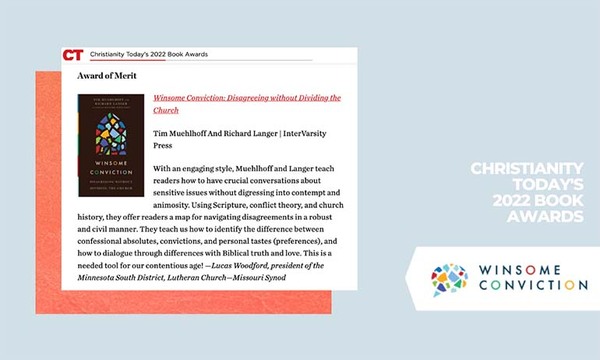
Christianity Today posted their annual list of top books that are “most likely to shape evangelical life, thought, and culture.” We are honored that Winsome Conviction: Disagreeing without Dividing the Church won the Award of Merit in the category of Church and Pastoral Leadership.
Tim and Rick continue the conversation with Dr. Theon Hill on the topic of radical rhetoric, and they press into the role of rhetoric in contentious issues such as critical race theory.
In the secular college environment where he studied, Tim Muehlhoff could have easily been marginalized for his Christian faith. Instead, he realized he didn’t just want to proclaim biblical truth, he wanted to have a conversation about it.
Tim and Rick resume the conversation with Quentin Schultze on listening. Manner matters in communication, and they discuss how the habit of giving thanks affects how we communicate with others.
Why is listening so difficult? In today’s argument culture, listening is especially difficult, and it often seems as if we have an incapacity to listen.
Tim and Rick continue the discussion with Cas Monaco on sharing the gospel in modern times. In Part 2 of this discussion, Dr. Monaco shares findings from a 2016 survey on the climate of evangelism in America.
I was in a heated cell phone discussion with my older brother—a man who loves the Lord, is in full-time ministry, and regularly leads Bible studies at local prisons. However, we were talking politics and our raised voices reflected our deep differences...
Tim and Rick speak with Cas Monaco on sharing the gospel in modern times. Dr. Monaco’s research identifies several behavioral changes Christians can make to help others listen to the gospel and make evangelism winsome.
What assumptions do we pass along to young Christians about what the Christian life is like? And how might we pass along the faith to young Christians in ways that help them foster a faith that endures?
After witnessing a comment section spiral out of control, an aunt’s unsavory Facebook post, or a coworker’s controversial Twitter feed, the online sphere may feel beyond repair. Is it reasonable to think that hope and peace can be achieved in today's online communication climate—where incivility often runs unchecked?
Tim is joined by Dr. Joy Qualls (Associate Dean of Communication Studies at Biola University) to discuss the pains and pressures of online incivility and whether we can be civil in online discourse.
Stories of Christians abandoning their faith have us thinking about the relationship between deconversion and convictions. So, when we heard about John Marriott’s book, The Anatomy of Deconversion, it got our attention.
Tim and Rick resume the discussion with Simon Greer, social entrepreneur and founder of Bridging the Gap, on his more recent project with students at Oberlin College and Spring Arbor University. Simon unpacks the skills and practices he has found beneficial in helping students find common ground.
Simon Greer is a social entrepreneur with an interesting story. One of his more recent efforts in social change involves helping students at Oberlin, a more progressive college, and students at Spring Arbor, a more conservative university, find common ground.
Tim and Rick resume the discussion on conflict and discuss the influence of phatic communication, the place of humor, and the need to do soul work when one is not in the throes of conflict in order to engage conflict in healthy ways when it arises.
Dave and Ann Wilson, the hosts of FamilyLife Today®, shared with Tim and Rick that they thought the rule, “don’t talk about politics or religion” would never apply to their family. But recently, even they have agreed not to tread those waters.
Conflict - it’s part of being human, but we usually don’t handle it well. Arguments and disagreements are more likely to break down and divide rather than strengthen and fortify our relationships and communities.