Biola University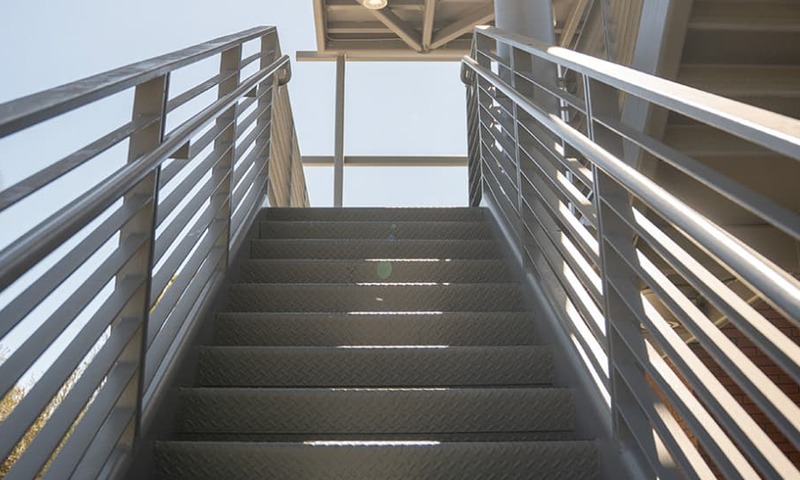
White House Chief of Staff Andy Card whispered eleven words into President Bush’s ear at a Florida elementary school. “A second plane hit the second tower. America is under attack.” The rest of September 11, 2001, rolled out like an apocalyptic movie.
I remember it was a few minutes after nine o’clock that morning when a knock on the door interrupted a meeting where I worked at a seminary north of Boston. As a 39-year-old administrator, I turned around to see the Dean of Students. She stopped our conversation to tell us a plane struck the North Tower of Manhattan’s World Trade Center. We noted this with an underestimated curiosity, continuing to work our way through that weekly Tuesday agenda. A second knock came ten minutes later. Upon hearing about the second tower, the meeting abruptly adjourned. A television was soon wheeled into the seminary president’s office as we stood speechless in front of that screen. America was under attack.
One by one, four al-Queda hijacked planes became jihadi missiles aimed at crippling America’s centers of economic, political and military power. For these terrorists, it was their holy war.
The world watched in horror as New York City’s tallest buildings crumbled to nothing, as billows of smoke poured from the ruptured walls of the Pentagon, as a fuselage smoldered on a Pennsylvania field after brave passengers thwarted the hijackers’ ploys.
Nearly 3,000 died on that day of infamy. And in the small New England community where I worked, the global pandemonium was felt with local panic. The two World Trade Center planes departed from Boston’s Logan Airport, one at eight o’clock and the next fifteen minutes later, an airport 18 miles south of where we lived. The executive assistant who officed next to me kept redialing her husband’s phone number, knowing he was on a plane that morning from Boston to New York. Our children’s primary school dismissed students early that day without telling them why, given the many parents whose business travels originated from Logan. Later, we heard of the neighboring North Shore towns who lost residents on those flights or in those buildings.
We all felt it globally. I felt it locally.
A few weeks later, Paula and I stepped off an Amtrak train onto a Penn Station platform, walking past hundreds of flyers on tiled walls with photos of sons and mothers and brothers and colleagues not seen since September 11. “Please help me find…” “Missing…” “Searching for…” “Have you seen my daughter…?” Each posting was a family’s plea, hoping against hope, refusing to give up.
That night in New York City, Paula and I sat in a Broadway theatre watching with “real time” emotions a performance of the musical Les Misérables. The song, “Empty Chairs at Empty Tables” became the sad refrain sung by desperate family members and coworkers taping flyers to New York’s subway walls and chain-link fences. Listening to “Do You Hear the People Sing?” took on a deeper meaning as the nation witnessed a precious solidarity after 9/11, standing as one in the crucible of a dreadful moment.
The depths of despair after such a terroristic disaster were overcome by the unity we felt as a nation in the wake of September 11, Republicans and Democrats alike. I do not know of any critique of President Bush’s words shouted through a bullhorn at Ground Zero three days later. “I want you all to know that America today — America today is on bended knee, in prayer for the people whose lives were lost here, for the workers who work here, for the families who mourn.”
There is a virtue to our national conscience when we wrap our hearts and loyalties around each other amidst our tougher times. Conversely, it’s a travesty when tough times come and we find ourselves divided. Remembering 9/11 means we care about the empty chairs at empty tables, whatever families may be grieving. Remembering 9/11 means we come together in humility and neighbor love to see one another as fellow citizens. Remembering 9/11 means, sung as Les Misérables climaxes in its Christian arc, “to love another person is to see the face of God.”
On Friday, Sept. 11, 2026, the Biola University Veteran and Military Affiliated Student Programs (VMASP) invites students, faculty and staff to participate in a memorial stair climb for the 25th anniversary of 9/11. Using the Talbot East stairwell, community members will collectively climb the equivalent steps of both World Trade Center towers, 110 flights per tower (220 flights total).