Biola University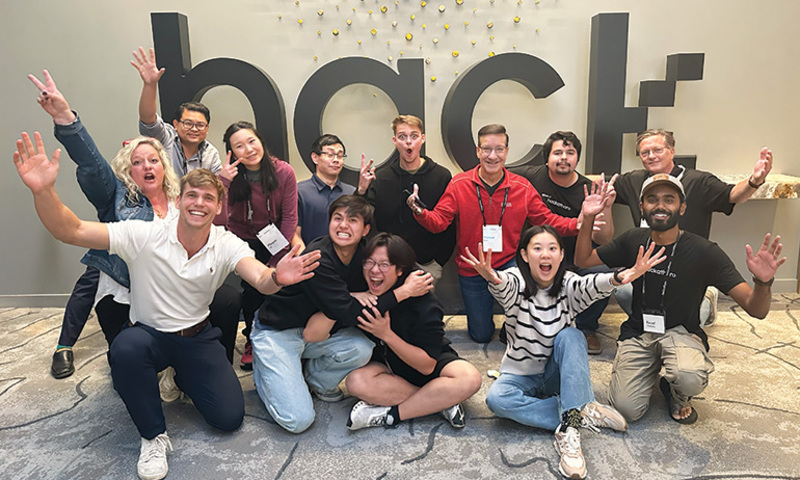
Artificial intelligence is advancing at breakneck speed, and Biola University students are not just keeping up — they’re helping lead the way.
At this fall’s Gloo AI Hackathon in Boulder, Colorado, students from Biola’s AI Lab competed against 98 teams, composed primarily of seasoned engineers from companies like Google and YouVersion — and walked away with two major awards and $15,000 in prize money.
Hackathons are time-constrained events where participants collaborate to develop innovative software or hardware projects and solve real-world problems. The three-day Gloo AI Hackathon, themed “AI for Human Flourishing,” drew nearly 700 developers, ministry leaders, publishers, investors and innovators from 48 states and 27 countries — all seeking to create AI-powered tools to serve the global church.
One Biola team won the “Best of Vibe Coding” award and a $10,000 prize for their project “Flora.” The app, guided by “Flora the Focus Fox,” uses AI to help users reflect on their digital habits and set healthy screen-time goals. The team included the Biola AI Lab’s associate director, Stefan Jungmichel (MBA ’24), computer science major Megan Lai, worship arts major Ben Currie and business major Felicity Zhang, with MBA student Gabriela Carvajal Melendez as a contributor.
Another Biola project, “Ephphatha” — Aramaic for “be opened” — earned first place in the Hacker’s Choice category and a $5,000 prize. The app offers real-time translation of voice audio into avatar videos of an American Sign Language interpreter, in an effort to make church services more accessible to the deaf community. The four-person team included computer science majors Matteo Mellilo, En Duo Wang, Ryan Ong and Caleb Ayers.
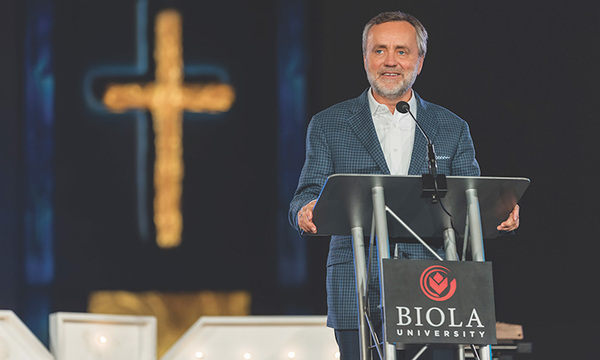
“It is imperative for our students to participate in the conversation about how AI can be used in alignment with biblical values, and this hackathon provided them a front row seat to this conversation,” said Dr. David Bourgeois, professor in the Crowell School of Business and director of the AI Lab. “Beyond winning awards, these students were able to connect with those shaping the direction that AI is heading. We are looking forward to competing again next year.”