Biola University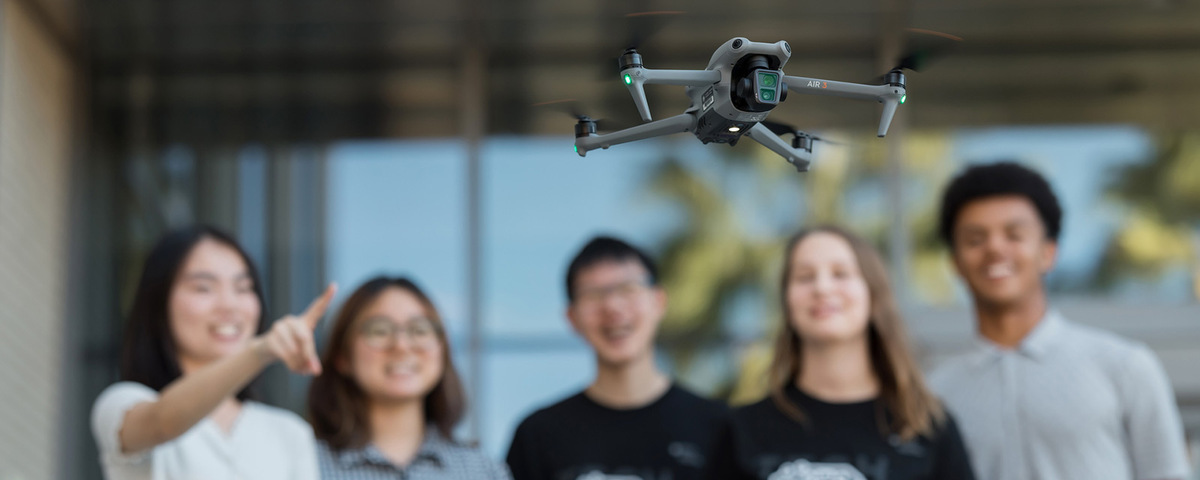
First came a murmur, then laughter, then a roar of celebration.
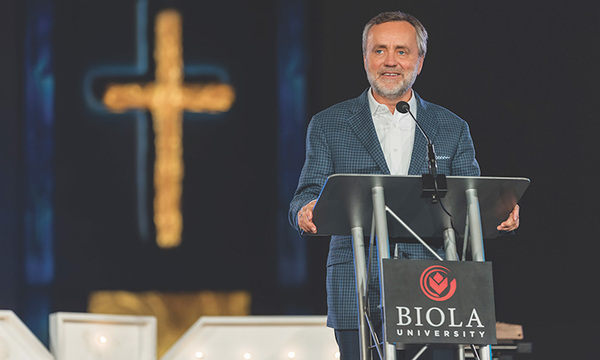
Inside a packed Chase Gymnasium, Biola President Barry H. Corey stood at a podium to welcome students to the annual Torrey Memorial Bible Conference — when the wave of voices began to rise.
Overhead, a small drone had emerged from the back of the room, a bright red envelope dangling from its frame. As the device hovered toward the president, its cargo illuminated by a spotlight, students pointed and laughed in surprise.
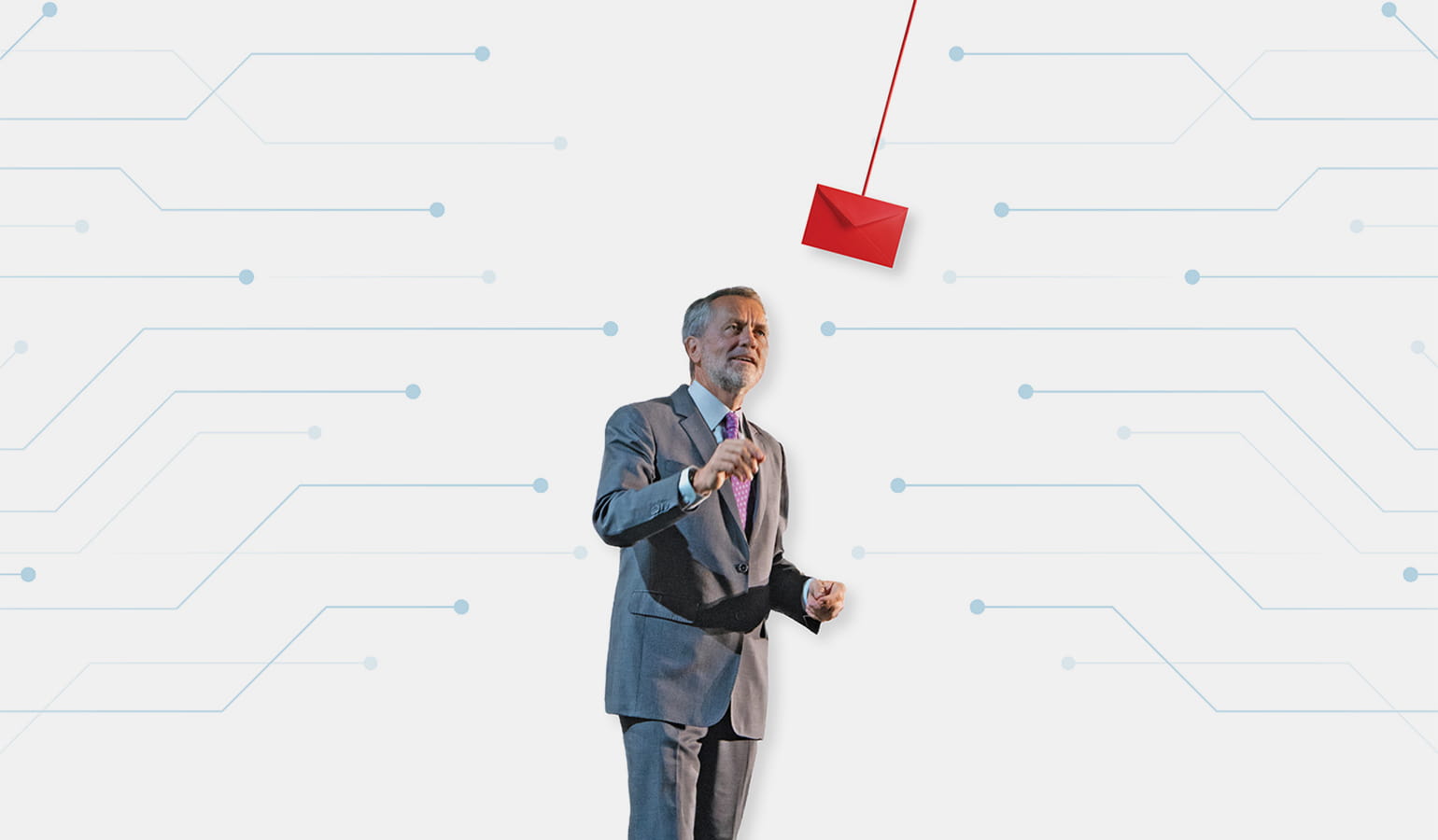
“Do you mind if I read it? Are you OK with that?” Corey intoned after reaching up to unhook the mysterious envelope.
The announcement inside triggered an outburst of excited cheers and stunned applause: Biola University had received the largest financial gift in its 118-year history, a donation of more than $40 million toward the university’s technology programs, made possible by a Silicon Valley executive passionate about technology and Christian higher education. The transformational gift will fund new engineering facilities, attract world-class faculty, expand student scholarships and research, and accelerate the growth of Biola’s already rapidly growing technology degree programs, Corey explained.
“This is a landmark moment for Biola,” Corey said later. “The generosity behind this gift will have a ripple effect for decades to come. The gift allows us to build forward-thinking programs that not only educate and equip students in emerging technologies but also prepare them to lead with moral conviction and Christian character.”
Biola’s technology programs are among the fastest-growing at the university, having expanded steadily in size and strength since the university launched the School of Science, Technology and Health in 2016 and opened the doors to the world-class Lim Center for Science, Technology and Health two years later. With the rise of artificial intelligence, robotics and other emerging technologies, interest continues to surge in the areas of computer science, engineering, robotics, mathematics and physics.
The historic gift, offered anonymously and announced in October 2025, was driven by a desire to equip the next generation of Christian innovators to bring moral and technical leadership to these rapidly growing and changing fields.
“We are standing at the threshold of a new era — one where technology will redefine how we live, work and connect,” the Silicon Valley executive said. “In this moment of extraordinary change, we need leaders who not only understand innovation, but who are guided by wisdom, humility and conviction.
“I believe Biola can be a catalyst for raising up such leaders — individuals who will bring both technological brilliance and moral clarity to the forefront of the world’s most pressing challenges. This gift is not just about advancing education; it’s about shaping the future through the lives of students who will lead with both conviction and courage.”
Building the Future: Engineering and Robotics Facilities
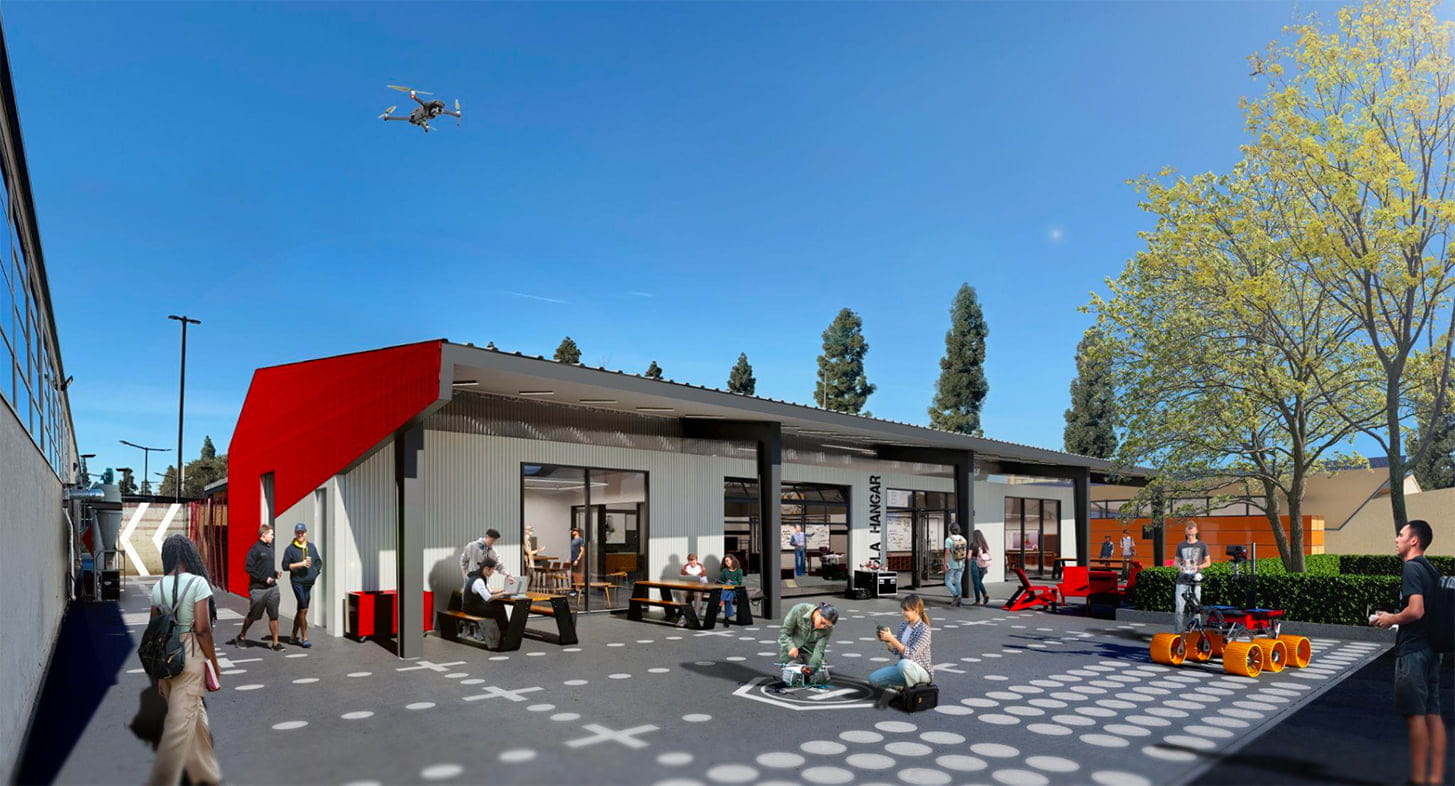
Two new multimillion-dollar facilities for engineering and robotics will be among the most immediate and visible impacts of the gift, with construction expected to begin by mid-2026.
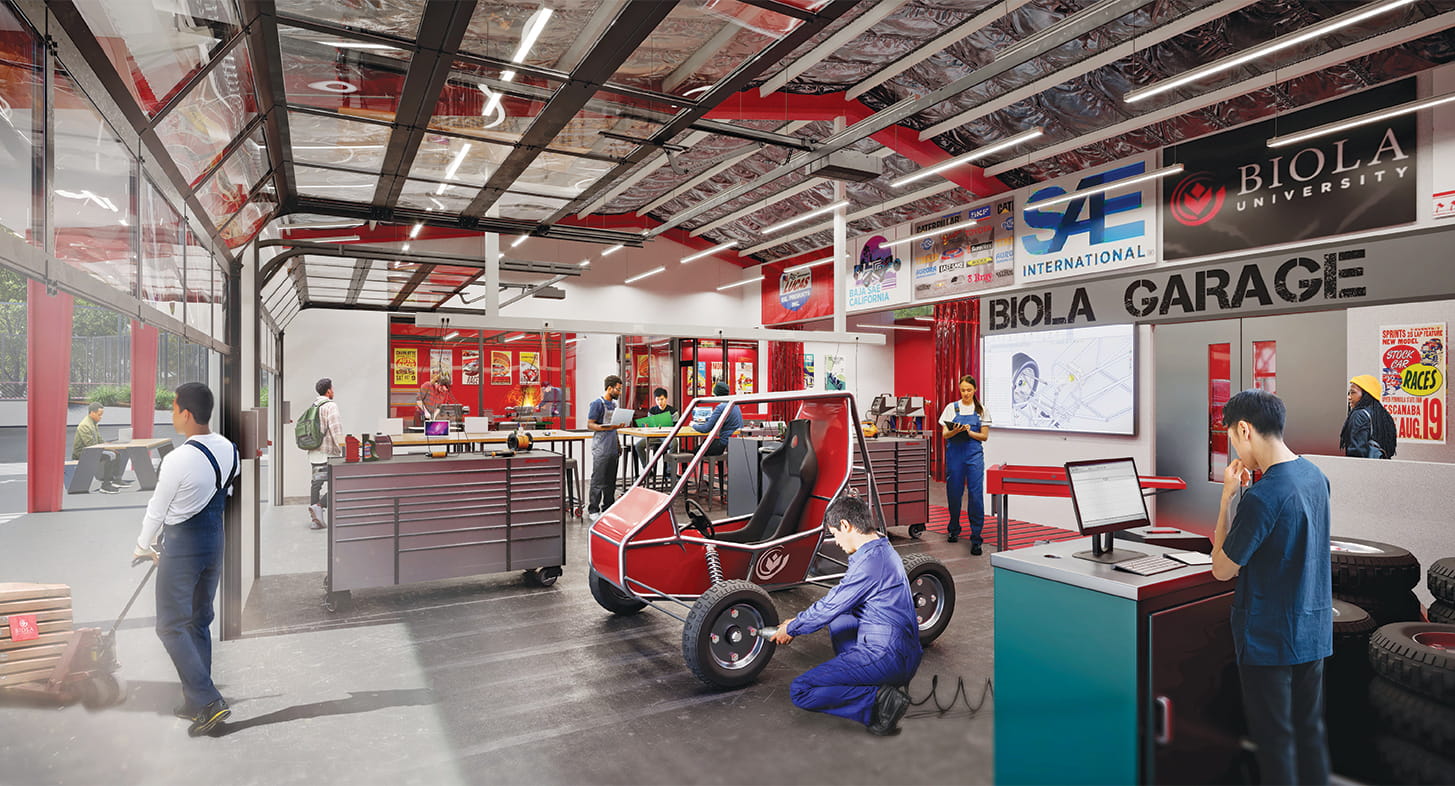
Located near the southwestern edge of campus, the engineering garage and robotics hangar will add more than 6,400 square feet of space dedicated specifically to technology programs. The buildings will feature a machine shop, welding area, classrooms and large open bays where students can test and build Baja racing vehicles, F1-style cars, aerial drones, self-driving vehicles and other mechanical and robotics projects.
That kind of hands-on mechanical engineering experience is vital for preparing students for a competitive job market, said Dr. Yohan Lee, Biola’s associate dean of technology. Baja racing competitions, in particular, are popular among university engineering programs and viewed by employers as a major résumé standout.
“There are many students whose engineering capability shines and comes out when they start actually working with their hands,” Lee said. “We talked to a Baja competition team within our region and you see students who would admit they were not as strong in the classroom, but once they were in the garage, actually welding, cutting, framing, measuring and doing stress tolerances, suddenly their academic interest spiked.”
Attracting Top Talent: Endowed Professorships
Top-tier technology programs require top-tier professors, and the historic gift will enable Biola to recruit and retain even more of them, Lee said. A significant portion of the gift will be used to establish endowed professorships — prestigious, permanently funded faculty positions that support research, innovation and long-term teaching excellence.
“Endowed positions often invite the best of the best to come to the university,” Lee said. “They announce to the world that this is something that the university believes is essential — that it’s committed to finding the best talent. It’s kind of like a great lighthouse or fireworks display that gets top faculty around the world to take notice.”
Biola’s technology division already includes faculty with industry experience and doctoral degrees from leading research universities such as Stanford, Caltech, Brown, UCLA, USC and Purdue. The new funding will expand that team even further, enabling the university to recruit additional Christian technologists who will mentor students, conduct cutting-edge research and help launch emerging programs in areas such as quantum computing and biophysics, Lee said.
“Our mark of excellence is really about bringing a smile to our Lord Jesus Christ’s face,” Lee said. “We are looking for people who can make a serious impact in ways that would excite and delight the Lord. When I think about what these world-class faculty can do, it’s about not purely publishing papers or just getting another research grant. It’s about making a tangible impact for the kingdom of God.”
Next-Level Exploration: Empowering Research and Innovation
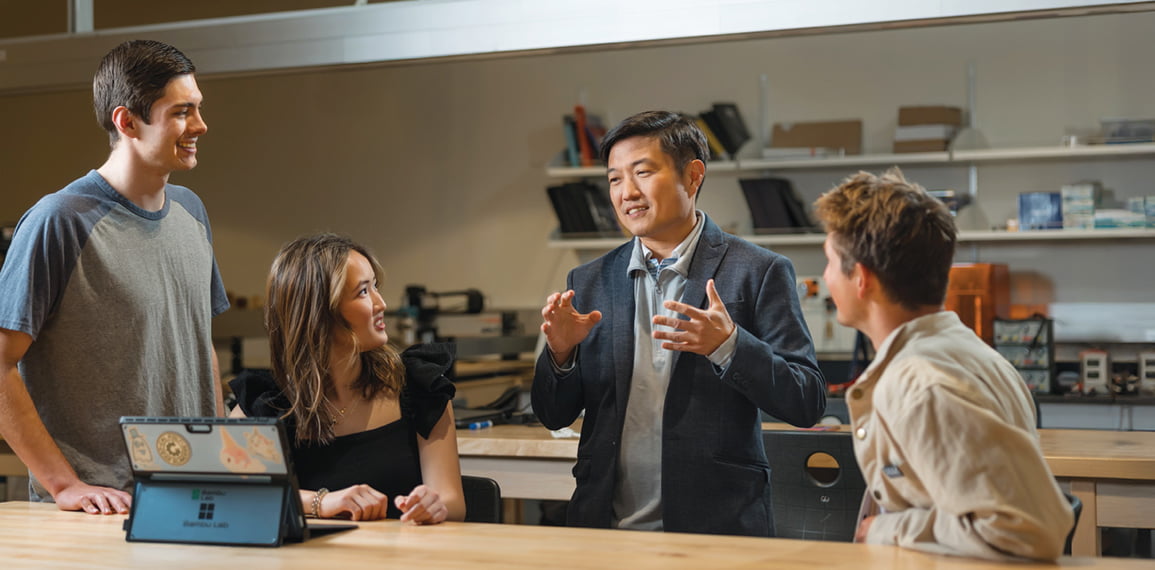
In addition to new facilities and faculty, the technology gift will also significantly enhance faculty-mentored research opportunities for students — with an endowment that funds equipment and programs in perpetuity.
Biola already offers abundant opportunities for undergraduate research through the Stewart Science Honors Program, the Summer Engineering Internship (SEI) program and other initiatives that pair students with faculty mentors on ambitious research and development projects.
This past summer, for example, SEI students working under the guidance of Dr. Grace Ni, chair of physics and engineering, built a low-cost 3D-printed drone, trained a robotic arm to respond to voice commands and designed a maze-solving “micromouse” — an autonomous robot that navigated a 5-by-5-foot maze in 32 seconds without human intervention.
The new funding will allow for more equipment, expanded research partnerships and additional opportunities like these, Lee said — all with the ultimate aim of using technology to promote human flourishing and honor Christ. Possibilities include projects to address contaminated waterways in developing nations, assist Bible translation efforts using AI and develop robots that can assist individuals with disabilities, he said.
“When you have a biblically based why — for example, addressing biblical justice by serving the widow, the orphan, the sojourner, the infirm — then your threshold for real-world sophistication goes up a lot higher,” Lee said. “Having a strong why that is biblical and Christ-centered is going to give us that motivation to challenge ourselves with greater levels of sophistication.”
Biola.io, Student Scholarships and a Bright Future
On the same day the historic gift was announced, the university launched Biola.io — a new name, visual identity and website for the Division of Technology.
In technological contexts, “I/O” stands for “input/output,” referring to the data that goes into a system and the results that come out. (The .io domain has become commonly used for websites for tech companies.) The Biola.io name seeks to reinforce the idea that what you put in — faith, curiosity and pursuit of excellence — shapes how people and products are formed.
“If you combine faith, curiosity and excellence together, you don’t simply learn how to invent, but you learn why to invent,” Lee said.
Along with the website, the Biola.io brand now appears across shirts, hats, mugs, ads, videos and more, all with the aim of building awareness and enthusiasm for Biola’s expanding tech offerings.
As student interest grows, the funding will also provide additional merit- and need-based scholarships to help students pay for their education.
All told, the heightened awareness, new facilities, faculty, research and scholarships will play a major role in advancing the School of Science, Technology and Health’s vision to be identified among the world’s foremost Christ-centered STEM and health schools, said the school’s dean, Dr. Matthew Rouse.
“This incredible gift will fuel our efforts to achieve this vision,” Rouse said. “I believe the future is bright for the School of Science, Technology and Health and Biola in the technology area, and our students will impact the world of technology for the Lord Jesus Christ.”