Biola University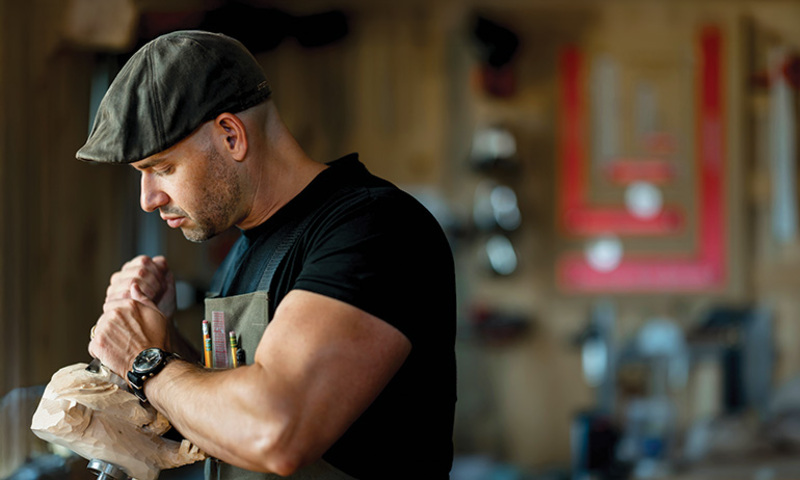
“There have been moments in my studio — my tabernacle — when I have felt the Lord’s presence. I have sensed him lend his creativity to mine…”
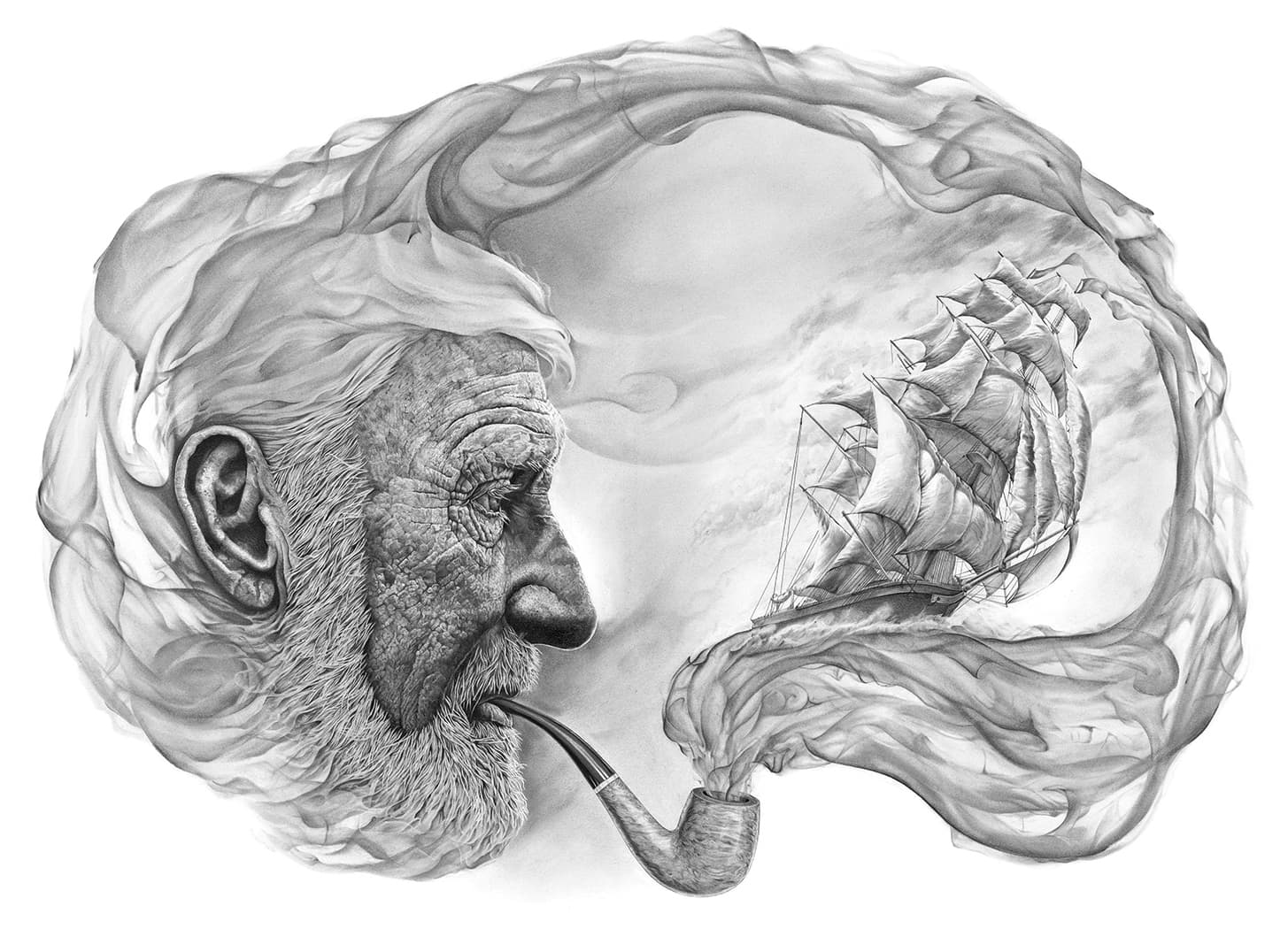
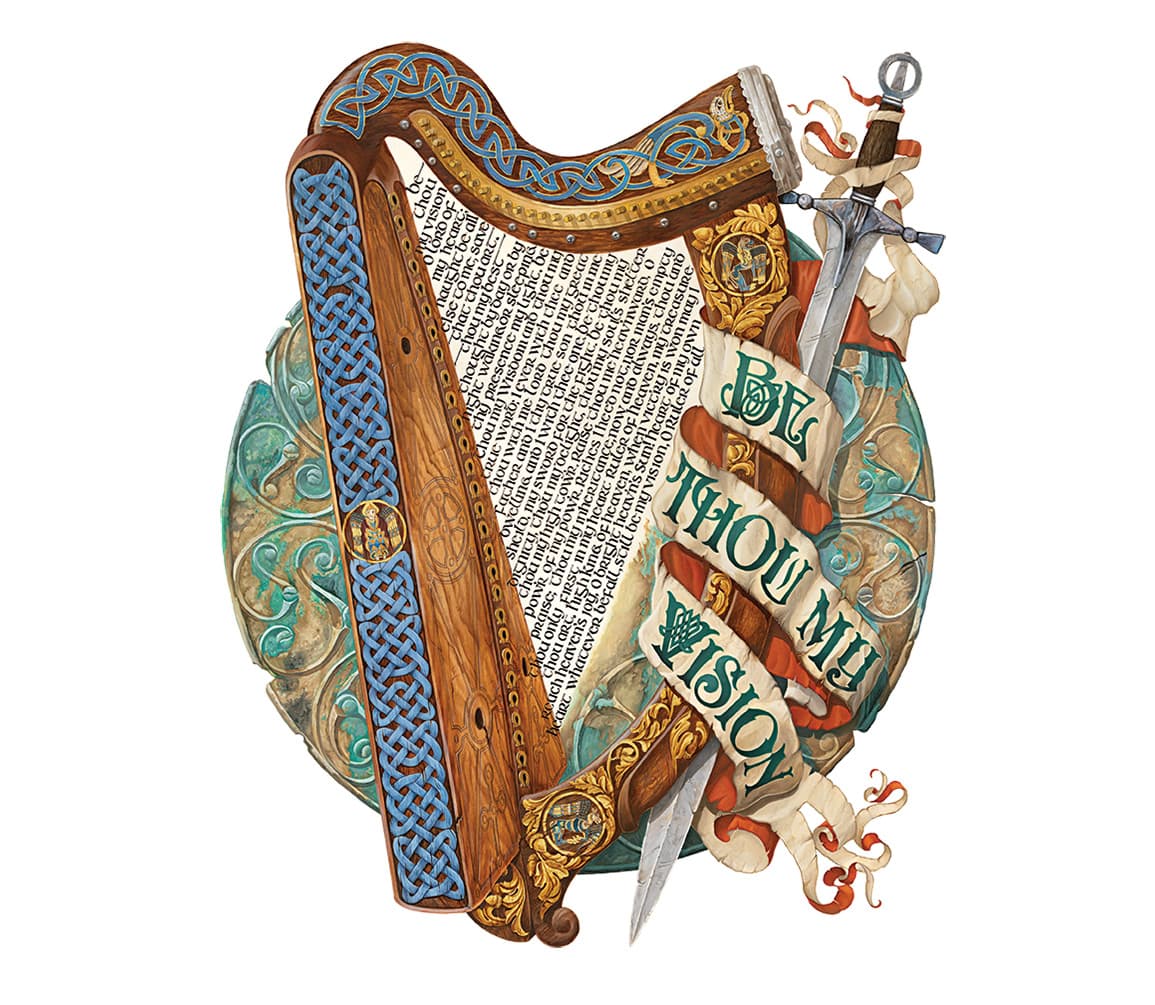
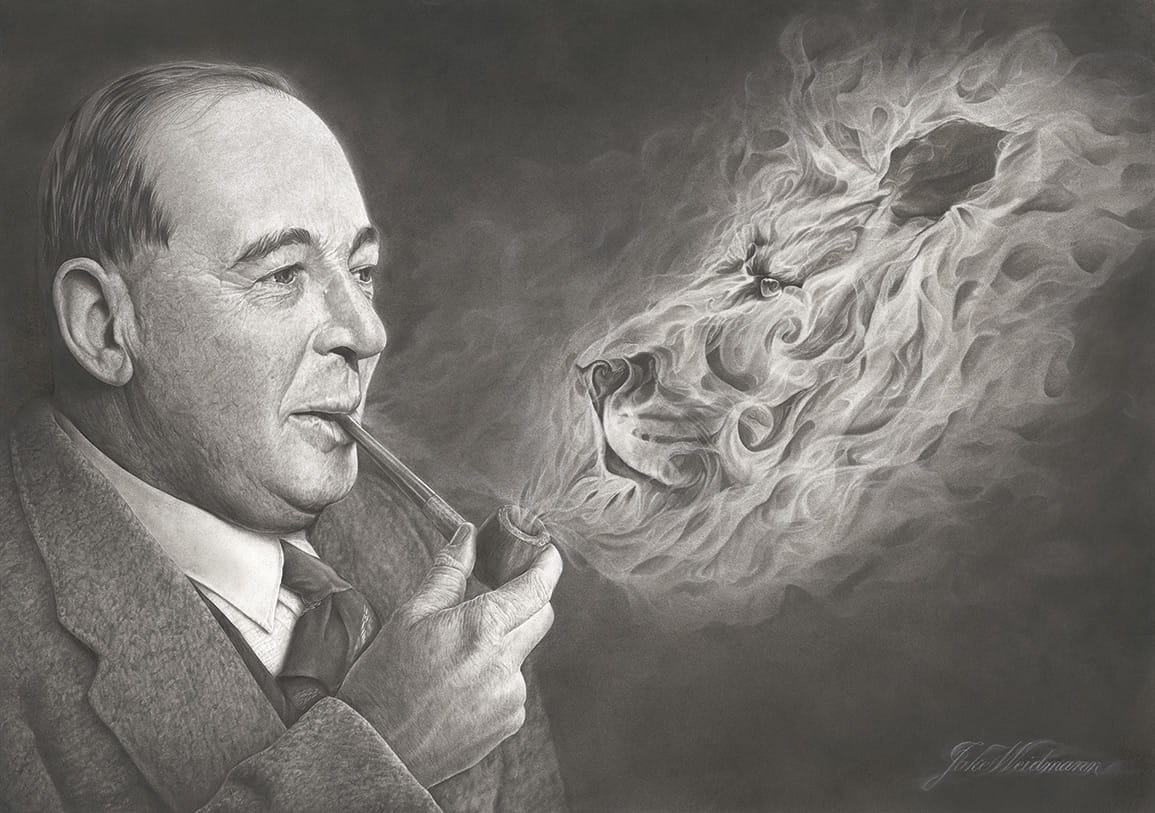
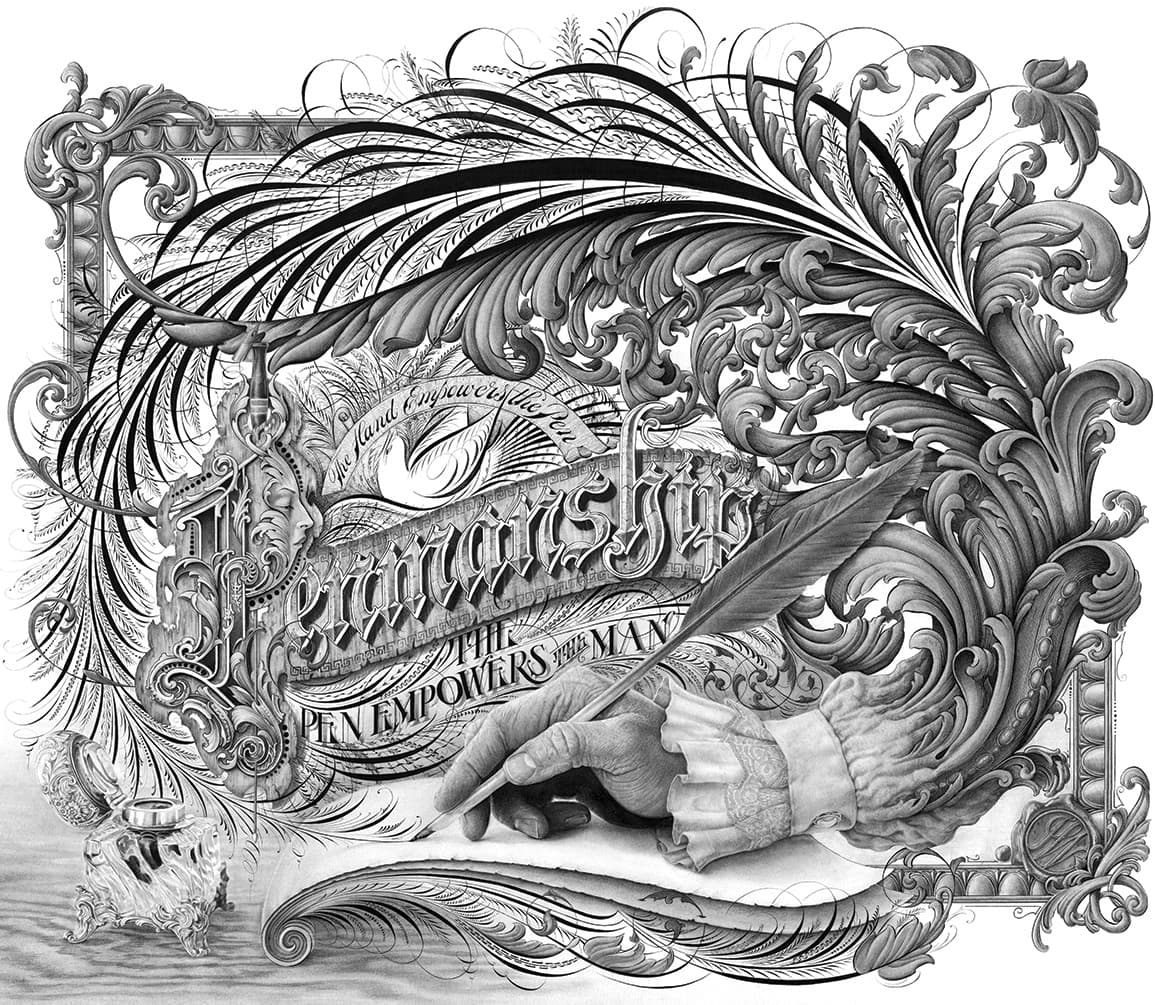
Jake Weidmann (B.A. ‘08) is a gifted painter, sculptor and woodcarver, and one of only nine people in the world to hold the title of “Master Penman” — a designation recognizing the exquisite artistry of his calligraphy. Weidmann’s works blend breathtaking talent and precise artistic skills with spiritual depth, prompting collectors to call him a modern-day Michelangelo.
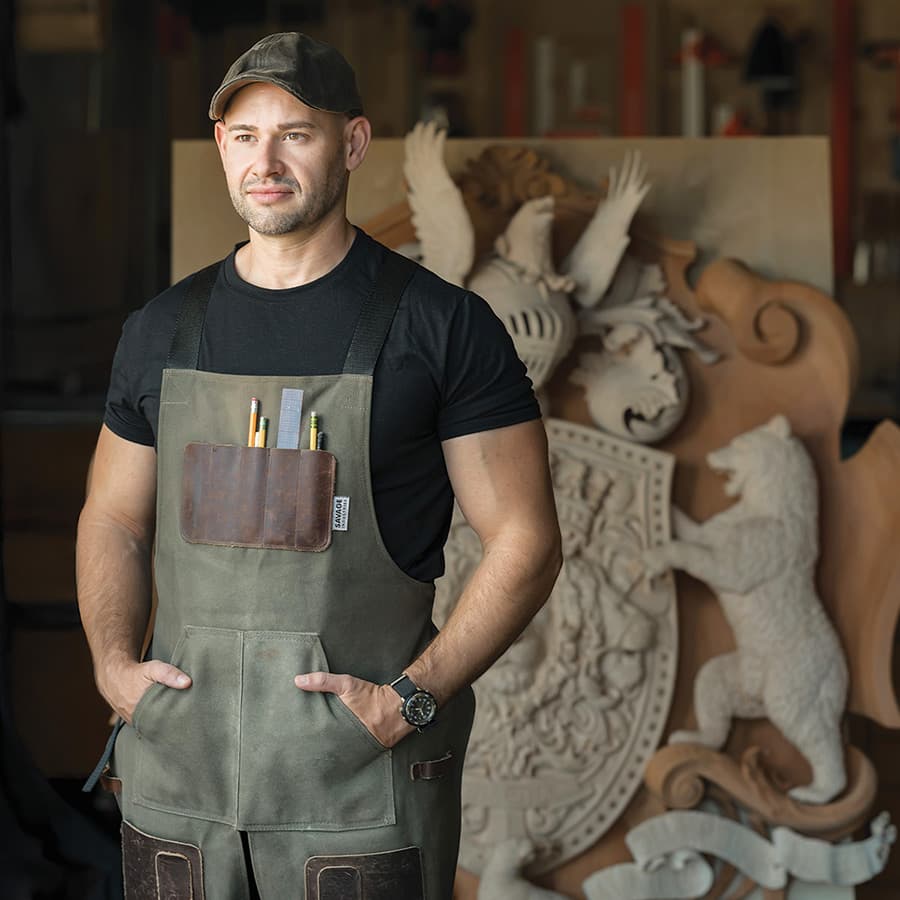
Working from his home studio near Denver, Colorado, Weidmann has created commissioned pieces for corporate clients and individual collectors worldwide. He was chosen by Apple as one of a select group of artists to help introduce the iPad Pro, was tapped by Coors to be the subject of a short film on master craftsmen viewed by millions and has spoken on his work at Pixar University. In 2025, Weidmann added “author” to his list of accomplishments with the publication of Old Soul, New Creation: Experiencing God through a Life of Art and Faith, a memoir exploring how his art connects with his Christian faith.
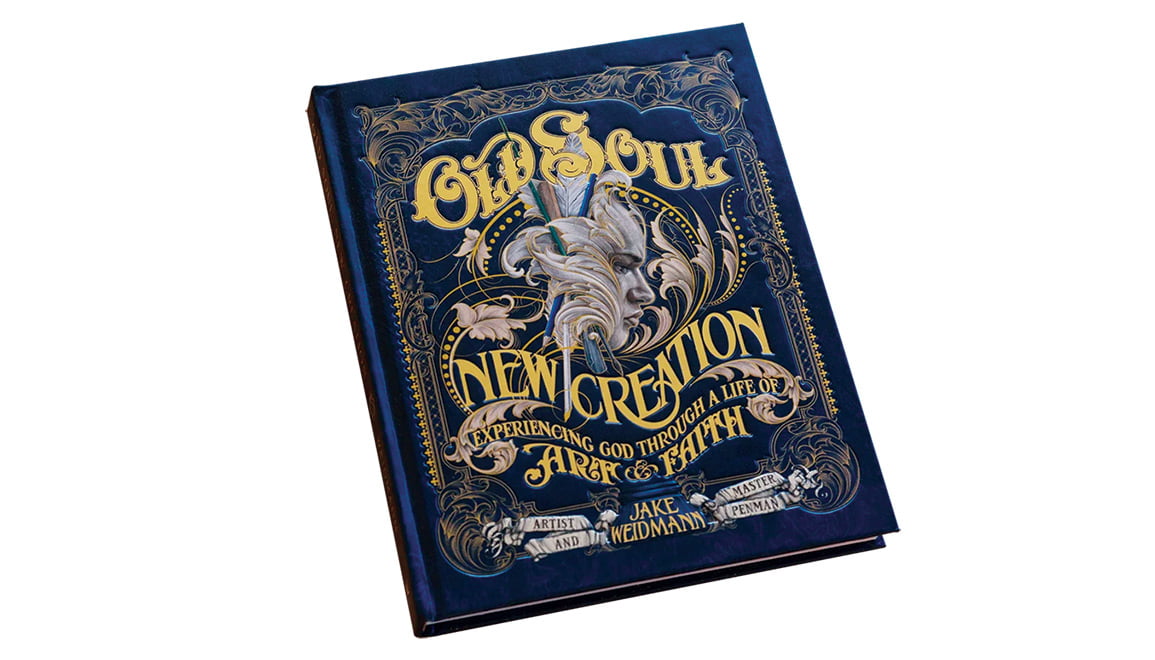
“My artwork disciples me in the midst of creating it,” Weidmann says. “God uses art and the process of creating it to bring me in closer relationship with him.”
Weidmann describes art as “his first language,” a passion his parents say was obvious from the first time he held a crayon as a toddler. He won his first art competition at the age of 7 and landed his first commission when he was still in high school.
But while art was Weidmann’s passion, he didn’t originally consider it a viable career option. He enrolled at Biola as a psychology major, opting to study something more “practical” that he believed had better potential for earning a living. Weidmann graduated in 2008, just in time to begin job hunting during a recession.
He soon found himself back home in Denver, where he converted his parents’ basement into a makeshift studio and took on art-related projects to scratch out a living. Weidmann painted murals in Sunday School rooms, designed T-shirts and created wedding invitations. He sometimes worked as a slow-but-popular barista, creating intricate designs in the foam atop each latte.
“There I was, doing art in my parents’ basement during an economic downturn, but you know, I felt the real favor of the Lord at that point,” Weidmann says.
That favor was exemplified in a pivotal Biola connection that had a life-changing impact on Weidmann’s career. He had displayed a few of his art pieces at a local coffeeshop. Fellow Biola alumnus Wes Roberts (B.S. ’68) saw the exhibition and connected with Weidmann over their shared tie to the university. Roberts eventually introduced Weidmann to his friend, Steve Musick, a financial planner.
“I was like, a financial planner? I have nothing in the world to manage but debt,” Weidmann recalls with a wry smile. “Why would I need to meet this person?”
Musick, however, had another skill — the ability to recognize and encourage gifts in others. He began mentoring Weidmann, advising him on the business side of working as a professional artist.
“Steve told me, ‘Jake, I love what you’re doing, but you’re doing too much. You need to be set free to do the things that God has called you to do,’” Weidmann says. “‘You need dedicated time to stop designing T-shirts and start creating the art that God has put in you.’”
Musick worked with Weidmann on a business plan that would allow him to drop the T-shirts, murals and wedding invitations by finding patrons who would support his fine art, just as Michelangelo benefitted from the patronage of Lorenzo de’ Medici in the 15th century.
“I thought that was a nice idea, but I had no idea where these patrons were going to come from,” Weidmann says. “Then one day, Steve invited me to lunch at this hole-in-the-wall Mexican restaurant. We finished eating and Steve pulled out his checkbook, and I thought, ‘Oh, he’s paying for lunch with a check.’ Steve tore this check out and slid it across the table. It was written for more money than I could have imagined at that time. And it had my name on it.”
“Jake, today’s the day you get your first patron,” Musick told a stunned Weidmann. “All of your fears on whether you’re going to make a living as an artist or not — they die today. All of your doubts on whether you’re going to be able to support a family by the things that God has put in you, die today.”
“So there I was — an absolute mess, just crying in my guacamole,” Weidmann says. “It was a life-changing moment, being taken seriously by this serious man, and in the middle of a recession, being set free to do the things that God had put in me.
“Patrons like Steve, whether they’re the patron of an individual artist or they fund the creation of a public art piece, have to have a heart aligned with the artist,” Weidmann continues. “In Steve Musick, I found something far greater than Michelangelo had in Lorenzo de’ Medici. Our relationship is guided by the Holy Spirit we have in common.”
In exchange for his patronage, Musick and his wife, Elaine, as well as any other patrons that followed, would receive a monetary return on their investment and become preferred collectors of Weidmann’s art. Weidmann, however, would retain complete creative control of his work.
“That was very important,” Weidmann says. “I had to have full creative autonomy. And they had to have faith not only in my artistic skill, but also that I was following God’s calling on my life and creating the things that he had put in me as an artist to create.”
The Art of Listening
Weidmann left that hole-in-the-wall Mexican restaurant as a professional artist. He has spent the nearly two decades since creating intricate, layered drawings and elegant works of calligraphy with an old-fashioned dip pen dancing across vellum. He coaxes inspirational art from seasoned wood with a chisel, casts inspirational pieces in bronze and fashions delicate jewelry of gold and silver. While some of his signature pieces have been completed in as little as a week, most require months of painstaking work; sometimes the period from concept to completion is measured in years.
“I’m self-taught, which I think helped me in a way, because I didn’t fall into a formulaic method or think, ‘This is how I have to approach art,’” Weidmann says. “Because I was teaching myself while I tried to eke out a living, my work has been more experimental. If a potential collector asked me, ‘Can you create this project in this medium?’ I typically said yes and then taught myself how to do it. When you’re self-taught, every medium becomes your professor, trial and error is your curriculum, and struggle is the tuition you pay.”
Weidmann’s Biola education, however, has been invaluable in lending depth to his work, particularly when he’s creating commissioned pieces. His psychology courses inspired Weidmann to become an “artistic listener.”
“Emotional cues are interwoven through the words my clients use when they tell me their stories. I listen carefully to what they say, then use those cues to formulate an art piece. My clients and patrons typically provide all I need to create a piece that’s profoundly meaningful to them. It’s just a matter of having the ears to hear it.”
Artistic listening has been critical to the development of Weidmann’s largest and most complex commission to date. A client has trusted Weidmann with creating a custom family crest that will represent the family’s lineage, identity and the values they hold most dear. Weidmann listened as family members described their personal histories and life achievements, as well as the character attributes, spiritual beliefs and deep faith that mattered most to them. Weidmann then researched the centuries-old tradition of heraldry, matching elements of the family’s story with timeless icons.
The finished commission will include both an intricate drawing of the crest inked on vellum and a large relief carving that will hang in the family home. The work in progress features three lion heads representing the Father, Son and Holy Spirit; a bear, symbolizing protection of the family; an eagle representing philanthropy and self-sacrifice; and other heraldic symbols, all interwoven into a dramatic piece like no other.
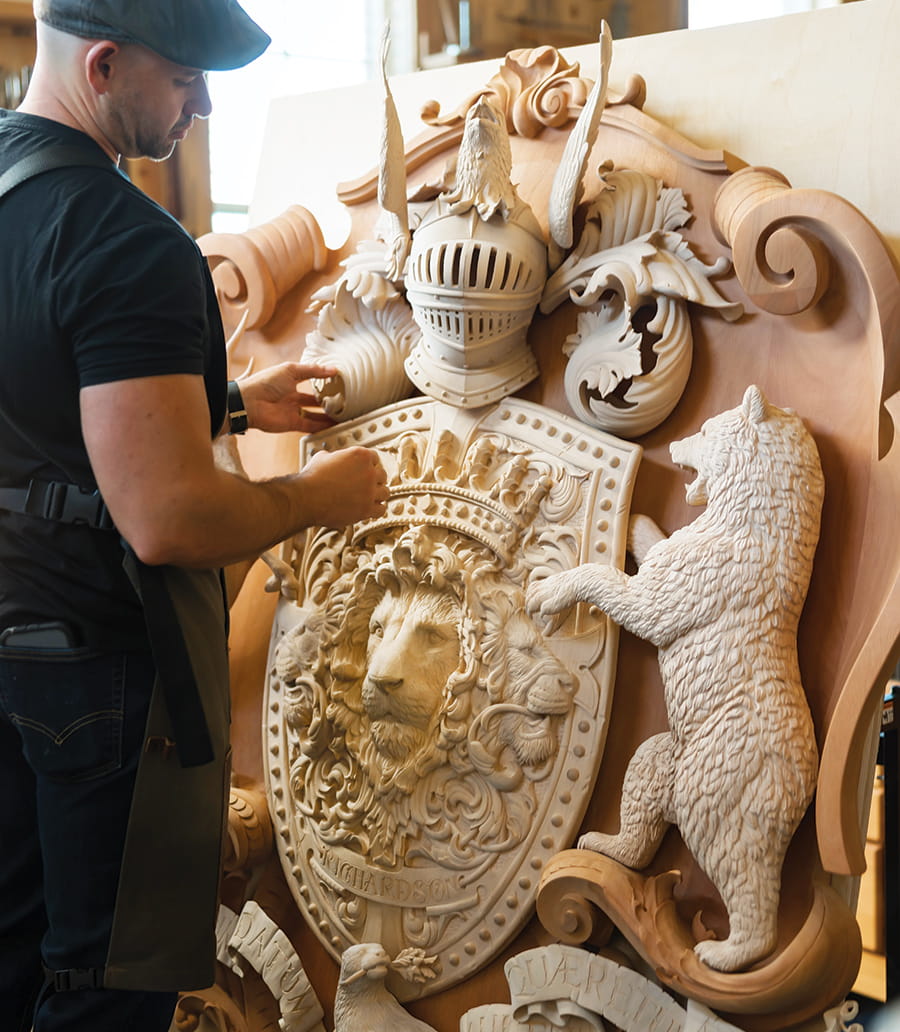
Scheduled for completion in early 2026, the project will represent two years of inspired work that began with an intimate conversation.
“Artistic listening is the ability to pick up on subtle things,” Weidmann says. “By always having my ears pricked and living in the world of the symbolic, it’s like I’m translating what people are saying. I have all these little conversations earmarked in my mind that I’m going to build out as an art piece that speaks to something I know is near and dear to their hearts. I know that because they said it genuinely, authentically, in the midst of conversation, sometimes through tears.”
Two Gifted Artists, Four Creative Kids, One Abiding Faith
Weidmann balances his calling to create inspirational art with his roles as a devoted husband to his wife and business partner, Hannah, and the father of their four children.
Hannah and Jake’s “how we met” story began with Jake dating Hannah’s sister, a relationship that ended when she told Jake, “I really think you should be dating my sister.” Jake and his future wife officially met for the first time when Hannah attended Jake’s first public art exhibition.
“On our first date, we knew we were going to get married,” Hannah says. “So we’re forever indebted to my sister on that score.”
Hannah and Jake were two creative souls drawn to one another. Hannah had a background in creative writing; their courtship unfolded not only over modern smartphones, but in a series of handwritten love letters.
In the years following their April 6, 2014, wedding, Jake’s art business continued to flourish. Hannah stepped in to handle the day-to-day business operations, including marketing and e-commerce, all while raising their growing family, which now includes four children under the age of 10.
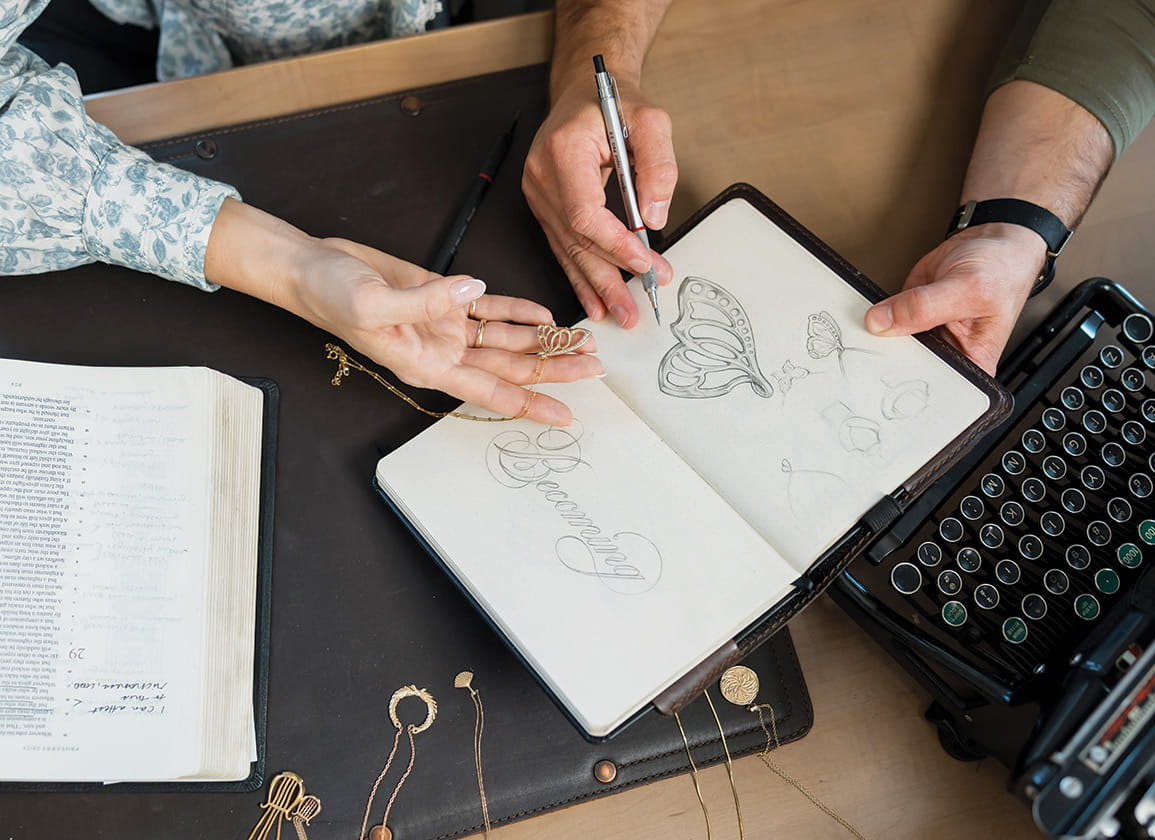
In 2018, the Weidmanns launched Everyday Heirloom, a joint venture built around fine jewelry designed by Hannah and crafted by Jake. Everyday Heirloom is about much more than pendants, rings and bracelets. Every piece of jewelry has scriptural symbolism and significance, and is designed “to adorn women as the beloved of God.”
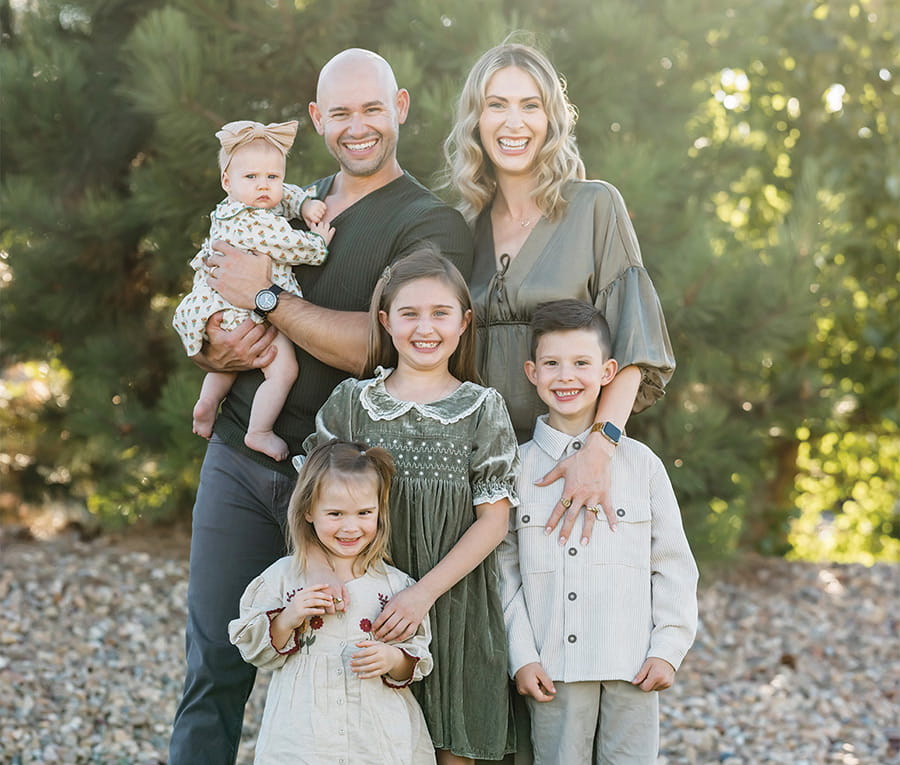
Jake and Hannah’s children, Emma (8), Henry (7), Eloise (3) and Eleanor (6 months), appear to have inherited their parents’ creativity. The older Weidmann children are drawn to art, and Emma has already won her first penmanship competition.
“It’s really neat to see my kids grow into art naturally,” Jake says. “Just yesterday, I had all three of my older kids sitting with me and we were all drawing together. It was a really beautiful moment. I never want my kids to feel like they’re in competition with my work. A lot of times they come out into my woodshop and I’ll set up a small block of wood so they can carve alongside me. Henry can tell you the difference between a fishtail gouge and a back-bent gouge. It’s fun to see their creativity blossom underneath the canopy of mine.”
While the Weidmann children may not be aware of all that goes into the family business, they do have an understanding of the most important part of their parents’ vocation. When asked what Jake and Hannah do for a living, 8-year-old Emma replies, “Mommy and Daddy make pretty things and tell people about Jesus.”
The Masterworks Ahead
“Jake is one of those rare people who really, really respects his gift and has embraced the idea of surrendering that gift back to God,” Weidmann’s original patron, Steve Musick, says. “I would love to see Jake continue to step into the truth that he is a present-day Michelangelo. I see Jake as part of the beginning of a new Renaissance, which is occurring in the artisans first, but will transition into other parts of the marketplace to change our culture. I look forward to seeing Jake rise to that occasion, not out of ego, but out of servitude.”
Despite his success as an artist and the critical acclaim his work has garnered, Weidmann confesses he still sometimes wrestles with fear and doubt.
“I’ve learned to be grateful for some self-doubt because that’s where faith comes in. I want to get to the point where I doubt myself, where I am beyond my current skill level, where I’ve taken my own ability as far as it can go. When I walk in neck-deep, that’s when God finally parts the waters. That’s the place where God meets me in the midst of my work, where his strength is made perfect in my weakness. That keeps me humble, and it keeps me wanting more. Not just more in the achievement of my artwork, but more in my communion with God.”
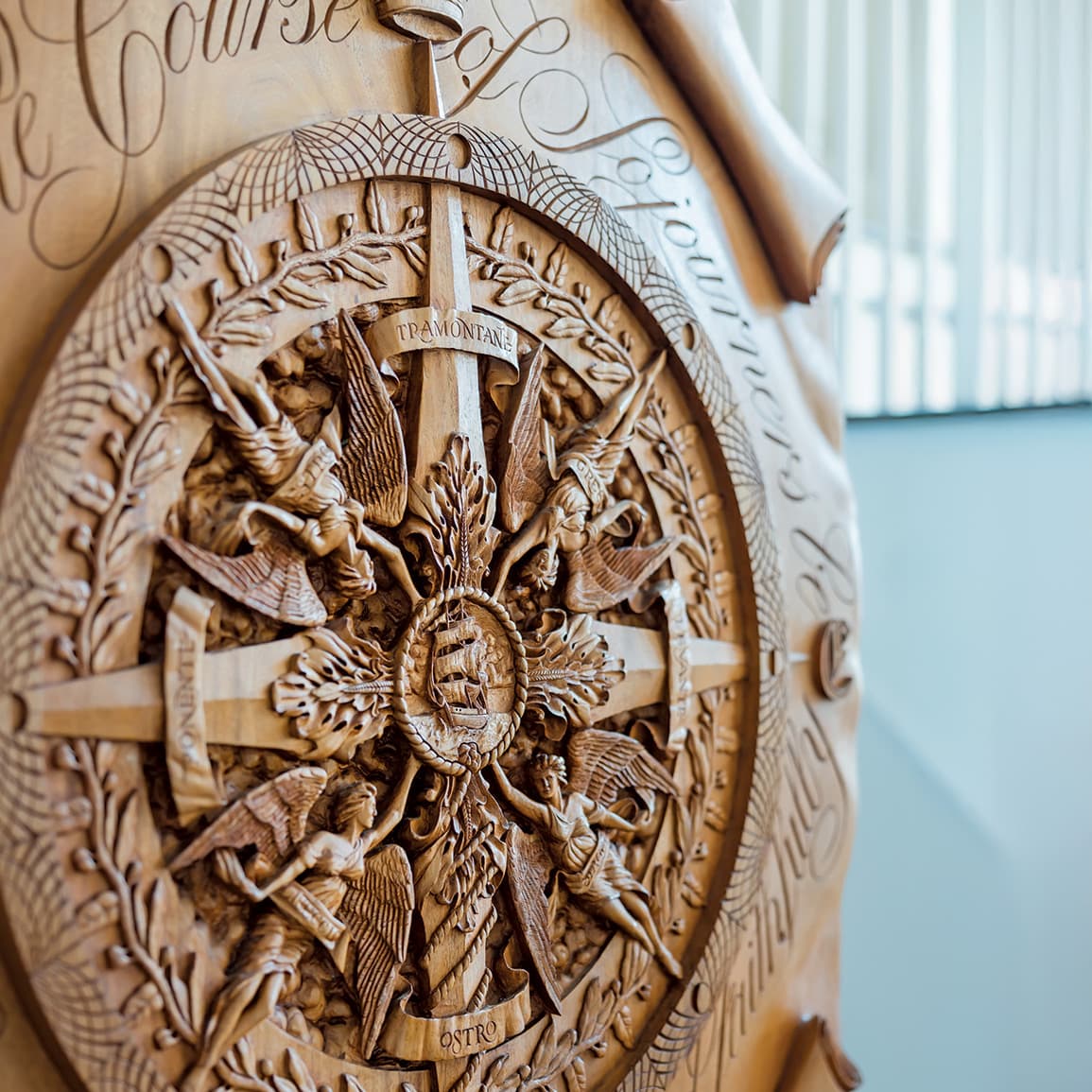
See more of Jake Weidmann's work at jakeweidmann.com. Jake and Hannah Weidmann share more of their story of experiencing God through art and faith on their podcast, “Made to Last.”