Biola University
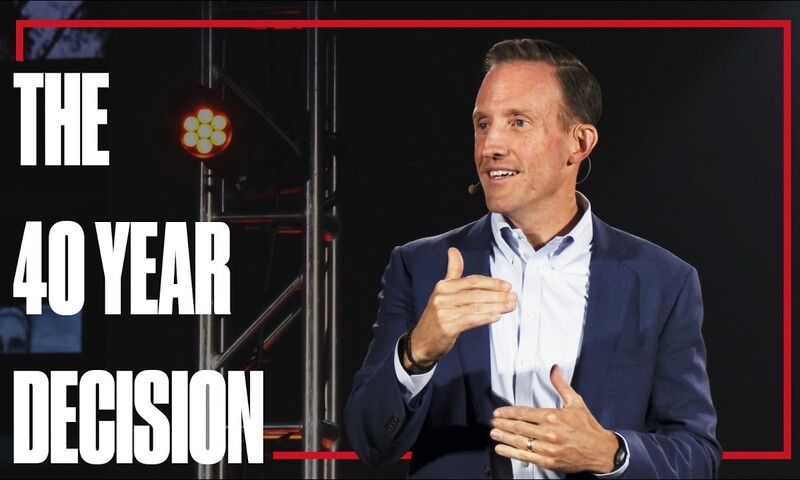
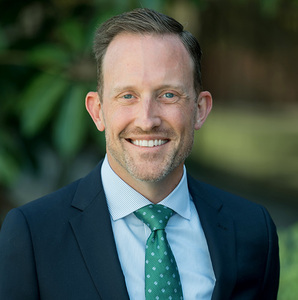
Provost Matthew J. Hall, Provost & Senior Vice President, Biola University addresses parents and supporters at Biola Preview Day. View his address >>
Polished transcript | Approximately 23 minutes
Opening: The State of Higher Education
0:06–1:16
There are more colleges in America than can be justified.
That's perhaps a more controversial statement than you might realize. We have a diminishing supply of 18-year-olds coming along, and we have a lot of institutions of higher learning in this country that, long ago, surrendered anything remotely resembling an education.
An increasingly competitive marketplace is applying some long-needed pressure to bring accountability to higher education in general—including, I'll be honest, Christian higher education.
And I believe that this institution, by the grace of God, because of the faculty we have, the mission we've maintained since 1908, and the faithful supporters and alumni who believe deeply in this place, has its best years ahead of it.
Even in these strange cultural moments, and despite the pressures institutions like ours face—including in a state like California, which isn't always the most welcoming to people who hold historic Christian convictions—we are here by God's grace.
Let me tell you about three things.
1. Explore the Faculty
1:24–6:19
If you want to understand why higher education in this country looks the way it does, among other factors, look at who universities hire to teach.
That presupposes, of course, that they actually hire people to teach—that faculty aren't simply doing research and viewing teaching as an inconvenient obstacle standing between them and their research.
Perhaps some of you have flashbacks to your college years: 200 or 400 freshmen in an introductory class, with a PhD student at the front of the room, and you're wondering, "Wait, I'm paying tuition for this?"
Look at the faculty who are teaching. They will, in large measure, have more to do with shaping your students' experience and worldview than anything else about their college.
It won't be the dorms, the lazy river snaking through campus, or the rock-climbing wall. It won't be the football or basketball team, or even the fraternities and sororities, as formative as those experiences can be.
It will be their professors.
When students sit down on the couch, who's sitting across from them? What kind of counsel and encouragement are they receiving? How are they being formed?
So let me tell you why we take this so seriously at Biola and what it looks like practically.
I tell people all the time that getting hired to teach on Biola's faculty is one of the most rigorous processes anywhere in higher education.
What do we look for?
First, we want faculty who are really, really good at what they do. As President Corey sometimes says, "Excellence in your craft is one of the great apologetics of our time."
We want to raise and maintain a standard of excellence in everything we do, and that starts with our faculty. There is no room for mediocrity.
But many institutions aspire to excellence. We also want our faculty to be faithful. We want them to wholeheartedly embrace the mission and convictions of this institution, to live and model a close walk with Christ—not perfectly, of course, but faithfully. They're involved in their local churches.
Let me explain the process.
Every faculty candidate goes through a standard hiring process that would look familiar at most universities: a search committee, CVs, writing samples, and a full review.
But we do something a little differently.
As you may know, Biola has its Articles of Faith and Statement of Biblical Principles. These are our guiding and governing doctrinal commitments. They're available on our website and explain what Biola University, from our Board of Trustees down, affirms to be true about ourselves, who God is, His Word, and other matters we consider important.
We ask every faculty candidate to complete a questionnaire responding individually to each of those commitments.
We don't simply want someone who can convince themselves they might sign a document if they had to. We want faculty who joyfully, eagerly, and enthusiastically affirm the commitments of this university.
After completing the questionnaire, candidates meet with a member of our Doctrinal Review Committee—a faculty member in theology or biblical studies—for an in-person theological interview.
If they make it through that process, they eventually interview with me. Then they have another interview with me and President Corey.
And if they make it through that, the full package goes to our Board of Trustees. Every full-time faculty member must be approved for hire by the board.
It's a long process, but the reason is simple: This is a sacred trust.
Who we put in a classroom to teach your sons and daughters, your loved ones, is at the very heart of what education is all about. Everything else we do matters, but this is the most important part.
So when you visit a college, look at the faculty.
- Who is teaching?
- How are faculty hired?
- Are they full-time or adjunct?
- If it's a Christian college, must faculty personally affirm certain commitments?
- Does the institution have clearly articulated commitments about Christianity and the truths of God's Word?
Check out the faculty.
2. Explore the Curriculum
6:19–16:57
The curriculum is a close second to the faculty. Think of the curriculum like your household budget: It tells you what you value.
There are many wonderful Christian colleges, even here in Southern California. Biola is different from those institutions—not necessarily better or worse, but different.
And because we're different, we're not necessarily for everyone. But if what you hear and experience as you walk this campus resonates with you and your student, I think you'll find this place is pretty special.
At Biola, our curriculum has three categories.
A. Academic Majors
7:07–9:29
When students come to college, one of their first questions is, "What do I want to major in?"
Sometimes it feels like this existential decision will determine everything about their lives. They worry that if they choose the wrong major, they'll end up living in a box somewhere down by the beach. Maybe that wouldn't be so bad, but we're not going to let that happen.
We expect that whatever major a student pursues at Biola, they should be equipped to compete in the marketplace of ideas and in the economy at the highest level.
We never want to settle for mediocrity. We're disciplined about ensuring that new majors serve our students well and meet a standard of excellence. Sometimes we even close majors if they're not working well.
I'm excited about some of the developments happening on campus.
We're launching new majors in architecture, interior design, and philosophy, politics, and economics (PPE). PPE is an interdisciplinary major that can prepare students for many different vocational paths.
Our existing majors are also continuing to advance.
The newly established Hawk College of Engineering and Technology is growing rapidly. Through the largest single gift in the university's history, it now has endowed chairs that are recruiting top faculty from around the world to teach in engineering, computer science, robotics, and mathematics. We're also seeing accreditation continue to elevate in these fields.
In applied and allied health areas, including occupational therapy and nursing, our students are competing for some of the best jobs available.
If you walk into a hospital anywhere in Southern California and ask about Biola nurses, I suspect you'll see a lot of smiling faces. Our students, both in their clinical rotations and now as alumni, have developed an incredible reputation.
I could go through major after major across the university, but the point is that we're committed to academic excellence and hiring faculty who will help our students excel.
B. Bible and Theology
9:29–11:12
The second part of our curriculum is particularly distinctive to Biola: 30 units of Bible and theology.
We've done this since the beginning. It's something our Board of Trustees is deeply committed to because we believe it is distinctive and formative.
Every student at Biola completes the equivalent of a minor in Bible or theology, regardless of their major.
For the overwhelming majority of students, that's a 30-unit portion of their degree program.
When I ask our alumni, "Tell me about a class that changed your life as a college student at Biola," nine times out of ten, they tell me about something they took in their Bible minor.
I hear about particular faculty members and courses. Students often say, "I didn't choose to take that. I had to take it. It was part of the curriculum. But God used that class in profound ways to change me and my friends."
I hear the same thing from parents. They tell me they've watched their sons and daughters mature year by year in their confidence and personal faith in Christ.
We're deeply committed to this.
Most Christian colleges and universities include some kind of Christian studies component in their curriculum, but nothing close to 30 units—and I would argue, nothing as deep or rigorous as what we expect of our students and the faculty who teach those courses.
It's truly unique to what we do at Biola.
C. General Education
11:12–13:02
The third part of our curriculum is often overlooked, and I'll be honest: I think this third area is one of the reasons higher education is in such a mess.
It's what we call general education.
Over the years, parents have understandably asked me, "Aren't general education courses the same everywhere?"
You take Introduction to Composition, Biology 101, or whatever course is required. Perhaps you remember a general education class you took in college and can't remember a thing about it.
Or you might hear someone say, "Just take it at the junior college and transfer it over. It's faster, cheaper, and easier because it's the same everywhere."
I wish I could tell you it was that simple.
In much of higher education today, some of the most corrosive and subversive ideological agendas are introduced through general education. That's true at public universities and elite private universities.
I don't say that to scare you. I simply want you to recognize that you can look at our culture and see the downstream effects of the miseducation of multiple generations of Americans.
I'm glad to tell you that Biola is trying to do something distinctive in general education. We're not the only institution pressing against the tide, but we're committed to this work.
Our faculty are committed to integrating Christian truth into every discipline. If you take Biology 101 at Biola, you'll see how Christian truth fits into everything you discuss and learn in that class.
But we're also leaning into one of the most significant curricular reforms in Biola's history.
The Good Life Core
13:02–16:57
A traditional degree program is approximately 120 credit units, although some programs, such as engineering and nursing, are different. Double majors can also change the equation.
For a typical 120-unit degree, think of it this way:
- Approximately 60 units in the major.
- Approximately 30 units in the Bible minor.
- Approximately 30 units in general education.
That's the framework we're working with as we move forward at Biola, beginning in fall 2027 and beyond.
What we're developing is called the Good Life Core.
We want to move beyond simply mimicking or following what someone in the UC system says we should do.
There is no virtue in mimicking a failed system.
We're building something that we believe can become a helpful model and resource for other Christian colleges and universities.
The Good Life Core gets at a fundamental question:
What is the good life?
What does it mean for human beings to flourish as those made in God's image?
What does it look like for our communities and our nation to recover the virtues that lead to a free, moral, and prosperous society?
We don't want to isolate Christian truth within the Bible minor. We believe God's truth—whether revealed in Scripture, in nature, or through His common grace—offers an abundance of wisdom to help students understand their role in God's world and society.
Let me give you a practical example.
Beginning in fall 2027, every new student, including freshmen and transfer students, will take a foundational course called Foundations of the Good Life.
This course, along with several others in the curriculum, will have a selective faculty application process. We want our very best faculty—the strongest lecturers and teachers—to lead these experiences.
It will be a cohort experience. During their first semester or year, students will take the course together as a group.
We don't want students walking through this experience alone. We want them to build friendships and be formed together, because friendship is part of the good life.
They'll explore questions such as: What can we learn from Scripture and ancient sources about what it means to be a friend?
They might read something in Scripture one week and Aristotle on friendship the next.
We want to recover some sanity in a confused world by asking what it actually means to live the good life. Students will also have a faculty mentor.
It's going to be an amazing change for us.
We're excited because we believe this will have a profound impact on students. Practically speaking, we also think it will make general education more distinctive and meaningful, while making the curriculum easier to navigate.
Students will understand what courses to take, what comes next, and when they can expect to graduate. And yes, hopefully that means Mom and Dad will know when they can stop paying tuition!
We want students and families to have absolute clarity about where they're going in their academic journey.
So, when evaluating a college, check out the faculty and the curriculum. What are they actually teaching your students?
3. Explore the Community
16:57–23:11
The third and final thing I would encourage you to explore is the community.
I've already said that faculty will likely have more influence than anyone else on your son or daughter. The curriculum provides the structure that mediates much of that influence.
But students will also be shaped by the community they're part of.
You can look at your social media feed and see how the community at a particular institution shapes students' worldviews, relationships, and futures.
We're not a perfect institution. If your family member comes to Biola, they'll discover that—and you will too.
But I believe with everything I've got that this is a special place.
A Community of Believers
17:52–19:08
Biola is one of a relatively small number of Christian colleges and universities in the country where every student who comes here is a professing Christian.
There are other wonderful Christian universities that approach this question differently, and God bless them. Institutions make different choices for a variety of reasons.
But at Biola, we've chosen this approach.
What does that mean practically?
When our professors step into a classroom or meet with students during office hours, they begin with the assumption, until proven otherwise, that the student sitting across from them has a personal relationship with Jesus Christ and trusts Him as Lord and Savior.
Yes, these students are still 18, 19, or 22 years old. They're still figuring things out, just as all of us are.
But their hearts and desires are fundamentally different from those of the world. They want to live for Christ.
And I have to tell you, God is doing something in this generation.
I believe God is doing something in 18-to-22-year-olds, and sometimes people my age are the ones getting in the way.
There's something special about what happens when our students come together on this campus.
Let me give you a couple of examples.
Torrey Memorial Bible Conference
19:16–20:04
Every fall and spring, we cancel classes for an extended period of time. And no, it's not just spring break!
Every fall, we hold our annual Torrey Memorial Bible Conference. We recently held our 96th conference.
For three days—Wednesday, Thursday, and Friday—we cancel classes and bring in speakers from around the world. Some are authors and speakers you would recognize and would probably want to come here.
There is time for worship, teaching, and all kinds of activities.
We intentionally slow things down because we want students to regularly be confronted with and reflect on what God's Word requires of them as they seek to live faithfully in their generation.
They step away from the laboratory and the library for a few days and experience this together.
Cook Missions Conference
20:04–20:45
In the spring, we cancel classes again for our Cook Missions Conference, named after Clyde and Annabel Cook, longtime leaders at Biola University.
We've been doing this for nearly 100 years.
The conference is student-organized and student-led. Students hear from missionaries and global workers about what God is doing around the world and the call to evangelize the least and the lost.
It's an amazing few days, and it reflects something truly unique about Biola.
A Higher and Holier Vision of the Good Life
20:45–21:57
Our commitment to the good life isn't simply about comfort and ease. It's not just about earning a great salary, although our students do compete for great salaries and do very well.
We want to continually hold before our students a higher and holier vision of the good life.
It's not just about temporary things. It's not about what's on your tax return at the end of the year or how much your net worth is.
We want students to consider a higher vision:
How can you join in what God is doing in the world?
How can you say yes to God?
How can He increase and you decrease?
How can you follow Him in holiness, find joy and meaning and purpose in His ways, and be bold and courageous?
How can you take big risks and start companies—not for your own self-glorification, but because you want to serve, give, and contribute to the well-being of society?
I'm encouraged by what I see in our students. I believe they are asking these questions about the good life.
Closing: Make a 40-Year Decision
21:57–23:11
I'll end with this:
Don't make a four-year decision. Make a 40-year decision.
And honestly, it's probably more than 40 years.
Chances are, your student may meet their future spouse here. They'll likely meet the people who will stand beside them as bridesmaids and groomsmen.
They'll meet the people who will celebrate with them when they get their first job. They'll meet the people who will walk alongside them through that really strange decade of their twenties.
They will be shaped and formed here in profound ways.
When you cut through all the marketing materials that every institution sends out—including the really good marketing materials we send out—you may find yourself thinking, "They all just sound the same. How in the world am I supposed to tell the difference?"
I hope that, even if I've done nothing else tonight, I've given you three things to look for:
- The faculty.
- The curriculum.
- The community.
And hopefully, I trust that He will, God will direct your steps and bless you throughout this process.
If Biola University is the right place for your student, we would be honored for them to join this community.
And I'm confident that, by God's grace, they would flourish here.
Editorial note: This is a cleaned-up transcript. The speaker's meaning and sequence have been preserved, but some sentence structure and filler language have been edited for readability.
Hear from the faculty members who spoke at the Biola Preview Day Parent Banquet on October 25, 2026:
- Dr. Arianna Molloy, Associate Professor, Communication - We Walk the Talk: Whole-Person Education at Biola
-
Dr. Douglas Axe, Rosa Endowed Chair of Molecular Biology
Co-Director, Stewart Science Honors Program - Peace Brought Me Here, Joy Keeps Me Here