How easily do those outside the Christian community think we are offended? Are we seen as people devoid of the ability to laugh at ourselves? Or, laugh at all?
We don't hear many people these days aspiring to "be gentle." Being gentle is often seen as weak and impractical, especially in harsh and abrasive times.
What practical changes can we make to be a little more charitable, civil and compassionate in our approach to others? Tim and Rick consider six challenging yet doable resolutions we can take toward cultivating winsome conviction this year.
We have made some progress on race in America, but we have so much farther to go, especially in regards to the ways racial inequity is perpetuated in cultural representations and social, political, and economic systems. Tim and Rick resume the conversation with James White and draw out a helpful metaphor for thinking about these issues on race: groundwater.
Tim, Rick, and James discuss their different and complex upbringings and draw out the importance of the backstory for acquiring perspective. Putting yourself in another person’s shoes and assuming their point of view is difficult and often resisted.
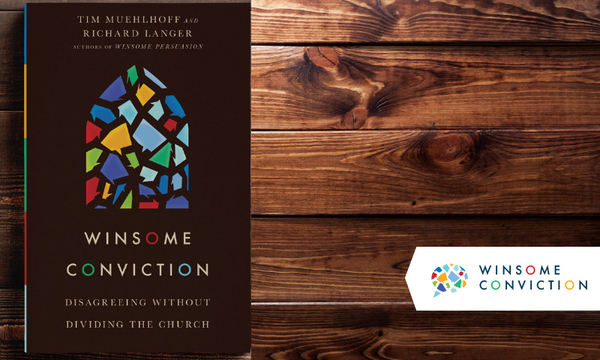
The book offers a guide to help Christians navigate disagreements with one another. In today's polarized context, Christians often have committed, biblical rationales for very different positions.
Dr. Joy Qualls, an expert in political and religious rhetoric, joins Tim and Rick to discuss how polarized news sources contribute to making us polarized people.
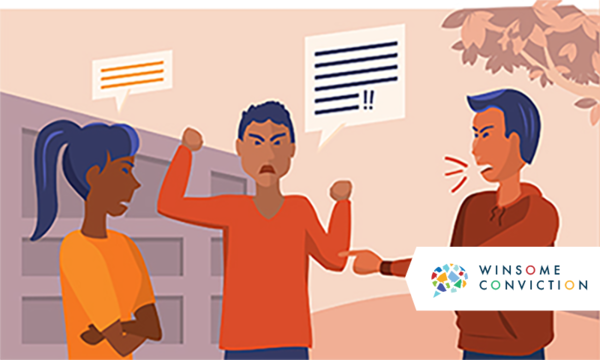
C. Christopher Smith, senior pastor of Englewood Christian Church (Indianapolis, IN), describes early attempts to bring diverse people in his church together to talk as a “hot mess.” Yelling and sarcasm were default modes as members gathered Sunday nights to discuss potentially volatile issues. Out of sheer stubbornness, Smith and church leadership stayed with it as trust among conversationalists slowly developed. Out of that determination and years of experimentation comes a book that serves as a reliable guide to those wanting to follow their example.
About the Podcast
The Winsome Conviction podcast is a biweekly podcast on learning how to deepen convictions without dividing communities. In each episode, hosts Tim Muehlhoff, Rick Langer and Mike Ahn along with frequent guest experts, consider how to cultivate understanding around our most closely held convictions and foster civility and compassion in disagreement.
To submit comments, ask questions, or make suggestions on issues you'd like us to cover or guests you'd like us to have on the podcast, email us at winsomeconviction@biola.edu.