Episode 160: Questioning Your Assumptions About The Bible
The Bible is filled with oddities and hard things to understand. Oftentimes, the Bible itself can be a stumbling block to belief in God and the Christian faith, and many former Christians report leaving the faith because of problems they see in the Bible. Our guest today is John Marriott (Ph.D.) and he has co-authored Is It Really the Good Book?, a book that aims to help people understand and appreciate the Bible as the Word of God and as a wise guide for life. John speaks with Tim and Mike about the assumptions we pick up in our culture that influence our expectations and appreciation when it comes to the Bible.
Transcript
Mike Ahn: 00:02 Hey everyone, welcome to the Winston Conviction Podcast. My name is Mike Ahn. I am the Dean of Spiritual Development here at Biola University. I'm also an associate director of the Winston Conviction Project and a co-host of this podcast. I'm joined with Dr. Tim Muehlhoff, our esteemed senior director of the project, and we are grateful to be led by him.
Tim Muehlhoff: 00:21 Mike, what's fun about uh doing this podcast is you get to have friends on as well as experts. It's kind of cool when uh both of those collide with each other. And today we have a really good friend. We'll tell you about him in a second, but let me set up this episode this way. Uh when I got to UNC Chapel Hill, not Duke, can we be very clear? Not Duke University, but UNC Chapel Hill, I didn't announce that I was a Christian. I actually was on staff with crew, Campus Crusade for Christ. I just didn't lead with that. So when I started my master's, I was privy to some backdoor conversations. And what I learned was even though we're in the Bible belt, uh, UNC Chapel Hill is pretty progressive. And so a lot of my professors and fellow grad students, boy, they had some bad things to say about conservative Christians, particularly about the Bible. Like a lot of comments like, how in the world could you believe a backward thinking book like that that's just filled with science fiction and Christians don't do their own thinking, they let the Bible do all of their thinking. It made me really realize that if we're going to have winsome conversations with people outside the Christian community, a big stumbling block is going to be the Bible. So we need to kind of uh explain to people that maybe some of their assumptions about the Bible are not correct. Uh a good friend of ours, Dr. John Marriott, who is an associate here at Biola University, is a uh teacher at Whittier Christian High School, one of our premier Christian high schools, uh, is joining us. So, John, welcome. Great to be here. Good to see you guys. It's really good to have John, except he's a Canadian hockey fan, and I'm a U.S. hockey fan. And uh I actually decided to invite him on our podcast as soon as the United States won the gold medal over. Winsomeness. Winsomeness. Maybe some vindictiveness. Let me tell you a little bit more about who's being wonderfully quiet right now. I can see the blood boiling. Um, John is uh an expert in what we call deconversion. Uh, Christians leaving the Christian faith. He holds a PhD degree from the Cook School of Intercultural Studies here at Bible University. Uh he's an author of five books on deconversion. Let me tell you, one of my favorites is a book in 2018, John, called The Recipe for Disaster: How the Church Contributes to the Deconversion Crisis. I can honestly say that book introduced me to a bunch of concepts and really made me think deeply about how we're communicating the faith. So thank you so much for writing that book. But that's not the only book he's written. His newest book on deconversion with our own Dr. Sean McDowell. It's called Set Adrift: Deconstructing What You Believe Without Sinking Your Faith, Zondervan Press. And I get to announce, Mike, that uh John and I have just finished a book for Zondervan Press called When Someone You Love Leaves the Faith, How to Stay Close Through Doubt, Deconstruction, and Deconversion. That'll be coming out probably about a year, right, John? I think so. Yeah. So listen, thank you so much for being here. It really is a treat to have friends on the podcast. So welcome.
John Marriott: 03:37 Yeah, it's great. I'm I'm so happy to be here, be back with you again, and to see you again, Mike. Um, happy to be here and talk about this because it's a really important subject. The Bible is uh the heart of why a lot of people end up walking away from the faith. They say, I picked it up and read it for myself, and boy, did it ever surprise me. I didn't realize that there's a lot of stuff in there they didn't teach me in Sunday school.
Tim Muehlhoff: 03:59 That's right. And so the result of all that was the writing of a book for Tyndale called Is It Really the Good Book? Restoring Your Faith in the Bible by questioning your assumptions about it. You you've uh written this with a co-author, Sean Wicks. Can you tell us just a little bit about Sean?
John Marriott: 04:17 Yeah, Sean is a pastor down in Orange County, and we've known each other for a really long time. And I'm more of the um uh more on the research academic end of things, and Sean's right in the trenches. He's dealt with lots of folks who have really wrestled with their faith, knows lots of people who have walked away from that and and regularly engages with people, even on today online with with the with people who are trying to figure out whether or not they really believe that the that the faith of their childhood really is is true. And so uh in our conversations, we recognize that there's not one thing that they have in common, but there is one thing. One thing that everyone who leaves the faith has in common is they come to the conclusion that it's not true and they get there different ways. For some people, it's an emotional hurt or an unmet expectation. But for a lot of people, especially when it comes to the intellectual component, the number one reason underneath that that that heading is the problems that they have with the Bible. And so if you listen to the stories enough, if you're if you're familiar enough with uh deconversion narratives, you read them online or you hear, and and they point to the Bible, yeah, uh, what you'll find is that there's a lot of m uh mistaken assumptions that they have about what the Bible is, how to understand it, and uh because of that, it sets them up for uh for a crisis of faith that in many ways I think can be avoided.
Tim Muehlhoff: 05:42 Yeah. Uh let me read a quote from your book and then share a personal antidote that uh I think kind of relates. You start off with these very interesting quotes to start each chapter of the book. Here's one of them. Bible-believing Christians, those who see the Bible as the perfect word of God, would be horrified to know how often loss of faith is triggered by someone deciding to read the good book and discovering the long litany of slavery, incest, misogyny, genocide, or other scientific absurdities there. Um so let me tell you my antidote. I I have a son who's just you know one of those freakishly brilliant kids. So a friend of his who's doing a PhD at Princeton in theology, they decided not to read the Bible in a year. They read it in a month, one month cover to cover. Now, he was living at home when he did this. So I remember very vividly, he would yell upstairs to me, Dad, listen to this. And he would read a section like from the Old Testament, and I'd be like, that that's in the Bible? He goes, Oh yeah, that's in the Bible. I'm like, oh, okay. Then again, 10 minutes later, Dad, I'm like, what? He goes, listen to this. And I was like, after a while, I was like, Jason, only come to me when you get to the Psalms and only some of them. Only come to me in the New Testament with Jesus, but only some of what he says. Because it does shock you, John, that there are things that you've either forgotten or read for the very first time, and it really sets you back as a believer.
John Marriott: 07:26 Oh, I think so, especially because some of the hard things that we read uh have we've been introduced to them maybe when we were younger, yeah, and we see them in a certain light. For example, the the Noah story, the flood story. Yeah. I remember when my son was young, we painted the Noah's Ark on his wall with uh all these fluffy characters and Noah smiling and giving a big thumbs up and a rainbow going overhead, you know? And uh and and that's that's how you remember it when you're a kid, but as you get older and you look back on it and you reread it, maybe with when you have the ability to step out and look back on your faith with a critical eye, yeah, you say, Whoa, all those did all those people really drown to death in the flood? Yeah, did God wiped out a significant portion or all of the people who were on the earth or in that area at the time. And and you never think about that when you're you're a kid, right? Or when Joshua fought the Battle of Jericho and the walls came a tumbling down. Right, right. Well, they did come a tumbling down, um, and then everybody was slaughtered. You don't think about that when you're the k when you're a kid, but as you read through and you have the ability and you have a bit of a moral compass of your own, and you say, I'm kind of uneasy with this. And there's a bunch of other stuff in here that I'm pretty uneasy with too.
Tim Muehlhoff: 08:42 I remember going with some people from my church to remember the movie Noah with Russell Crowe as Noah. Yeah, and so we're there with a bunch of people from our church and they show the the scene, they show the flood scene. And afterwards we're all walking out, and I remember a couple of them, the younger, younger people from my church, go, uh, Mr. Muehlhoff, we have some questions. And my response was, uh uh, let's go to Chuck E. Cheese. Whoa, I know exactly what you're gonna ask. But to see it on the big screen really changes what you painted on the walls of your uh child's room.
Mike Ahn: 09:17 It does, it does. Absolutely. You know, so again, you know, taking a step back, you're talking about assumptions. And with these assumptions that we bring into the Bible and how we see something, how do assumptions and the assumptions that we have about a person or a topic or the Bible or a book, how do how does that influence how we view that book?
John Marriott: 09:37 Well, I think that assumptions are I don't think you can underestimate them or overstate them because they really set the tone for how you're going to either view a person or view a Bible or view the Bible or something that you you are trying to interpret in the Bible. When Nancy and I, my wife, were married shortly thereafter. I was I had to go on a trip. I went away for about a week, and it was about a five-hour drive from where I was going. And I remember standing at the door, and Nancy was standing at the door, and we were saying goodbye, and I was waiting for her to do what I thought that she was gonna do, and she was waiting for me to leave. And eventually I said, So did you didn't pack me a lunch or anything like that? And and she said, No, why was I supposed to? And I didn't realize it, but I assumed that that's exactly what she was gonna do because that's what my mother would have done, and that's what my mom did. Anytime my dad had to go somewhere or we went at somewhere, my mom packed a lunch. And when she didn't pack a lunch for me, I thought, Oh, who have I married? Yeah, and and does she you know is she that inconsiderate? And that was all because I had an assumption as to what either her role was or what love looked like, and because my assumption was mistaken and misunderstood, it it caused uh you know a a bit of a problem for us. And when you when you go to the Bible with a set of expectations and assumptions, it's like wearing a set of glasses, and you want to make sure that you have glasses that are the right prescription. And if your glasses are the wrong prescription, then they're going to cause you to uh see the world in in a in a way that uh certainly is is less clear, yeah. And and you're going to bring your assumptions to the text of the Bible, and it's going to probably um cause you to s to to to raise issues and questions that if you had the right assumptions or the right expectations of what you were reading, maybe you wouldn't have those same struggles and questions that wouldn't arise. And so that's what we wrote the book for was to say, hey, we think the Bible is a difficult book, it's a messy book, it has lots of questions, it comes out of the distant past, sometimes it sounds like a fairy tale. We acknowledge all of that, but we also think that you might be bringing a set of expectations and assumptions to the book that raise problems for you. And those problems don't necessarily need answers as much as they need to be your assumptions and expectations need to be recalibrated. And when those are correct, some of those difficult questions that you have will just evaporate on their own.
Tim Muehlhoff: 12:14 Yeah, I love what you say in the book. There's a key assertion. You say we're convinced the assumptions that many Christians, current and former, have about the Bible tend to distort rather than clarify its message. And I was recently at a conference, a marriage conference, and the other uh speaker said, Um, talking to the men, men, pick up this Bible and read it. It is God's personal love letter to you. And I thought to myself, has he read Habakkuk? Has he read even Hebrews? You know what I mean? Has he read Hosea? Yeah, he's told to go out and marry a prostitute. That's right. Noreen's written me love letters. Like that would be a really weird love letter. But but going into it with that mindset is really interesting and and would warp how you're reading it.
John Marriott: 13:05 Oh, that's that's correct. Or that the Bible is is uh you know simple and and really easy to understand, and that anybody can understand it. You just have to pick it up and and read it, and you'll which is really far from the truth. Now, on the one hand, we believe in what sometimes is called the perspecuity of scripture, right? Which is a big fancy theological word that just says the main ideas and the big points, if you pay attention, you'll be able to get from the book. God created, there's the fall, God's doing things to to restore humanity. You have the life and the work of Jesus, you have the second coming, like these are big things, the movements in the story that are easy to understand and easy to pick up. But there are just so many things in the Bible that require you to have the right interpretive tools to be able to understand it. And if you come to the Bible thinking that it's just uh it's it's a simple book and it's uh you know like a love letter written to you from God, uh then you're set up for uh you're set up for a problem, I think.
Tim Muehlhoff: 14:00 And Luther remember what Luther said, he said the word of God is like a river on the banks. A baby can crawl along the banks of the river, but it's deep enough that an elephant could drown in it. And I do think we do a great disservice to the Bible to say um it's not at least as complex as Plato's Republic or reading War and Peace. I mean, this is a complex book that is trying to talk about the ways of God, the thoughts of God in a Near Eastern context, which if you don't know the context, it's gonna hurt a little bit. So real quick, John, how I I think our listeners might be discouraged at this point. Like, okay, like uh how much work do I have to do to correctly interpret the Bible to get at what Paul was trying to communicate to the church at Ephesus or the church at Thessalonica? Some people might be like, I think that demotivates me, because I just want to pick it up and get my personal love letter.
John Marriott: 15:04 Well, I I think that there's there's a place for that, right? I think that you can pick up the Bible and you can read it, but you're always reading it from a place, you're always reading it from a time, you're always reading it from a background context that you've inherited from your church or from your your your your family, right? You you're always coming at it from a perspective. Now, I don't think that those perspectives are probably so far off that they're going to distort the general message of the Bible. I think you can pick up the Bible and read it. And when it says things like this, for God so loved the world that he gave his only son, right? I I think that we can understand what that means. I think it's clear that Jesus is returning someday, and I think that Jesus' life and ministry and most of the things in the gospel are are are fairly straightforward on the surface. But all of it is set within a context that you just mentioned, which is the ancient Near East, that is filled with idioms and meanings and um context that would have made uh sense to them that doesn't necessarily make sense to us. There's uh uh economic uh issues, there's uh uh issues of gender, there's um issues um uh just geographical comments that are made. And having an some knowledge of all of that, I think can really help avoid making some uh interpretive errors and help us avoid uh issues and concerns that we would um that that are that are just that we don't have to fall into a trap of if we know some of that stuff.
Tim Muehlhoff: 16:38 And I really want to get at how non-Christians view this because as a non-Christian, I grew up in I grew up in a non-Christian home. I mean, we didn't even go Christmas Easter, we didn't even go to church. But my um grandparents on my dad's side were committed believers. And so every Christmas we got two presents. One, we got something fun, like I don't know, like a a cap gun or or you know, uh hockey stick. Hockey sticks. But for sure the second one was a Bible. Every Christmas, every Christmas. So my mom and dad would say, Okay, look, grandpa and grandma are gonna give you two presents, say thank you for both. We're not saying you have to read the Bible. Just take it and say thank you. And we're like, okay, thank you. So one time, I'm I was a voracious reader in high school. I'm probably 12. I pick it up. I say, you know what, I'm gonna read it. I read all the time. I'm gonna read the Bible. Honest to Pete, I open it up, Sermon on the Mount. First words from the Bible, I read. If your right hand offends you, cut it off. If your eye offends you, pluck it out, and I go, What? What? And I literally close the Bible, did not pick it up until I had become a Christian about a year and a half, two years later. So I so part of me is always a little bit understanding about non-Christians who say, This is what I've heard is in the Bible, or this is what I've read. So, John, what what can we what benefit of the doubt can we give to non-Christians who do approach this, kind of like my grad students at UNC Chapel Hill, who are like, man, that book is crazy in some of the stuff that it contains. What would be a general comment we could offer to a person who has a pretty negative view of the Bible because of the bits and pieces they're aware of and they don't like what they're aware of?
John Marriott: 18:42 Yeah, I think that there's a number of things that we could say, but I think the first would be I think that we might want to acknowledge some of the strangeness of the Bible. I I think that there's real value in being honest and acknowledging that you know what, I get it. Uh, when I read stories of talking snakes, or I read the story of uh Ill um Elijah and the bear or Elisha and the and the bears, where the the bears come out and maul 42 kids. I say, what's going on there? Or the example that you just gave. And we could continue to multiply examples of all of the difficult things in the Bible. So the Bible does sound strange to us at times, it does come out of the distant past. And um, I I do think when it comes to our modern moral sensibilities, it does strike us sort of sideways. So I do think that we can say, hey, look, I I get where you're coming from here, but I think that we can also pause and say, but do you realize that the many of the things that we take for granted in the world today, like freedom, right, you know, individual rights, there's a you know, a list of things that that aren't self-evident and that aren't obvious, and that the rest of the world, prior to the coming of Jesus into the world, did not base their society on. Yeah. But but because of the Bible and its outworkings, uh, we we stand in a place today that's radically looks radically different than if the Bible never came along. So I think just even being able to point out that yes, there's some hard things in the Bible, some strange things in the Bible, but the impact of the Bible that it's had wherever it's gone in establishing society, when it's the impact that it's had on culture, civil rights, etc., rights of women, rights of abolishment of slavery, all of those things do come out of the Bible. So, you know, it it really is the book that has made our modern world in a lot of ways, and and therefore it is worthy of taking seriously, especially if you want to be even an educated person in the modern world, you need to at least know something about the Bible. So I I think that it's an easy excuse to say, ah, there's a lot of weird stuff in there, so I'm just gonna write it all off. That's only one side of the coin. I think the other side of the coin is that the Bible has had a magnificent influence on our world, and we each benefit from it every day.
Tim Muehlhoff: 21:02 Yeah.
Mike Ahn: 21:02 Yeah, you know, that reminds me of my first class in college. My first class in college was um, I didn't go to a Christian college, but my first class was called Bible and Literature. And so I walk in, I was a history major, it's a history professor, and the first thing the professor says is, uh, did you guys read Genesis 1 and Genesis 2? Contradictory. Did you read Matthew 1? Why is it, why is the genealogy a little bit numerically incorrect? You know, pointed out other contradictions in the Bible. Sometimes there's this sense um in culture that the Bible is an anti-intellectual book. Why do you think that um we feel like we we capture some of that anti-intellectual ideas of what the Bible is? Um, do we are we really supposed to believe that these miracles in the Bible, some of these stories in the Bible, are we supposed to really believe that they're true?
John Marriott: 21:50 Well, I want to even go back to the examples that your professor gave. And what's going on there? Are there a certain set of assumptions that he's operating on that the Bible is supposed to meet, and it's not going to meet because that's not what it's intended to be written for. Yeah. So when you go back to the Genesis 1, Genesis 2 issue, Genesis 1 and Genesis 2, as you and Tim know, wasn't written to 21st century modern scientific readers. It was written to ancient people who'd come out of the who had come out of Egypt, who had a worldview that was very similar to the Egyptians and to the Mesopotamians that were in and the Canaanites in their area as far as the way that the cosmos was structured. And Genesis 1 and Genesis 2 is communicating real truth, but it's not real truth in the way that it would be committed communicated to a 21st century audience. If God is going to communicate and write to an ancient people, he can't write in 21st century idioms and he can't write in 21st century customs. He has to write it in a vehicle and in a way that makes sense to them. So the Bible was written to them, but it's written for us, right? So and and we need to keep that in mind. And even when you get into Genesis, or sorry, when you get into the Matthew sections, whether the the where the genealogies don't line up, there are also cultural factors there that explain why the genealogies don't match up. But if we come at those passages and say, oh, clearly that there's a problem here because it's not meeting my expectations for how truth needs to be communicated, then yeah, we're going to find all kinds of problems in the Bible. So at Biola, we think that the Bible is inerrant, which for our listeners means that in the original manuscripts there are no errors. Well, I think we we can all agree on that, and we think the Bible speaks truthfully on everything that it teaches. But the question is, what does it mean to speak truthfully? Does that mean it's always speaking literally? No, it's not always speaking literally. We don't think the trees of the field actually clap their hands. And it doesn't necessarily mean that when it talks about things in a truthful manner, that it's going to map onto the way we think of truth. Now I want to be really careful here. We and the ancient world both believe that for something to be true, a statement needs to match up with the facts of reality. But how that maps onto the to the world looks a little bit different for us as it might have done for them. So for example, if you read the Gospels, you have Mark putting things out of order or in a different order than Matthew. And you ask, okay, what's going on? Is there a contradiction here? And you say, no, what Mark is doing is what theologians call a Markan sandwich. He is taking a really important point and he's placing it between two other bookends in the life of Jesus in this passage, and he's doing it to highlight this point. Now, is it out of chronological order with what the way that Matthew wrote it? It is. But did anybody in the first century say, uh, that's not corresponding to the facts of reality? No, they didn't. But we do, because we come charging into the Bible with our own set of expectations, and we say, uh, it's got to meet those, and it doesn't. And I can't help to think that that's a bit of our own hubris and arrogance in thinking that there could be other ways that other people spoke truthfully about the world, and and uh we miss out on that and we set up ourselves for uh a significant problem. Absolutely.
Tim Muehlhoff: 25:21 You know, John, one thing uh I think that's really important is to interpret the Bible in community. Like the insights that you're given right now for some of our listeners might be absolutely brand new, but that's good. It's good to study the Bible together where people can bring insights of how to interpret, you know, certain things. Like, for instance, when I did become a Christian, uh, I was handed a Bible and they said, start reading. I said, Okay, before I start reading the Bible, I have a question. I'm gonna cut my right hand off and pluck out my eye. And the guy who was great, he kind of laughed a little bit and he said this if I said to you, I could eat a horse. Like, I'm so hungry I could eat a horse. What do you take from that? Let's go kill a horse and eat it? I said, No. He goes, No, I'm kind of using hyperbole to say I'm really hungry. Jesus is not saying cut off your right hand. Because your left hand, you still have it to sin. If you plucked out both eyes, you could still have lustful thoughts. But what's he saying is I mean you take sin really seriously. And I literally said to him, I gotta write that down. That was really good. But but that's why you do it in community. Yes, right? I love that point. Second, I want to comment on your civil rights um point about the Bible. I teach a rhetoric class and we we read every year Letter from a Birmingham Jail, maybe the finest piece of American rhetoric ever written. Martin Luther King Jr. is trying to convince, particularly white pastors, why he's gonna bring his civil rights movement to uh uh Birmingham. And he uses the Bible to do it. He said, Let me tell you why racism is wrong. And he says it doesn't matter culturally, it's God's law. And racism doesn't square with God's law. How do we know God's law? The Bible. So yeah, the the Bible is filled with these oddities and hard things to understand, but it's been used for great good. We we could all also talk about the feminist movement, the suffrage movement, is rooted in scripture.
John Marriott: 27:29 Orphanages, hospitals, universities all find their history rooted in the Christian faith in the Bible.
Tim Muehlhoff: 27:37 Yeah, and it's easy to forget that because we start to quibble about some of these. And again, I love your point to start the whole uh podcast was we're not denying these are there, because they really are. Hey, listen, we didn't even get a chance, John, to talk about your book uh about the eight faulty assumptions that people most likely are carrying as they approach the Bible. Uh so listen, would you come back and we can tackle one of those uh faulty assumptions? Oh, I would love to. It'd be great. So hey, let me just recommend the book again. Uh the book is called Um Ten Things I've Learned from Dr. Tim Muehlhoff. No, I'm sorry. That's probably wrong line. Wrong line. John's laughing, but he's really trying not to make it audible. But he's laughing. No, the book is called Is It Really the Good Book? Restoring Your Faith in the Bible by questioning your assumptions about it, written by Dr. John Marriott and Sean Wicks. Uh, find that anywhere. Amazon, go to Tyndale, all those places. All those places. Check it out. It is really well done. Um it's going to be a little bit challenging in parts, but it's going to expand your view of the Bible. Uh, and let's talk about how to find more about Winsome Conviction Podcast. Uh, you can go to our website with Winsomconviction.com. Uh, there you can find all of our past interviews. Matter of fact, John, we had you on in the past to talk about deconversion and some of your great work there. And we'll have you on in the future when our book comes out. Uh, and so uh sign up for a quarterly newsletter. You can find out all the really cool things that we're doing. So listen, we don't take your listening for granted. Thank you for tuning in.
Authors
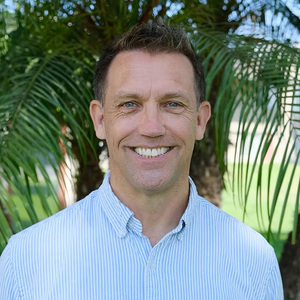
John Marriott
John Marriott (Ph.D.) is a social scientist and educator and a leading expert in the study of religious deconversion. He is a former faculty affiliate of the Human Flourishing Program at Harvard University's Institute for Quantitative Social Science, and his books include The Anatomy of Deconversion, Set Adrift, and Is It Really the Good Book?. He holds a Ph.D. from the Cook School of Intercultural Studies, where his dissertation focused on deconversion from Christianity to atheism.

Mike Ahn
Mike Ahn (Ph.D.) is the Dean of Spiritual Development at Biola University in La Mirada, California where oversees the various departments in spiritual development: chapel programs, worship teams, Torrey Conference, student ministries and pastoral care. He is a graduate of Haverford College (B.A., History, ’01) and Talbot School of Theology (M.Div., Spiritual Formation, ’09; Ph.D., Educational Studies, ’22). And he recently accepted the invitation to join the Winsome Conviction Project as a co-director, where he will be leading training programs and periodically helping to co-host the Winsome Conviction Podcast.

Timothy Muehlhoff
Tim Muehlhoff (Ph.D.) is the Senior Director of Biola’s Winsome Conviction Academy that seeks to reintroduce compassion and civility into our disagreements. He is the co-host of the Winsome Conviction Podcast where people with differing viewpoints are brought on for engaging dialogue. Tim has written extensively in the area of cultural engagement and conflict including I Beg to Differ, Winsome Persuasion, Winsome Conviction, and his newest book (co-written with Sean McDowell) is End the Stalemate: Move Past Cancel Culture to Meaningful Conversations.