Episode 159: Engaging Critics In Content And Tone
There are two levels of communication - the content level, which involves arguments and reasons, and the relational level, which involves the amount of respect, curiosity, and friendliness between individuals. Our guest today, Dr. John Lennox, models communicating at both levels in prominent debates, and we would do well to learn from his example. Tim and Rick reflect with Dr. Lennox on these two levels of communication in two of his previous debates that have left a lasting impact: one with the late Christopher Hitchens and another with Princeton ethicist Peter Singer.
Transcript
Tim Muehlhoff: 00:02 Welcome to the Winsome Conviction Podcast. My name is Tim Muehlhoff. I'm joined by my co-host, Dr. Rick Langer. Um Rick, one of my favorite uh segments that we do, we we we so enjoy doing this is called People Doing It Right. And we've been amazed. This is local people, these are these are our neighbors doing a great job, but every once in a while we find somebody on not on the world stage who's doing it great.
Rick Langer: 00:31 And in the world where so often you get the opposite, that's pretty cool, right?
Tim Muehlhoff: 00:35 Yes, that is really cool. So um today when we think of Christian apologists, boy, uh Dr. John Lennox is at the top of the list. He he has engaged the best and the brightest of people who just disagree with the Christian worldview. Let me tell you a little bit about John Lennox. Uh he's emeritus professor of mathematics at the University of Oxford, uh, emeritus fellow in mathematics and philosophy of science at Green Templeton College. He's lectured on religion and science at many prestigious institutions around the world. He actually made a trip to Biola University once, I think, if I'm correct.
Rick Langer: 01:12 He did.
Tim Muehlhoff: 01:12 He did. And he's publicly debated uh the top uh people today, uh Richard Dawkins, Christopher Hitchens, Peter Singer. And what struck us with his autobiography, which is such a gift, Rick, to the church. Um, it's called John C. Lennox: My Story. I love the subtitle because it's really true, the autobiography. It is a spiritual and intellectual autobiography. So just don't think this is like an apologetics primer. It really is his spiritual journey in the role of his father and his parents. It's really amazing to read. But he has done such a good job engaging um these critics, both content and in tone. And that's why we thought it'd be so great to interview Dr. Lennox on our podcast. So enjoy this interview as we ask him uh some of the questions we had reading his autobiography. So, Dr. Lennox, what I love about what you model for us is I'm a communication professor, and we know that there's two levels of communication, not one. There's the content level, which is incredibly important. Those are our thoughts, reasons, arguments, but there's the relational level, which is the amount of respect, friendliness, um, admiration, acknowledgement between two individuals. And you do a great job with two individuals of modeling what this looks like, uh, both Christopher Hitchens and Peter Singer. But let's start with Christopher Hitchens, who, of course, our listeners may not know is the New York Times best-selling author of a book called God Is Not Great, How Religion Poisons Everything. But you mentioned that before the debate, you actually got together to have a conversation before the debate, uh, to just get to know each other. Um how how did that affect the actual debate, just getting some time with him outside the official on-stage discussion?
John Lennox: 03:17 Hard to answer that, but I think it had a real effect because uh Hitchens had no idea who I was. And when I met him, he was well, he'd consumed a fair amount of alcohol. And I said, It's very interesting to meet you. I said, because I see that you're a contrarian. He said, How do you know that? Well, I said, I read your book. That one statement changed everything. He said, You what? I said, You heard me, I read your book with that title. And he was amazed. Well, he said, I haven't read your books. But that doesn't matter. The impact had been made. He saw that I'd taken him seriously enough. And I said, Your book raised a big question in my mind. And he said, What's that? He was getting curious, and I said, Well, it's that so many of your arguments come from one single source. He said, Do they? I said, I think most of them do. What's the source? Tom Payne. He said, You know you're right. And he was as affable as he could possibly be after that off stage. Of course, he was ranted and raved at me on stage, and in a most idiotic way, because he handed the thing to me, really, by his ranting and raving about religion poisons everything and so on, which I just gently pointed out that the kind of poisoning he was talking about was something that Jesus agreed with. And I said, look, Christopher, I think if you'd really followed the New Testament at all, you'd be on his side instead of against him. Because the things you point out that are unacceptable in religions of different kinds, Jesus pointed out as well. And he had no real answer to that. Did that move him at all? How can you tell? Christopher was uh a clever person that kept his reactions close to himself. But it is interesting that towards the end of his life, he had quite a few Christian friends. He was privately treated for cancer by Francis Collins and things like that. And if you want to find out about that, there's a very interesting book by a friend of mine from Alabama who set up all of these high-level debates, Larry Taunton. And he's written a book called The Faith of Christopher Hitchens. It is very interesting. Not that Christopher became a believer, but exactly what conversations he had, which were many more than I had.
Tim Muehlhoff: 06:27 But but I love the principle of acknowledgement. You acknowledged his book and you read his book and you took his book seriously. What a wonderful way to frame a conversation by saying, look, I've read your stuff, and it is thought-provoking. And uh what a wonderful way to set the stage for that. And we could probably do more of that to understand a person's argument before we launch into our rebuttal.
John Lennox: 06:55 I think that's absolutely right. But the important thing about it is that I had picked several things out of the book. It's very easy to say, I've read your book, and then say nothing else. And it's important to say something else, that you've actually read it and gained something out of it that's interesting, that leads to further questions. And so that leaves the path of open friendliness much more open than simply saying, I've read your book. Well, so what?
Rick Langer: 07:28 Yeah. Did you find things in reading, and I would, you know, be it Dawkins or Hitchens or whoever, but you've you've read a fair number of these atheists. Are there things that you look at and say, you know, this person made a really good point, or there's real value in this argument, or I learned something from it. Have you had moments like that that you look back and say this is a good thing? Oh, of course, yeah.
John Lennox: 07:50 If you can't learn from everybody you meet and every book you read, you're not in education properly, quite honestly. Uh, I think that's that is extremely important. I mean, if you take something as extreme as the attitude of someone you will know well, uh Friedrich Nietzsche, and his discussions on atheism, that if a person follows atheism logically, they have they destroy all Christian values. That's a hugely important insight. And the fact that an atheist has reached it is quite remarkable, especially when some of his much lesser uh disciples, like Dawkins and Hitchens, haven't seen it.
Rick Langer: 08:41 Yeah, Nietzsche's an interesting guy that way. So I I had uh one of the professors where I uh at the university where I got my PhD was a very renowned Nietzsche scholar, so I got sucked into a couple of seminars on Nietzsche just, you know, by the current that was blowing through the department. But it took me a whole semester to get over just reacting to the kind of jarringness of Nietzsche. And somewhere in the course of events there, I had an interesting moment where I was reading a section from, I think it was this, this was uh the Genealogy of Morals, but he describes this uh a kind of an ethos of wimpy, whiny people who refuse to just take life by the, you know, by the handles and ride it like a bull if that's what it is, but say, you know, life is all we've got, and I'm gonna make the most of it. And I'm going, actually, it hit me that this is kind of a classic example of C.S. Lewis's argument in Abolition of Man. There's no new moral judgments, really. What tends to happen is somebody takes a single moral judgment out of the Tao and throws away to all the others. And I realized what Nietzsche was describing to people I don't like either. And he's making a good argument about why I don't like them. And the only problem is he's thrown out everything else. But that was its own insight for me. And it was a valuable thing. The other thing it did was it really opened me up for having meaningful conversations about Nietzsche and enjoying seminars that otherwise I might have simply endured, because I had one of those moments where I it was kind of an I get it moment, as opposed to just I react to it moment. Um, so anyhow, that I yes, that example of Nietzsche, I think, is a good one and a lot of currents that go through his thought are that way for me.
Tim Muehlhoff: 10:32 Um, one of the most interesting parts of uh your autobiography for us was your conversation with Peter Singer. And could you, Dr. Lennox, just very quickly, many of our listeners probably are not aware of who Peter Singer is and why some of his views are seen as being quite provocative. Could you just bring us up to speed very quickly with Peter Singer and then uh would love to talk about your discussion with him?
John Lennox: 11:03 Peter Singer is an Australian academic who holds a very prestigious chair at Princeton, so far as I recall, in the sphere of ethics. He, on the one hand, is greatly praised for his work on preventing cruelty to animals, uh, the kind of vast chicken farms that aren't looked after properly, etc., and care for the creation. He's very much a champion of that. On the other hand, he is reviled by many people because of his very radical views on the treatment of fetuses or infants that are defective. And he and his co-worker, who's called Helga Kuhse, once argued that parents should be given a license that they could uh essentially kill uh infants who were, in their view, not viable because of some serious birth defect or disability. And that made him infamous. And so tempers were very high and polarized, and I was invited to have a debate with him in his home country of Australia, in Melbourne Town Hall. And uh before the debate I read most of what he'd written, and I got many hate letters, and they were very sad because they mostly came from Christians who didn't seem well people who claim to be Christian, telling me that I should go and attack him and eviscerate him and berate him and all kinds of things, short of physically uh sticking a knife in him, that kind of that kind of thing. And I thought, what is this? Is this uh the way of Christ? And of course it wasn't. And so when I uh stood up to greet the people, I said I disagree with some of uh Peter Singer's views very profoundly, especially his views on ethics and the disabled. But I said, I think these views are actually a product of his atheism, and that's what we're here to debate. But before we do so, I think I would like to recommend one of his books that all of us should read, because I found it myself as a Christian as a huge challenge. And its title is The Life You Can Save. And I spoke a little bit about that. And it was that that prompted his response afterwards. He shook my hand before we left the platform and he said, I have never ever in my life been treated by a Christian like that. And that spoke volumes, you see, absolute volumes. Uh it was a very interesting interaction, as you saw, for many other reasons as well, but that that is the thrust of it. And in fact, in honor of that response, he invited me to a special private uh lecture he was giving the next night in one of the art galleries or museums where he talked a bit about his life. Uh, he's from a Hungarian Jewish background, and of course, uh in the shadows there there was a whole awful problem of the Holocaust. But it was a lesson, really, that by stating the truth about my attitude to his views and simultaneously uh commending him for writing one of his books, that got through to the audience very clearly.
Tim Muehlhoff: 15:12 Boy, that's what we're missing today is the simultaneous nature of both disagreeing with the person, and and you make no bones about the fact that certain views he has you are absolutely opposed to, but at the same time recommending uh a position he has that you actually learn from, and that that was his book, The Life That You Can Save. I think we're missing that today in the argument culture. We only do the first, let me just list all the ways that I disagree with you, uh, and we're missing the second part.
John Lennox: 15:44 That's because we're not asking a very simple question. If we're discussing something, either publicly or privately, we ask the question, or we should have I got anything in common with this person and their views? And that often requires a bit of research. But if you can flag that up with them and they see that it's genuine, that can change the dynamic of everything. And you know, it's funny, even at a trivia level, I'm often met by people who say I'm an agnostic. And I say, that's very interesting. What do you think the word agnostic means? Well, it means I don't know. Oh, well, I'm an agnostic too, I say. Are you? Yes, I said. Otherwise, I'd have to claim to know everything. There are lots of things that I don't know. So I'm an agnostic. Now tell me, what's the biggest thing that you don't know? Because maybe I know something about it, and vice versa. Well, that's an approach that knocks most of them down because they've never met it before. Of course, many of them don't believe that at all. They think agnosticism means I don't know and you can't know. And I usually joke with them about that as being a beautiful example of incoherence. If you don't know, then how can you know that I don't know? It is just silly. But that's one of those cases where you can identify where you wouldn't think there's any possibility of identification.
Tim Muehlhoff: 17:33 I love you're not going for the jugular, as those emails had suggested. Can you comment on something you say when you read those emails? You you made a very interesting observation. Um, they are so convinced they are right that it legitimizes any kind of behavior.
John Lennox: 17:54 Well, uh, uh this is the realm of almost uh certainly authoritarian but totalitarian thinking. And we're getting it at the political level of the world. People who simply believe they have the power and might makes right, and they're absolutely right, and there's no way of talking to them. And that is very dangerous. That's the dangerous side of what people called fundamentalism. I say that carefully because they'll also say the Amish are fundamentalist and they aren't exactly harming people with bombs and the rest of it. But it's the idea that I have the truth, nobody else has it, there is no other truth. If you don't agree with me, then that's it. We have nothing to discuss. And that's a very dangerous position because you're locking yourself in your own castle and you're not open to criticism. And therefore you've stopped. Well, you've not only stopped learning, I suspect you've stopped thinking, and you're becoming a danger to people around yourself. And sadly, we have far too many of those people in public places today.
Rick Langer: 19:14 Let me pick up something you mentioned about um Peter Singer. Uh and that is that his, you know, the background being Hungarian Jew, uh, experience that he had in the Holocaust or his family did. Uh that was also true of my Nietzsche professor, Bern Magnus. Uh, I believe he had been in a concentration camp when he was like seven years old or something that and was liberated. So one of the things that I think is is really valuable, it isn't just listening to other people's arguments and conclusions, which is we've already identified the value of reading the books, understanding what they're really saying, things like that. Singer's a great example of that where you realize, oh, he really has, in some ways, a very rigorous ethic that we tend to think is flamingly lax because he's okay with killing uh a person who's who has a disability or something. Well, that's a byproduct of whole long current of his thinking that is often exceptionally demanding ethically in ways that most of us would shy away from. I think some of that probably comes up in the book you mentioned about, you know, the life that you can can save. Um, that said, the other interesting thing is say, what is the backstory? Sometimes people ask this question rhetorically and say, how could he possibly believe that? It'd be great to change your tone of voice and say, how can he possibly believe that? Let me find out. What's the backstory that led him to think that way? And uh Tim and I have done been doing this for for years, and we're amazed at the stories we hear when you just basically ask a person, tell me the long story of phone and score. What are what are these influences? And as we mentioned, the Holocaust experiences, is it a shock that that shapes a person, ethical reason? They try to make sense of some of these things that are just incredible, and they come up with a particular path for doing that, but oftentimes it isn't raw insanity, it's a relatively natural response to actual experiences that have happened in the past or sometimes particular passions they have. And that that curiosity that you mentioned so many times, I think to say, yeah, how could they possibly think that? Well, good, find out. Let's have that be the focus of the conversation. Tell me the story. And I think you've modeled that with uh uh several of the people we've talked about as we've chatted here of that genuine hear the story. And it's interesting, it sounds like Singer was a little reluctant to go into that in a broader public place. So it was a private uh, if I got that right, kind of a private setting where that came out more. Is that correct? Probably.
John Lennox: 21:51 I what we're talking about here, I think is the difference between intellectual response. And emotionally intelligent pastoral inquiry. And we need both. Putting it another way, you often have to answer a question. But more often than one realizes, you have to answer the questionnaire in terms of their experience, their background, their story. And this is the first time in this conversation we've used the word story, and it is hugely important because if you can set an emotionally warm scene, genuine, that permits a person to share part or all of their story, you change the interaction dynamic permanently. And sympathy, even listening to another person's story without necessarily commenting on it, is one of the most powerful things we can do as Christians. Even with each other, not simply with strangers. Because these days everything is against even the creation of a story because of the addiction to technology, which is stunting life and producing great anxiety, as Jonathan Haidt has pointed out in his book, which I believe every parent should read. But story is hugely important. And after all, the Bible is a narrative, it just happens to be big enough to be able to fit us into it. And it's true. And I I think to get across in the end that you have a story, a very big story, from the beginning to the end, so to speak, it's what people are desperately looking for. Where can I find a story that's big enough to fit in? And I think uh that is an increasingly important task because uh we've been talking about these new atheists, but their day is gone. People these days are far more often asking questions of meaning and purpose. Where can I find value? How can I see myself as a person of value? And that is where I believe that we can communicate the story of Christianity, the large biblical meta-narrative. And uh that's one of the main goals I find, which is why I write books about scripture, in order to show my contemporaries that this story is easier to understand than you think and deals with the biggest problems of our existence. And it comes very close, very near to each one of us.
Tim Muehlhoff: 25:08 What a powerful reminder. Um to wrap up the segment, we we were curious about something you described, a scene in Boston in 2021 when you spoke at the Veritas Forum. Uh where a discussion partner was Professor Alan uh Gooth? G U T. Gooth. Gooth. Yeah. Um and at one point you offered a critique of evolution, and you felt that the audience started to get very um antagonistic. And you write that you were tempted, but didn't, to say something like, This is what you put in the autobiography. I thought I uh to say to the audience, I thought I had been invited to a university context where big ideas would be welcome. Instead, I find a crowd of what look like angry children who are locked in a closed universe of their own making. Shame on your lack of real intellectual curiosity. Now, we're thinking about playing with an idea called winsome confrontation, where we do actually confront people on certain things. This seemed like an opportunity to do it, but but you didn't. We were curious why you didn't say something like that to the audience and confront them. What was your thinking process of not doing it?
John Lennox: 26:26 Oh, it was very simple. The anger was so obvious. I really felt that to tell them what they looked like would be to go over the top, and some of them might have lost their tempers. And I wouldn't have been surprised if there'd been a modest amount of jostling and possibly even violence. It was very tense. And I thought that needs to be defused. A soft answer turns away wrath, that is human wrath. And to look at those folks, it was an absolute tragedy. Now I'm not sure if I was critiquing evolution or not. What I was critiquing was atheistic naturalism as an interpretation of the universe and saying that there is an alternative. And it's the theistic worldview, which is highly respectable. In fact, it forms part of the base of modern science. And they did not enjoy it at all. The very odd thing was it was a forum where the invitations stated that they were here, the universities, uh, in Boston, at the Harvard MIT Faculty Club, talking big issues of life from a Christian perspective. And it was me introducing the Christian perspective that caused all the anger. I just didn't feel it was an opportunity like Elijah had when the prophets of Baal were cutting themselves and yelling at Baal to save them, and he mocked them. There are some situations so ridiculous that it's right to be angry and mock. The Lord mocked the people who were uh selling birds and sacrifices in the temple for their total incomprehension of what the temple really was. And you have to choose where you do that kind of thing. And looking back, I don't regret not doing it at all because I had a sense that there's something actually quite dangerous here that is not going to further the cause of the of the gospel. So I stopped short of that kind of treating them like little boys. It would have been regarded as a deep insult. And I'm not sure that that would have been a right thing to do because there are some good and godly people among them.
Tim Muehlhoff: 29:12 What a great uh communication principle called feed forward, where I anticipate the effect of my communication, what it'll have on a person or a crowd. What a great reminder, what the book of Proverbs says, a word spoken in the right circumstance.
John Lennox: 29:27 Yes, there's another way of putting that that I found very important. When you're preparing, don't think very hard of how you can be understood, but think even harder about how you might be misunderstood.
Tim Muehlhoff: 29:45 Yeah, that's really good. Well, Dr. Lennox, thank you so much for taking time uh to be with us. Um uh we know it's getting close to dinner time on your end.
John Lennox: 29:58 Thank you so much for having me on.
Rick Langer: 30:00 Well, thank you for joining us for this episode of the Winsome Conviction Podcast. Uh, we'd love to have you become a regular listener. We'd love to have you subscribe to the Winsome Conviction Podcast. Also give us a rating. That's a wonderful thing for us. And share the podcast with a friend. Uh, it's it's uh word of mouth, it's always the best way to share the things that we're doing. We'd also encourage you to check out the winsomconviction.com uh website with a lot of resources we have there for people who are interested in in uh kind of contributing to the conversations that that are compelling in our culture, but doing in a way where Christ is reflected in their words and conversation, not simply the content, but the way they present themselves to others. So that's one of our great concerns. Thanks for joining us, and uh we'll look forward to having you join us again for near episodes in the future.
Authors
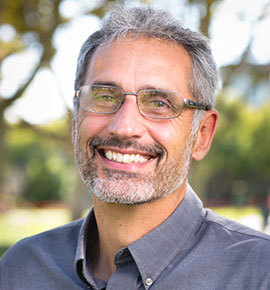
Rick Langer
Rick Langer is a Professor of Biblical Studies and Theology and the Director of the Office of Faith and Learning at Biola University. He specializes in the integration of faith and learning, and has also published in the areas of bioethics, theology and philosophy. He has a passion for helping Christians of all ages understand the connection between the Gospel and all the diverse facets of the created order in which we live. Prior to coming to Biola, he served for over twenty years as a pastor at Trinity Evangelical Free Church in Redlands, California.

Timothy Muehlhoff
Tim Muehlhoff (Ph.D.) is the Senior Director of Biola’s Winsome Conviction Academy that seeks to reintroduce compassion and civility into our disagreements. He is the co-host of the Winsome Conviction Podcast where people with differing viewpoints are brought on for engaging dialogue. Tim has written extensively in the area of cultural engagement and conflict including I Beg to Differ, Winsome Persuasion, Winsome Conviction, and his newest book (co-written with Sean McDowell) is End the Stalemate: Move Past Cancel Culture to Meaningful Conversations.

John Lennox
Dr. John C. Lennox is Emeritus Professor of Mathematics and Fellow of Green Templeton College at Oxford University. He is the author of many books, including God’s Undertaker: Has Science Buried God? And God, AI, and the End of History. His most recent book is My Story: A Spiritual and Intellectual Autobiography.