Episode 158: On Being Winsome With Dr. John Lennox
Oxford University mathematician and Christian apologist Dr. John Lennox is no stranger to intense debate, and he’s exchanged ideas with some of the foremost atheists including Dr. Richard Dawkins. Yet, he characteristically demonstrates friendliness, kindness, and care with his disagreers. On today’s episode, Tim and Rick speak with Dr. Lennox about why bother engaging in debate, the importance of balancing thoughtfulness and friendliness in debate, and the influence of spiritual battle during times of debate.
Transcript
Rick Langer: 00:02 Welcome to the Winsome Conviction Podcast. My name is Rick Langer, and I'm a professor emeritus here at Biola University. I was the director of the Office of Faith and Learning, but also the co-founder of the Winsome Conviction Project, which I've worked with for several years now with my good friend Tim Muehlhoff. And Tim, who do we have joining us today?
Tim Muehlhoff: 00:20 Well, you know, Rick, we're always looking for people who kind of embody um what Peter was saying to give a reason for the hope that is in you, but to do with gentleness and reverence. And it's harder to find people who are representation of that. But we are so pleased to have a guest on today who we really do feel like uh is really good at speaking truth, but doing it in love. And that is uh John C. Lennox. He's the emeritus professor of mathematics at the University of Oxford, an emeritus fellow in mathematics and the philosophy of science at Green Templeton College. He has lectured on religion and science at many prestigious institutions around the world. And he's publicly debated some of the who's who of atheism, which would be Richard Dawkins, uh, Christopher Hitchens, uh, Peter Singer. He's also the author of many books, not just books about science and mathematics, but also books about how to interpret the Bible. He has a wonderful book on revelation. So we are so grateful that Dr. Lennox would join us. So, Dr. Lennox, uh, greetings from across the pond.
John Lennox: 01:31 Oh, thank you very much. It's a delight to be with you.
Tim Muehlhoff: 01:36 Uh, we've heard you're experiencing a heat wave of some sort.
John Lennox: 01:40 Yes, it's the hottest June day in recorded history today.
Tim Muehlhoff: 01:45 Oh my goodness. Well, we are doing this inside. Um, you've come out with a wonderful gift to the church, and that is your autobiography called John C. Lennox, My Story, a spiritual and intellectual autobiography, S P C K Publishing. And uh, it what a gift to us that not only do you talk about your journey, both spiritually and intellectually, but you talk about these interactions that you've been able to have with some leading individuals. And uh, one quick question would be: I think some people would say, like, why even bother to debate somebody like a Christopher Hitchens, who is obviously equally passionate about his perspective. So why even bother to debate like a family member or a coworker when I know that they're fairly entrenched in their position? Why bother?
John Lennox: 02:39 Because the first obvious answer to that is Hitchens and Dawkins, they were public intellectuals and have colossal influence. And if they're never challenged in public to show that there's a real credible alternative to their atheism, then they win in the public mind by default. And as a result of that, they've had a heyday, it's I think over now, but they've influenced thousands, if not millions, of young people, because those young people only heard essentially one side of the story. So that's why it's hugely important to do it. You don't do it directly in order to see them converted, although that would be uh wonderful if it happened, and it has happened in the past. There was a man called Soul of Tarsus. But the point is that in the public arena, you're speaking over their heads to the public that are watching, who are really interested to see what the alternative is, and that's why I've done it.
Rick Langer: 03:51 You know, just as a follow-up on that, I've I've had this question from uh so a couple of students of mine. I I have done uh workshops with kind of left-leaning people and right-leaning people, you bring them together for a day and they you know talk about their differences of opinion. And at this, in this level, it's a very low-level thing. It isn't a public matter. Uh, and my student asked me, well, why do you bother doing that when you know people will walk out of the room uh with the same opinion? So it's kind of the same as Tim's question, but the the the level that it's happening, this is probably true for a lot of our listeners, is at a level where no one other than the people in the room are likely to hear it, or you know, your close friends, what do you feel? Is there are there things that still say, yeah, even when you know that you're gonna be talking to some people who just fundamentally disagree, you're in a workshop with people who are kind of committed progressive leaning and committed conservative leaning, there's a value to those conversations too. Would you say that there is? And if so, what would be a good thing for people to come to mind, to bring to mind when they think about that when they aren't going to be standing up in front of a stage of a thousand people?
John Lennox: 05:00 I think if people, especially Christians, are used to getting up and walking out of a room, they need to learn to be Christian. In other words, they need to realize that part of the learning process is to listen to people who have an alternative viewpoint from yourself. And that's one of the most enriching experiences in life. I started out very early, in fact, in my first week in university. I wanted to befriend people who did not share my worldview. I wanted to hear why they believed what they believed, and discuss with them, if they wished to, why I believed what I believed. And I've been doing it all of my life. And I think it's one of the ways to deep friendship, and it's a very superficial uh community that simply clashes all the time. We need to grow up a little bit, and there's a huge need for that in the world today. And I I believe too that if we adopt the attitude of the Lord Jesus and his apostles, we can become role models and teach students to listen to, not snap quickly and react rapidly, and to try to explore what people think who disagree with them. They might even learn something about these other people and begin to understand them. So all of those reasons, we need to get out of this scratchy community type thinking. And if you can facilitate that among students, well, you're starting in the right place.
Tim Muehlhoff: 06:46 Oh, thank you. We had Arthur uh Brooks on our podcast, and I asked him, we asked him, what would be one thing we need to do? He said exactly what you just said. He said, we need to grow up. Like we need to be mature how we approach each other. And Dr. Lennox, let me mention another book that I think would be great to read alongside of your autobiography, is a wonderful little book you wrote called Have No Fear, being salt and light, even when it's costly. And you start that book by saying we need to ask more questions and be curious. And so this is a wonderful book I would suggest to our listeners to read alongside uh reading your autobiography. What I love about your autobiography is you kind of bring us from your very first debate and you take us through this journey. But what's wonderful is you you explain to us what you're learning in the process. So very quickly, uh, I thought this was interesting. In chapter 17, you describe your first direct involvement in a debate that occurred in Norway in 2003. Uh, and after it was a three-way debate. Um, and afterwards you make this observation. This, my first debate, reinforced the importance of two things thorough preparation and being friendly. Uh, might you unpack both of those, but particularly what you mean by being friendly towards people you disagree with?
John Lennox: 08:13 Well, actually, it was a two-way debate. There were two atheists against me. They were teaming up on you. But well, in a sense, one of them sadly had no idea that there was any intellectual defense for Christianity, and he hadn't prepared. And to be fair to him, it was impressive to listen to, and it caught the audience by surprise. He apologized and more or less told the audience that he hadn't a clue what the other two of us were talking about. The other person was a professor of physics who really had got his arguments together. So it was a very salutary lesson for the young sociologist. And it also showed the audience that it was possible for people, even on the atheist side, to be honest and in a sense to take the blame upon themselves. The whole question of friendliness needs certainly to be described because friendliness does not mean compromising with the truth. And that's very important. What it means is that you have a disposition that comes across to other people with the following characteristics. First of all, that you're interested in them as people. You want to know them so you ask questions about who they are, what they're interested in, and possibly what they do. Then, secondly, that you take them seriously enough that you're prepared to listen to their questions. And thirdly, that you take them even more seriously, that you're prepared to think about their questions and search out an answer to their questions. Now that often makes a very deep impression on people because they expect Christians to be people that pretend to know everything, which is a disastrous attitude. They have no idea that I, as a Christian, would necessarily find them interesting or listen to them or be prepared to tease out their questions. So it's normal ways of making relationships and being friendly, not with a view to giving them a message of some kind or other, but of getting to know them so that you understand them enough to say things when you get the opportunity that will relate to them and that they will understand also. And that demands learning to listen in a new way. I think that's one of the most important things, learning to listen, because there are people of certain temperaments, and many of them come from my original country, Ireland, and they don't listen. But we see a lot of it today, particularly in the political world, and I'm not a politician, so I'm not here to answer questions about that, but they simply don't listen. They don't listen to reporters' questions, they don't listen to anyone from whom they may might conceivably learn. They only listen to people whom they know in advance agree with them. And that's the end of all education processes.
Tim Muehlhoff: 11:43 I do love what you said. Uh, search out the answer. Because we don't expect everybody to know every apologetic answer or be the Bible information person. But but I think that's a great point to say if you ask me a legitimate question that I simply do not know the answer, uh, to say to that person, but let but I'm I'm committed to this. I'm gonna try to search this out, and then maybe we can come back together and have coffee after I've kind of done my research. What a wonderful way to continue the conversation.
John Lennox: 12:16 Yes, and often you don't even have to do that because once you've said that, they say, Look, I only put that question up because I wanted to test you. My real problem is, and then the relationship can develop. That doesn't always happen. You must take the question seriously. Uh, thinking of your work in philosophy or your education in philosophy, my great hero is Socrates, who learned to ask questions but paid with that with his life. Uh, so you need to be very careful if you ask people questions.
Tim Muehlhoff: 12:53 That's great.
Rick Langer: 12:54 I have a friend of mine who's a huge fan of kind of a Socratic process and all this, and sometimes I have this feeling that he kind of overplays that hand, and I gently remind him of how that did work out for Socrates.
John Lennox: 13:07 Yeah, that's right. Uh I my my take on it is he simply taught the young people in Athens to ask questions their parents couldn't answer.
Rick Langer: 13:16 Yeah. You gotta be careful about that. Um let me pick up a uh section about a debate you had with uh Richard Dawkins. And I'll briefly describe this for our listeners. I know you're aware of what all happened. I'd love to have you talk a little bit about this. Um he had a really interesting reaction to some things that you brought up about the resurrection of Christ. And he seemed to be fine with you arguing for some kind of deistic God who has who established and then adjusted or tweaked uh the laws and constants of the universe, and he found that all just fine. But when you mentioned the resurrection, his response was uh that would be so petty, uh, so trivial, so unworthy of the universe to adjust these laws for something as apparently trivial as the uh as the resurrection of Christ. Um, and I have to admit, when I was reading that, I found that like a little startling. Of all the responses that were, I was sort of expecting that wasn't it to trivialize the resurrection of Christ. And I just I'd love to have you talk a little bit about how you respond. I assume that that's one of those moments where you realize things that to you are just enormously important, are totally trivial to a person on the this other side. And how do you navigate that? What what are what are some of the ways you respond to, or even how did you deal with that with Dawkins, but just in in general as well?
John Lennox: 14:46 Well, you have to be gentle with people who are talking nonsense to start with, and uh the context of that is quite important. It was our first debate at Birmingham, Alabama in 2007, and we'd each been told that we would have nine minutes to give a concluding speech. And suddenly, towards the end of the allotted time, we were told that we've got to wrap the whole thing up in two minutes each. So I'd spent literally weeks preparing those last nine minutes. So I had two minutes, and I decided I go for the heart of Christianity, the preaching of the resurrection. And Dawkins' reaction, well, was intellectually utterly absurd. Uh that was my first reaction in my mind. How can this man think that if Jesus rose from the dead, it's not the most important event in history? And that really was almost admitting that he'd no idea what an intellectual is when it comes to investigating the universe. And in a sense, I felt very sorry for him because it was that point that many people watching, and over the years, many still began to see that the emperor had no clothes, that he got nothing to say, was intellectually bankrupt. And on the basis of that, quite a few people over the years have come to faith in Christ simply by watching that. Of course, you have to be ready, and you have to take a deep breath when you hear something like that. But you see, I got the message of the resurrection in before he uh talked this nonsense. And my second response was you don't need to say much to this, let it stand, because it is so palpably absurd that people will see that, and that's exactly what happened.
Tim Muehlhoff: 17:08 Oh, go ahead, Rick.
Rick Langer: 17:09 No, I'm just gonna say that's an interesting point because I think there's a lot of times that there's real progress made in my experience with apologetic conversations when someone is pressed to actually state a position that you realize the vast majority of people would radically disagree with, but it emerges from their line of argument. And you don't really have to club anybody with it, they're just like, okay, so that's where you're landing your plane to make sense of things. And if that works for you, great, but I think you're gonna find fewer people on your bandwagon that than were there with you a minute ago.
John Lennox: 17:47 That's right. If you shoot yourself in the brain, your opponent doesn't have to do very much else.
Tim Muehlhoff: 17:52 Right.
Rick Langer: 17:53 The dirty work's been done, right?
Tim Muehlhoff: 17:56 Um, Dr. Lennox, you made an interesting observation that you were very much aware that you were in a spiritual battle, not only against Dawkins, but also against evil powers. What what explain to our listeners what what led you to that conclusion that this spiritual battle was happening in the background?
John Lennox: 18:19 Well, because it's fundamental Christian teaching. Uh, and Paul, the leading apostle, was very clear on it that our battle is not with flesh and blood, but there are evil forces behind this universe, and the devil is the god of this world, which is a very important uh description because it means that he is interested in setting the thought forms, the worldviews, the things that people trust and worship rather than the true God. And so he's to be seen to be active. And I felt it as almost as an oppression. To counter that, I knew there were thousands of people praying for me. I had a real sense that this is Christianity on trial, and so my prayer was that the Lord would enable me to get across, whatever Dawkins or anybody else said, would get across a clear statement of the Christian gospel without fear, but so clear that people could comprehend it. That was my prayer, and I was so relieved to find that many people were praying because you must realize I'd never been a member of a debating society. I'd never done anything like it before, except for that evening in Bergen. That was it.
Tim Muehlhoff: 19:54 Well, I was on the debate team uh in college, which is interesting um training. But but uh part of me thinks, Dr. Lennox, not to diminish training and debate as valuable as it is, but there's something genuine about you in these exchanges. Having watched these conversations, these debates, you you very much get the feel that you are in a conversation, not necessarily trying to get checkmate in a debate. And I think that really does resonate with the people that watch your discussions.
John Lennox: 20:28 Yes, I think that's absolutely true. Because I don't despise training for debating. I've had a lot of training and thinking. And uh the reason that I can cope with these things is because I've read what these people have to say. I've analyzed it, I've dissected it, I've thought through all possible scenarios of answers. I've asked what is the best angle to take with this person if they say this or that. And uh I see that they come in, like Dawkins came into that debate. He didn't know who I was. He hadn't even discovered that I'd written a book on science and God until it was too late. And he started reading it in Alabama in a coffee shop. Didn't help him much, I'm afraid. And I I think that's part of uh uh what taking people seriously means that you read what they have to say.
Tim Muehlhoff: 21:30 That's good.
Rick Langer: 21:31 Let me pick up a different uh thread on this. I mean, uh let me ask this question. Uh Tim and I have talked about the kind of the disposition you seem to be able to model as you do these sorts of debate things. Um, you talked a little bit about the attitude you brought uh to college when you got there about wanting to uh interact with people of different views and things like that. Could you talk to us a little bit about, I don't know what to call it, but perhaps your spiritual formation process. Uh was this just a thing that came naturally to you? Were there moments or pivotal things that made you grow an awareness of a need to listen more to people? Or t tell us just a little bit about your growth process and coming to this point?
John Lennox: 22:14 Well, spiritual formation by definition doesn't come naturally, it comes supernaturally. And uh the important thing here is that I had my eyes opened by a brilliant mentor in my teenage to the value of scripture, but not only to its value, to how to get to grips with it at depth. And that laid the foundation. And discovering the way in which scripture is written, not just in disconnected verses, but in books, in books with thought flow and structure that are dealing with big issues in life. And if I could grasp that, then that's a very powerful way of making inroads into the alternatives that are offered. But it's that commitment to scripture, and you talk about formation. I think one of the fundamental lessons was to have a valid answer to the question, why read the Bible and pray at all? Because I remember thinking that uh what one was really doing, because I started preaching teaching very young, was you read the Bible to get sermons and talks and for other people. And it was pointed out to me that there's a big risk in that, in that the danger is you're always preparing things for other people and you never let scripture speak to you yourself. And I remember my mentor saying, that is not the reason I get into scripture and prayer. I said, What is the reason? And his answer really went very deep in my mind. He said, I do it to get to know God, don't you? And it's that sense that we live in a world, as C.S. Lewis would have said, a supernatural world. God is real, he's a person, he's not a theory or a force. And you can get to know him through Christ in a deeply meaningful way by opening his word and prayerfully thinking through it and asking him to reveal himself to you. And that was one of the key note things that he said to the disciples before he left them. I will come to you, uh, and the Holy Spirit will come, and he will take of the things, uh, my things, and reveal them to you. So there's a real supernatural dimension here. And I will go as far as to say that if people do not experience that in life, ultimately they've got nothing to say. And that's why the two things have happened in our world. It's full of empty pulpits, and the ones that are full are full of empty preachers. I mean, that's a hard verdict, but I fear that a lot of it's true. Thankfully, there are wonderful exceptions, but there's been a shift away from real conviction about the authority of Scripture as God's word. And liberalizing tendencies have come in, compromises come in, and we've all seen the wreckage that is left. And we need to recover it, and there's no easy way of doing that. We need to do the hard work of doing the only thing that is an offensive weapon, that is the sword of the spirit. And ChatGPT is not going to solve the problem for us, although many, many people today think it is and are using it for everything.
Tim Muehlhoff: 26:13 Yeah.
John Lennox: 26:13 That'll lead to spiritual bankruptcy, I fear. Uh AI is useful, and I've written several books on it, but AI is useful as a tool, but it is a very deadly master.
Rick Langer: 26:25 Yeah.
Rick Langer: 26:26 Well, that that is a great word to uh to end this discussion on. Thank you so much for for doing this.
Tim Muehlhoff: 26:34 So thank you so much. And more importantly, thank you for the work that you've done being examples to us of winsome conviction, winsome communication, and thank you for utilizing the platform that God has given you.
John Lennox: 26:48 Well, I wish you very well with your project because you're onto something extremely important. And if you can promote it where you are and throughout Christian communities, the impact uh for the gospel will be considerable.
Rick Langer: 27:05 Well, thank you for joining us for this episode of the Winsome Conviction Podcast. Uh, we'd love to have you become a regular listener. We'd love to have you subscribe to the Winsome Conviction Podcast. Also give us a rating. That's a wonderful thing for us. And share the podcast with a friend. Uh it's it's uh word of mouth, it's always the best way to share the things that we're doing. We'd also encourage you to check out the winsomeconviction.com uh website with a lot of resources we have there for people who are interested in in uh kind of contributing to the conversations that that are compelling in our culture, but doing in a way where Christ is reflected in their words and conversation, not simply the content, but the way they present themselves to others. So that's one of our great concerns. Thanks for joining us, and uh we'll look forward to having you join us again for near episodes in the future.
Authors
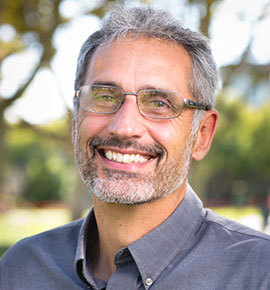
Rick Langer
Rick Langer is a Professor of Biblical Studies and Theology and the Director of the Office of Faith and Learning at Biola University. He specializes in the integration of faith and learning, and has also published in the areas of bioethics, theology and philosophy. He has a passion for helping Christians of all ages understand the connection between the Gospel and all the diverse facets of the created order in which we live. Prior to coming to Biola, he served for over twenty years as a pastor at Trinity Evangelical Free Church in Redlands, California.

Timothy Muehlhoff
Tim Muehlhoff (Ph.D.) is the Senior Director of Biola’s Winsome Conviction Academy that seeks to reintroduce compassion and civility into our disagreements. He is the co-host of the Winsome Conviction Podcast where people with differing viewpoints are brought on for engaging dialogue. Tim has written extensively in the area of cultural engagement and conflict including I Beg to Differ, Winsome Persuasion, Winsome Conviction, and his newest book (co-written with Sean McDowell) is End the Stalemate: Move Past Cancel Culture to Meaningful Conversations.
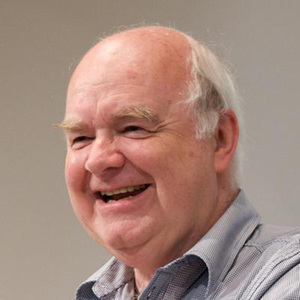
John Lennox
Dr. John C. Lennox is Emeritus Professor of Mathematics and Fellow of Green Templeton College at Oxford University. He is the author of many books, including God’s Undertaker: Has Science Buried God? And God, AI, and the End of History. His most recent book is My Story: A Spiritual and Intellectual Autobiography.