Episode 156: Come Alongside And Seek To Understand
Although dissent has long been a part of our country, in today’s “argument culture” we approach people who hold different views as combatants. Have things gotten worse in the culture? Have things gotten worse in the Church? On today’s episode, Tim and Rick speak with Dr. Crawford Loritts about a biblical posture Christians ought to reclaim for handling disagreement faithfully and well. They reflect on the Civil Rights Movement, discuss contemporary issues around “being woke,” and they draw from the Apostle Peter on what to do when someone disagrees with mean intentions.
Transcript
Rick Langer: 00:02 Welcome to the Winsome Conviction Podcast. My name's Rick Langer, and I'm a professor emeritus at Biola University. I was the director of the Office of Faith and Learning there, and also one of the co-founders of the Winsome Conviction Project, along with a good friend of mine, Tim Muehlhoff. Tim, what have you got for us today?
Tim Muehlhoff: 00:19 Well, Rick, today's a special day. It's so great to have people you admire on the podcast. And our guest is at the top of that list. Crawford Loritts served for 27 years on the staff of Campus Crusade for Christ, now known as CRU, and served for 15 years a senior pastor of Fellowship Bible Church in Roswell, Georgia. Him and his wife Karen, an amazing couple to listen to. Noreen and I have had the privilege of listening to them talk about marriage, have been feature speakers at Family Life Marriage Conferences. Dr. Loritts is the author of nine books, including Your Marriage Today and Tomorrow, co-authored with his wife. That's amazing. He also hosts two national radio programs: the weekend program Living a Legacy and the Daily Program Legacy Moments. Um Dr. Loritts serves on several boards, including CRU, Family Life, Chick-fil-A. Rick, he has received five honorary doctorates. The latest one, I think, is from Biola University. Yeah.
Crawford Loritts: 01:27 Actually, that was that was my first one.
Tim Muehlhoff: 01:29 Oh, it was your first one.
Crawford Loritts: 01:31 Yeah. Yeah. Wow.
Tim Muehlhoff: 01:34 Okay, Crawford, we don't interrupt the hosts. Can we just take a as president and founder of Beyond Our Generation, Crawford is committed to encouraging mentoring and helping to shape the next generation of Christian leaders? And let me just say uh the reason we can joke with each other is I've known Crawford for a long time, and I really do feel like he has been a mentor in both how to think about things, and definitely him and Karen a mentor to me and Noreen about our marriages. So, Crawford, thank you so much for joining the Winsome Conviction podcast.
Crawford Loritts: 02:08 I'm just delighted to be here, man. I'm excited about our time together.
Tim Muehlhoff: 02:13 Well, we were at the speaker retreat uh for family life uh marriage conferences, and um Dr. Loritts and Karen came in to give some devotionals. So immediately, Rick, we grabbed them for lunch and just got on this side conversation about the things that we've been talking about over the years, Rick. And I immediately thought, man, we've got to have Crawford on the podcast. So, Crawford, we are gonna wrap up civility. We're gonna fix all the problems in the next 25 to 30 minutes. I have high hopes uh for this interview. But let's start with this. This literally kicked off our lunch conversation. Today we live in what has been described as the argument culture, where we approach people with different views as combatants. Couple of quick questions. Crawford, in your estimation, how in the world did we get here? And is this uh the worst it's ever been? Is this a unique time or is or is this mirroring other times that we've seen within our country how we handle disagreements?
Crawford Loritts: 03:18 You know, uh, I'm not the prophet, neither the son of one, but I think um, you know, the the beauty of our country here is that uh this Democratic Republic encourages dissent and disagreement and that kind of thing. And enter the Christian community, particularly our brand of Christianity, quote, the evangelical community, um, you know, there there we should be engaged with the arguments of our time, the issues of our time. However, I think what has happened in recent years, um uh a culture war theology has has gripped many of us. Now, don't get me wrong, I'm not saying all the issues of culture war is is wrong and this kind of thing, but what what has happened to too many of us is that um our attitudes have uh have been uh recruited to a bit of a vitriol, and and and there's been this negative tone. Uh we perhaps have been right on many of the issues, but our posture has not been engaging. And uh and I think in a very real sense, now this has always been the case, okay? I don't, you know, every we we all think our the issues of our time are unique to but this has always been the case. But I actually think that it's it's a little bit more complex now, and it's gotten, I would say, I would say it's gotten worse because a self-righteousness has set into this negative posturing that that has equated that with being faithful to the gospel, which is, in my view, and I'll say it strongly, it's damnable. It it is it has compromised the beauty of our Christianity. And so I would say that, yeah, there's been a natural flow. We live in a country where dissent is encouraged, disagreement is encouraged. Now we come with issues where Christians come to the forefront. We're pro-life and I'm pro-life and all these issues. However, winning and losing has replaced the passion for transformation, and that's pushed us over the edge.
Rick Langer: 05:37 That so that's a uh great observation, Crawford, about you know, the the reality of American governance kind of almost requires disagreement. So the fact that we disagree isn't really that problematic. The question is how do we do at it? Are we having successful disagreements? Tim and I sometimes talk about the skill of actually achieving disagreement because oftentimes we condemn people, we blast people, uh, and we don't we could not really articulate what their viewpoint is. We we just know they wear the label of the other side, and we don't take the time to really identify what our real differences with them are, what are our points of disagreement, and then also where do we have common ground? What are our points of intersection?
Crawford Loritts: 06:27 Exactly.
Rick Langer: 06:27 That that allows us to be able to move persuasively with the person when you feel this is what we share in common. Well, let's think about that then for our legislation. But we tend not to do that.
Crawford Loritts: 06:37 That's exactly right. You know, um the there there's a certain um there's a certain insecurity that's embedded in self-righteousness. Um when when when you feel that you're right about something, it automatically postures you in in such a way as I'm I'm up here, and if you can see my hands up, I'm up here and you're down there. And of course, if you if you had the advantage of the truth that I know, well you we we need the humility to understand, by the way, that we're all flawed. And the only reason that we're right is because of the grace of God and eyes that have been opened. And oh, by the way, we didn't open our own eyes. Okay? So we've got to stop beating up a blind man because he stepped on our foot. Um, so we we we need to we need to approach this. Don't no don't back away from truth, but we come alongside people and let them know we're just as needy. And and and I'm not I'm not I'm not uh pushing you aside because I feel that you're wrong on this matter. I'm coming alongside trying to understand you and hear where you're coming from, but at the same time, walk you through to a place that by the grace of God I've come to. And that posture is the posture that's been lost.
Tim Muehlhoff: 08:05 Um Crawford, that understanding part really interesting in the argument culture. We have been criticized because under seeking to understand a person is seen in some way as condoning that perspective. Like, why do I like why would I ever give you the microphone to come on a podcast like ours or different podcasts where I ask you about your opinion, I want to find out what you know, where other Christians are saying, no, you should have jumped in quicker with the truth. And by giving that person the microphone, you are platforming their unbiblical beliefs.
Crawford Loritts: 08:44 Well, that's that's certainly untrue. Um the bottom line is that none of us are the fourth members of the Trinity, meaning that, you know, we we we're not we're not omniscient, we don't know everything. And and that's that's the problem. Um, that's the reason why Paul says, you know, knowledge puffs up. There is a humility there. And and I you can be secure of the truth that you know, but engage people with the understanding that I don't know everything. There might be more to this that, yeah, and I want to hear where you're coming from. That's not going to shake the certainty of the knowledge that I have from the Word of God or that kind of thing. So I think people who do that, who do that, and we're, and listen, let's listen, I've done that myself. You know, we all get passionate about things that we see, and we get angry about the sins of the culture and society, and before you know it, we say we we could go ready fire aim. But I think it's important to sit down, and people need to know that we did not participate in our own salvation or in our own enlightenment. You know, God did that for us, and that we don't know everything. So I I I would to ask you, okay, you know, Tim, why did you do that? Can you tell me more? Um, you know, no, I I don't necessarily agree with that behavior, but maybe there's an element that I don't understand. And then you speak, and that's you know, to me that's grace. Grace is a tension between uh uh, or love rather, is a tension between, you know, uh truth and grace, truth and grace, truth and grace. And so I think we just need to be more secure. And I'm I'm jumping uh down the road here, but um, you know, here lately I I I have been sharing with people that we need to have the courage to be gracious, civil, and kind. It's not a it's not a sign of weakness, it is a sign of security and stability. I don't have to come into the room and be the be the brightest person in that room. I don't have to come in the room and and you know, I might know something more than the people there. Every once in a while, that's true. But I need to make sure that I'm demonstrating a love and openness and a desire to care about those folks.
Rick Langer: 11:16 That's so that is a great thought. I I am sitting here thinking now, we've been talking a lot about how Christians' culture war, how Christians relate to the non-believers. How have you seen this in the church? Is the same posture creeping in? Do you sense it creeping in uh between believers uh on issues that would be internal to the Christian faith, hopefully?
Crawford Loritts: 11:42 Oh, yeah, absolutely. You know, uh in fact, uh I think the last I retired as senior pastor at our church in 2021, but uh I would say the last four or five years, um this thing of my tenure as as pastor, it has just been baked into um how we do life in the church and and just just uh the hair trigger reaction that we have toward one another. Um and my my sons have asked me this. I have two sons who are uh pastors, they've asked me uh repeatedly, I said, Dad, it was it this bad during the civil rights movement? And uh and you know you know what my answer is? You're gonna surprise. I said, uh no, it wasn't. It wasn't. There was there was, uh believe it or not, there was actually more open interaction uh from 1968 until the early 80s than there is now. And the reason for that, I think, was the shock value of seeing all this stuff brought to the surface and what have you, the end of the war in Vietnam and all this stuff. And so and so you had a more openness, and I would even say in many churches there was more openness than there is right now. Now, what we've done is that we have we have put people in categories and camps. Um we've we we have we have uh you know, if if you're a conservative Republican, then of course uh you are our people, and that's the 67th book of the Bible, and then on the other side or the progressive side, this kind of thing, and we've allowed pundits and our favorite newscasters to do the thinking for us, and because they can articulate a couple of verses from the Bible, we assume that they're right on all things, and so we we we carry that in to our churches and we sit there in the pews. If I don't hear certain wonderful watch words that affirm me and where I'm going, if I don't hear those words, then you're not here here's the term, you're not faithful to the gospel. You're not faithful to the truth of God's word. And my response is okay, articulate the gospel. What is that? What is it? You're making a set of assumptions, and so um, yeah, and I think that is the problem. This is this is really weird. This is the problem with with with what's happened to in the evangelical world. We've ingested this stuff and it's become mainstream without there being surgical discernment on our part as to what is society and culture and what is transcendent truth that has been true always. And uh and then lazy preachers stand up and you know they repeat these things.
Rick Langer: 14:38 So let me pick up on that, Crawford. Um it strikes me that the lack of discernment that you mentioned, that we we aren't clear about what is a political issue and what is a Christian issue, perhaps, or what is the grounding of the convictions that we hold in either of those two spheres. I I worry that that discernment, the lack of it, has uh created a place where we have a greater allegiance to our political party than we do to our Christian family, the our brothers and sisters in Christ. Um and if someone from within the church body articulates the wrong political view, you question the authenticity of their faith. And that just makes me feel like, oh, you're navigating by political signs on the side of the road, not Christian markers on the side of the road.
Crawford Loritts: 15:39 Yeah, yeah. Yeah. Let me give you an illustration of that uh really uh clearly here. I I don't share this too much publicly, but some uh some years ago when I was pastoring back in night, uh I think it was either 20 or uh 19 or something like that, I was preaching a series of messages entitled Um Thinking Right About What's Going Wrong. And one of these messages that I I preached on, uh I preached, I quoted 2 Chronicles 7.14, and I was wondering, I was warning our people, be very careful of the misapplication of that text. That this is not talking about the United States of America. It's speaking to covenant people, it's talking about the nation of Israel. The context, there's that the temple has just been built, it has just been dedicated, and this kind of thing. And God is saying, Oh, by the way, knowing his people that they would wander, if you wander from me, my covenant people, uh, this is how you get back in line. So I don't want to re-preach the message. And so it was in that context. Well, I made the statement in the message that I said, now again, near the end of the message, be again be very, very careful, very careful of this misapplication. Understand that, and I said that I'm very patriotic, I love our country, I die for the freedoms here, but let's not get it confused. Let's not get it confused. The White House is not heaven, the president is not God, and God does not stand up when our national anthem is played. Well, it was that last line that got me into some very deep water. Well, why would that be? This lady marched toward me and she had tears in her eyes, and she said to me, shaking, Crawford, God does stand up when our national anthem is played. And I said, You know, again, you didn't hear me. I would die for the freedom of this country. I think God blessed this nation because of a God acknowledgement. I think people have laid down their lives. But man, will you just listen to what you said? Do you mean to tell me that the sovereign God of the universe who created this country, created the people in this world, bows to any nation? Are you saying that we we are co-objects of worship? And so she turned around and left the church. But look, but this is what we're dealing with right now. That's a little bit of an excessive illustration. We're also dealing with a worldview that has become baked into us. We've got to be careful. Um, when you a la carte sin, when your menu of sin is limited, as I said earlier, it sets you up for power motivations. It does, because now it's a winning and losing kind of thing. And God's menu of a list of sin is more far more comprehensive than we are. Not only that, once you get into this winning and losing scenario, you're a half a click away from a worldview that views the world as enemies, issues, and enemies that need to be defeated rather than people, neighbors who need to be loved and transformed. And I think that this is where we have come to. Yeah.
Tim Muehlhoff: 18:58 No, I didn't mean to cut you off, but let's go back to that woman who came up to you. This is what I find so interesting. Um, she didn't come up with curiosity, she didn't come up to ask for clarifying questions. She came up summarizing you in a heartbeat based on one line and was ready to condemn you uh very quickly. And I just feel like we're missing that first step of hey, Pastor Loritts, I just want to make sure I understand you correctly. And then I have some questions. So maybe let's go grab coffee. Uh somehow we missed that step, and now we label each other very quickly and put us in different categories. Can we talk about one label that we tend to get a lot here at uh Bible Institute of Los Angeles? Is that we're woke. Uh, that is that is one, it's the scarlet letter today to say that you're woke. Can you? I was curious when you were talking about the civil rights movement of the 1960s. Could you bring our listeners up to speed very quickly of how that word originated and maybe even its positive context and how we've kind of morphed it into a Christian scarlet letter today?
Crawford Loritts: 20:11 Yeah. Well, whenever I hear that word woke being used, I I feel as if how do I say this kindly? Uh I I feel that it's it's a bit um dishonest and disingenuous the way it's been hijacked. Let me explain. That word goes all the way back, all the way back to the early part of the 20th century. It was used by W. E. B. Du Bois, who was uh the father of what of black higher education. Uh he championed the the HBCUs and all of that had their philosophical roots going back to uh W.E.B. Du Bois. He was a sociologist. And uh he developed this concept of dual consciousness. Okay? He was saying that that as African Americans uh trying to make it in this world, we we need to be able, in a, in a, in well, in a word, be able to code switch, right? We need to be able to code switch uh to speak in terms of what the predominant white society understands and this kind of thing, and yet at the same time remember who we are. And then he kind of in a in a he kind of used in a in a in a casual way, we we just have to be woke. Now, that had no Marxist overtones to it, had nothing. It just meant what it was said that we we need to be aware of our context. Okay, now fast forward, I remember using the term, you know, I was 18 in 1968 when Martin Luther King Jr. was assassinated. And that term was used in the civil rights movement again to say we need to be aware of what's going on in the culture. What's happening around us. Now you fast forward, that word uh began, it was was was hijacked, redefined, and made a pejorative. And now you throw it back and and and label people now who are progressive or you know as being woke. Now I do get that. I mean, you know, they they've rebranded the word and uh and and then they suggest now then here's where the lazy part comes in. The lazy part of this whole thing is now anything that uh speaks of justice, um speaks of issues in the culture, uh if you dis if you disagree with, let's say, the Republican Party on immigration policy or whatever, all of a sudden they slam the term woke on you to shut you down, close the argument, and say that you you sold out. I find that horrendously disingenuous and dishonest. Now, don't get me wrong, and I don't want to listen. I'm probably more conservative than our listeners uh would realize, but I think now it's time as believers, we gotta be very careful. We've got to be very careful that that our nomenclature, the words that come out of our mouths, doesn't edit the truth of our theology. For example, justice is a big issue, it's a big issue in the Bible. And I think justice falls into three buckets. The teaching of justice, the conceived must live, the living must be cared for, and the poor and voiceless must have advocacy. And that's that's justice. Now, if you hear me talking about advocating for the poor, I would be highly offended if you call me woke. That's not right. And so it's this degree of lazy thinking that that shuts down interaction and conversation, and we've got to be careful that we're not so arrogant that we take terms and redefine them and now tell people this is what you really believe.
Rick Langer: 24:17 Yeah. Yeah. And I so this is interesting to think about the the uh the backstory of the word woke. But I also think even in our contemporary, like Tim made the comment that you know there's people who accuse Biola of being woke. Um, and it's kind of weird because there are indeed people that that is the thing that gets thrown around. The weird thing is that there's an awful lot of people who would be saying the opposite about Biola. And you know, we are flaming bastion of knee-jerk conservatism. I probably I go back and forth between these groups actually. It's can be disorienting at times of oh yeah, which group am I studying in? And I and I do think that the one of the problems with these terms in general is that they they mask what's going on, they're a replacement by discovering what's going on. I mean, they talked about you know a biblical mandate regarding things with justice that that absolutely includes how do we care for the the the least last and lost among us. That's sort of an issue. I don't know how you can not see that as being a biblical uh concern. So if someone mentions that and they become woke, I'm going, well, wow, either you really have thrown out the Bible or you've used this term to keep you from having to look at the Bible, which I think is actually more likely. I you know, it keeps you from having to dive in and it's uncomfortable to have the discussion. So you kind of wipe it off your windshield like a bug that got smashed on it, and and then you don't have to think about it. But that usage of those kind of labels is toxic no matter what the label is. It hides and polarizes and alienates much more than it gives insider illumination.
Crawford Loritts: 26:10 It does, but it but but it but it does energize my tribe, right? It does, it energizes, it energizes my tribe, it gives me clickbait, it gives me a it strengthens my constituency, and so you know I can run a little loose and fast with the truth here because this is getting me down the road, and you know, it's uh it's just it just it's just very, very convenient. But I think what our listeners, all of us need to learn, and I need to learn this myself. You know, you're you can tell that I have strong opinions about things as well, just like everybody else. But you know, one of the things I've learned in life, don't be so arrogant that you don't give the person the privilege of defining themselves. Give them that privilege. Uh, don't get into this group think. It's like just like you said, I mean, it's so on one hand, Biola's woke, but on the other hand, what are you talking about? I mean, we you know, it it's so but but give give them the privilege of answering the question. Give them that privilege. And to me, that's Christian, right?
Tim Muehlhoff: 27:24 Crawford, let's end the segment with this. Let's let's say a hypothetical, well, not hypothetical, because we've been hit pretty hard uh Biola University, but let's say a person does go after us in the meanest intentions, uses woke like uh we're just shutting you guys down by calling you woke. And these are fellow believers, let's say. Uh can you uh if we ask Peter for advice, and Peter gives us this advice, we were wondering if you could unpack this for us. Peter says, do not repay evil for evil, don't retaliate with insults when people insult you. Instead, pay them back with a blessing. That is what God has called you to do, and he will grant you his blessing. First Peter 3:9, the new living translation. Unpack that a little. That seems odd when you've just been legitimately insulted, and then you hear Peter and you're like, Peter, stop it. Like that seems pie in the sky at best. I'm supposed to give a blessing for an insult. And I know you've spoken about this passage forever. Well, what unpack this for us.
Crawford Loritts: 28:33 Well, you know, uh, my unpacking may not be completely comprehensive, but I I would say this the first thing I think would say is that we need to be careful that we we don't we don't assume the passage is saying something that it's not saying. For example, it is not saying that you do not defend the truth. It's not saying that all. It's saying that you don't become personally defensive. That's what it's saying. No, and and Daniel is an example of this in those occasions in the book of Daniel where he made clear when there was wrong accusations, he was attacked by something. Certainly you should defend the truth. But you're not personally defensive. And I think we respond in love toward those who attack us. We bless them because the Christian life is based on not the affirmation of other people and their behavior, but it's based on the security that we have in Jesus. And that we believe that Jesus always takes care of us, that he will always help us. And so that I look past the offense and I can give him a cup of cold water in Jesus' name. You know, the guy that cusses you out when he hits you. You know, I mean, I and this is a real story. I got an accident a number of years ago. The guy ran into me, jumps out of a car, and calls me all these insane racial epithets, and I don't know this dude from House, Adam's House Cat. And my natural response was not so Christian. You know, I wanted to I wanted to interact with him in a very hostile way that he would feel. And so, you know, and then you know it's dangerous when you read the Bible. Passages like that came to mind. And so I remember who takes care of me. And so I can give him good without feeling as if I've been pumped out. I can do that. Why? Because God has taken care of me in impeccable ways. And each time, each time we retaliate based upon the way people have treated us, we're saying that that the resources of heaven are not sufficient for me. They're not enough for me. Yeah.
Tim Muehlhoff: 30:56 Hey, let's let's end with this. And it's a it's a compliment. We'd love to have you on for another episode. Would you be up for that, Dr. Loritts?
Crawford Loritts: 31:04 Oh, I would love to, Tim.
Tim Muehlhoff: 31:05 Well, we would love it. So, Rick, we're at the speaker retreat uh for family life marriage conferences, and Dr. Loritts is giving a devotional. And I don't often pray this, but I really prayed that God would give me a word of the Lord, that he would give me a very specific um affirmation. This was happening when all the criticisms were flying around about biola being woke. And uh, Crawford, I don't know if you remember this, but you were talking about um Paul's counsel to Timothy. And I'm taking notes like a madman, taking notes like a madman, but no word of the Lord yet. Nothing that would address what's happening with us being criticized. You ended it this way, and it is hanging on the wall of my office. Oh my god you said, let me wrap up what I think Paul's saying to Timothy. This is God's gig, not your gig. And I put that on the wall because the Winsome Conviction Project is God's gig. Uh, Biola University is God's gig, and He is gonna take care of us, He's gonna defend us. And so thank you for that great reminder to all of us, and personally, that great uh word that now reminds us that we're really doing God's word. So uh thank you so much, Crawford.
Crawford Loritts: 32:27 Thank you for sharing it. But I I would this triggers a thought in my mind. Um, you know, here's here's a a level of thinking that we need to hold on to. Every enterprise that God has created in human history is a prophetic representation of what he wants done and not necessarily the composite picture of what others desire. Meaning that uh Biola's mission did not come from human beings or even other Christians. God brought that into existence. I'm not saying that it's not accountable, don't get me wrong. The same thing with local churches, the same thing with other parachurch organizations. And so that's where the that's where the clarity and courage comes from to stay moving uh and and keep in line with what the scriptures say, and not necessarily with what the desires of other powerful people who are strong voices.
Tim Muehlhoff: 33:29 Amen. Well, what a great way to wrap up. Um, if you've loved what you've been hearing, uh please check out winsomeconviction.com. We have uh all of our archives are there, including uh Dr. Loritts' son, Brian Loritts, who is absolutely amazing communicators on the board of directors of Biola. Uh we've done some interviews with him and some of the great books he's written. Um so go to winsomconviction.com. You can get our quarterly newsletter. Uh give us a like wherever you get these podcasts. Go ahead and give us a like. And uh we are certainly going to have Dr. Loritts on in the future. Uh Crawford, thank you so much for being with us.
Crawford Loritts: 34:11 Oh, thank you for having me.
Authors

Rick Langer
Rick Langer is a Professor of Biblical Studies and Theology and the Director of the Office of Faith and Learning at Biola University. He specializes in the integration of faith and learning, and has also published in the areas of bioethics, theology and philosophy. He has a passion for helping Christians of all ages understand the connection between the Gospel and all the diverse facets of the created order in which we live. Prior to coming to Biola, he served for over twenty years as a pastor at Trinity Evangelical Free Church in Redlands, California.

Timothy Muehlhoff
Tim Muehlhoff (Ph.D.) is the Senior Director of Biola’s Winsome Conviction Academy that seeks to reintroduce compassion and civility into our disagreements. He is the co-host of the Winsome Conviction Podcast where people with differing viewpoints are brought on for engaging dialogue. Tim has written extensively in the area of cultural engagement and conflict including I Beg to Differ, Winsome Persuasion, Winsome Conviction, and his newest book (co-written with Sean McDowell) is End the Stalemate: Move Past Cancel Culture to Meaningful Conversations.
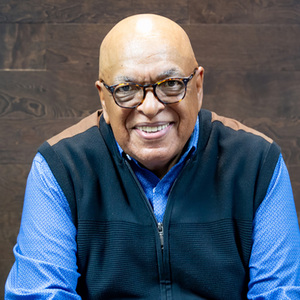
Crawford Loritts
Dr. Crawford Loritts was ordained to the ministry in March 1972 after graduating with a Bachelor of Science degree in Bible from Cairn University. He has been the featured speaker at Super Bowls, NCAA Final Four Chapel, and the Pentagon with senior military officers as well as spoken at churches, evangelistic outreaches, conferences, colleges and seminaries across 5 continents. He and his wife Karen are featured speakers at Family Life marriage conferences, and has authored or coauthored nine books. Dr. Loritts has been awarded five doctorates, and is a visiting professor at Trinity Evangelical Divinity School. Crawford is the host of two national radio programs, the weekend program Living a Legacy, and the daily program Legacy Moments. Presently, he serves as the senior pastor at Fellowship Bible Church in Roswell, Georgia. He and his wife Karen have four children and 11 grandchildren.