Episode 153: A New Way To Love Your Neighbor
Jesus tells his followers that the two great commandments are to love God and to love neighbor, and it is difficult to do both. Yet, as we learn to be loved by God and to love from God’s perspective, we may learn anew what it means to love our neighbors. On today’s episode, Tim and Rick speak with author and Bible teacher Jada Edwards about her book, A New Way to Love Your Neighbor. They discuss the difference between “liking” and “loving” one’s neighbor; whether the Christian perspective on love offers something unique in ways of loving one’s neighbor; the differences between divine and cultural perspectives on love; and love’s closely related virtues such as patience.
Transcript
Rick Langer: 00:02 Welcome to the Winsome Conviction Podcast. My name is Rick Langer, and I'm a professor emeritus at Biola University. I've also spent a long time being co-director of the Winsome Conviction Project with my good friend Tim Muehlhoff, who one of my great joys is doing these podcasts together with. So, Tim, what have we got for us today?
Tim Muehlhoff: 00:20 Well, we have a great guest today, Rick. But let me start with by reading a passage from Matthew, very familiar to those of us who care about civility and peacemaking. It's Matthew chapter 22, where Jesus says, Love the Lord your God with all your heart, with all your soul, and with all your mind. This is the first and greatest commandment. And the second is like it, love your neighbor as yourself. All the law and the prophets hang on these two commandments. So you know, Rick, we're often asked the question, which is way above our pay grade, how do we fix the nation? How do we fix the turmoil and the rancor that we're seeing today? And again, this is so far above us, but I do think the answer is neighbor love. At the end of the day, can we reclaim a sense of neighbor love, the second great commandment, which is showing our love and fidelity to God? So you and I are always on the lookout for resources on how we can do that. Not just understand that commandment, but how do we put that in practice, particularly in today's argument culture? So came across a great resource by an author named Jada Edwards. Jada is an author, speaker, Bible teacher, and mentor. She loves studying and teaching the Bible. Now, this is how I came across Jada. Jada and her husband Conway planted one community church in Plano, Texas. Rick, they went from 10 people meeting in a living room to over 14,000 people attending different campuses in Plano, Texas. Wow. Yeah, amazing the work that they're doing. They put on the single best marriage conference that Noreen and I have ever seen based in the church. It is, Rick, it is unbelievable how many people attend this marriage conference based on all the different campuses. And uh Jada's husband, Conway, is an amazing speaker. So is Jada. So when I came across her book on neighbor love, I was like, okay, we have to have her on the podcast. So, Jada, welcome to the pinnacle of your career.
Jada Edwards: 02:37 This is what it's all been about. And so I'm so glad to be here. If the Lord calls me home tomorrow, I'm like, it is finished.
Tim Muehlhoff: 02:45 Thank you. No, Jada, thank you for writing such an insightful book. And I I love the title of the book because it's kind of a unique play on words. If you just look at it, it says a new way to like your neighbor, but like has been crossed out, and the word love has been put right above it. So let me ask you, we'll start off this way. What is the difference between merely liking my neighbor and loving my neighbor?
Jada Edwards: 03:20 Well, I summarize it this way: I say love is action and like is affinity. And so if I have something in common or I appreciate something about a person, um I'm attracted to a person, I want to be around this person, there's some probably some benefit I'm getting from this person. It can create affinity. We have shared interest or whatever the case may be. Um, but love is action that's independent of affinity. You you can definitely have affinity with love, but it is not required. And it is it's proven in John 3.16 that you know God did not so like the world, He so loved the world. And praise God that when I am at my most unlikable, I'm still loved. And so I really wanted to invite people into something more than just acts of kindness or thoughtfulness that is detached from the heart of what love is, because then it still will depend very much on the recipient and them responding the right way and you feeling motivated and all the things. And then that really gets away from what God has asked us to do.
Tim Muehlhoff: 04:34 Now, would you are there any qualifiers on that? I mean, are you saying, and what I I love very quickly in your introduction, you say to readers, hey, I'm coming at this from a Christian perspective. So a two-part question, real quick. How does that Christian perspective shape your view of how you treat a neighbor? And are you really saying we should love all neighbors? Aren't there some neighbors who might have a certain sign planted in their lawn? Aren't there some people who'd be excluded from love and wouldn't like be good enough?
Jada Edwards: 05:07 Well, gosh, those are the people it's easier not to like and just love them. No, I'm kidding. That's why I'm glad like is optional. Um, but no, I the reason why I emphasize the Christian perspective is because what what I found, and I I know you both know it as well, as you're navigating relationships and what the world considers kind or humanitarian or generous or whatever their their standard of morality is at the moment, there's gonna always be some overlap with what God has asked us to do, how he's asked us to live as believers. Um, but there will always be a wall. There will always be a limit where the world says, okay, enough is enough. That's too much. And only the Christian perspective gets you over that wall where Jesus says, nothing's too much. I I bore everything so that nothing's too much. And the reason why I have to emphasize the Christian perspective as the framework up front is because a lot of these things will make sense. They will fall in line with universal morality, but you're gonna get into some territory that requires a divine perspective. It requires that you have been a recipient of God's, you know, lavish grace and you have this awareness of his forgiveness. It requires all those things to even stand a shot at trying to love the way he's asked us to love.
Rick Langer: 06:35 So let me pick up a little on this. This is an intriguing thing to think about, the distinction between liking and loving some someone. Uh, and it does strike me that so I I like the the distinctions you've posed, but it seems to me that sometimes when you dislike someone to try and love your way around it may be missing the fact that there that there might be some liking that needs to be cultivated by you too. In other words, uh if someone is telling me, oh, I love you, but I really don't like you, there it it kind of doesn't taste right. I remember a person in a marriage counseling situation, I was a pastor for 20 years and then a professor for 20 years, and they were talking about loving their husband but not liking him. And I in the back of my mind, I'm going, that could get a little old. Um and I also thought, I wonder what it is, and I wonder if this is all the husband's fault in this case, or if some of these things that are keeping you from having this sort of ordinary human affection, and I think this is one of my concerns, it isn't so much do you like them, but can you see them with regard and value them with kind of a positive emotional disposition to them without worrying too much about the technical terminology? And I worry sometimes that we give ourselves a hall pass about the like, the emotive side of this, because I think that can kind of make a dent in our ability to actually love our neighbor when we really don't like them and if we think it's okay not to like them. What do you think about that?
Jada Edwards: 08:20 Yeah, no, I think that's a good point. And I think first I would say this, I'm not the goal is not intentional dislike. You can't make a determination that you don't like someone and now I love you. Because to say that means you don't fully understand love. Um, I'm saying that liking is not the premise, it's not the foundation, it's not the building block. But that doesn't mean that divine love does not ultimately create some kind of affection. It's just a more action-oriented, intentional affection, maybe not a natural affection that comes from affinity. Just like, well, I just I just gravitate toward this person, or we have some natural things in common. So it's not that the liking should never happen, because a person that says that probably doesn't really understand divine love, uh, because it's going to result in some level of affection, because it just requires us to see people beyond who they are to us. And I may start at some level that feels um disconnected, you know, just out of obedience, but that should eventually lead to something that has some level of compassion, the same way Jesus did for strangers that he did not know. And so I don't think you can distinctly disconnect loving and liking. I I am my argument is that liking is not the starting point and is not necessary. And more importantly, liking wanes. And so I like you today. If I stop liking you next week, as my heart is catching up, my will should be solid in loving you well. And so it just the divine love is the safety net. It allows all the ups and downs of liking and emotion to do what they're gonna do. It doesn't say you can dislike a person, like as your position and still love well. But it does say that as that ebbs and flows, here's still the thing you're called to do as you relate to others.
Rick Langer: 10:15 Yeah, that and that's a great point about we often like is often like the the gateway drug to loving them, so to speak. You know, it's the the way you get some, yeah, I'm actually liking, maybe I could move on to loving. And you're kind of turning that back upside down, saying, actually, loving is gonna be on the foundation. Liking may come down the road. In fact, it's probably good that it would, but at some point you're gonna leave with love. And I I think that's a great, uh, a great insight. Yeah.
Tim Muehlhoff: 10:42 And I think, uh, I think, Jada, I might be able to like you on my own power. But when the New Testament arrives and Paul says, No, no, no, I want you to love your enemies, I can't work up the love of my enemies. I mean, I couldn't even work up the like of my enemies, let alone the love. So the love part immediately puts me to the cross. I I throw up my hands and I say, come on. I I yeah, I'm not liking or loving my enemies, but that's divine love based on what Jesus had to do. Um one thing I really love about your book, Jada, is we get a glimpse into you. Not all authors do that. Like sometimes we we kind of address an issue from 50,000 feet, but you really make the decision not to do that. I love early on in the book, you write that this is a personal book for you, and you write, let's talk about the whole how the whole thing started. And then you mention that the Lord said to you in a moment of conviction, Jada, you have a love problem. And I thought that that was a pretty amazing admission. And and can you unpack that for our listeners?
Jada Edwards: 11:53 Well, you know, in my audacity, I dare to disagree. I was like, Are you sure, Lord? Uh I was, I remember wrestling with something, praying for something in our marriage. And, you know, of course, like any good spouse, you pray to for the Lord to fix your spouse. And so I was like, if you fix him, things will be better. And uh it was just one of those moments where it felt very routine, but you know, the Lord kind of disrupted the moment and and showed me that I really loved the outcome that I wanted from the Lord. I loved what God could do in my marriage more than I was loving him. And that kind of created a whole journey of realignment because at first I didn't really connect the dots. And I was like, I do love you, and I love my husband. I cook and I look what I do for the kids. And he was like, Yeah, that that's not what I'm talking about. And so I couldn't even really process where I was with how I was relating to my husband because I had not fully really anchored myself in in God's love and my ability to love him. And so this whole love the Lord your God with your heart, soul, mind, and and Mark adds strength, um, which I think is an important element, you know. But that piece I think we skip over because sometimes we assume we love God well, um, but but the struggles that show up in loving people always originate in how we love God or how we think God loves us. And so it was a really kind of re-anchoring moment for me for God to say, let's, let's, we need to go back up a little bit. I know this situation is top of mind, but we we we gotta go back. And that that was a pretty that was a journey longer than I expected it to be. I wasn't doing as well as I thought I was.
Rick Langer: 13:44 So uh and and I wanted to ask you about that. Tell us a bit about that journey because it it's easy to come up with as like great insight. That'll preach, by the way. That's wonderful. You know, got that in there, but actually processing that sounds to me like in, I mean, working that out in your life sounds like that's bound to be much more of a story, so to speak.
Jada Edwards: 14:07 It is, it is. It's it was literally like therapy. That's what I felt like. Um, and and I reference Psalm 139. It's one of my favorite passages, it's one of my favorite biblical foundations for self-discovery and like the inward journey that the world has kind of made a very self-centered thing, you know, to know yourself. But but but it's actually biblical, you know. David lays out this case clearly that God knows everything about him. You've searched me, you know me, you know when thoughts are uh before they form on my lips, you know, you're intimately acquainted with all my ways, all these things. And then he ends that song with search me, search me, Lord. And and clearly he's not asking God to search him for God's knowledge. He's laid the case that God knows everything. He's saying, Search me because you know me better than I know myself. And so, you know, then show me what grieves you, then lead me in the way everlasting. You know, a lot of times we we try to walk in the way everlasting and we have not asked God to search us, and we haven't asked him what grieves his heart. And so we're just trying to apply some good sermon truths or podcast notes to an unsearched heart, and it just is behavior that just doesn't last. And so that was the journey, and it was I was surprised at things that I was very familiar with. I knew my story, I knew how I was raised and all the baggage, but being familiar with it or even having wrestled with it is different than healing from it. So it was just the thing I knew was true about me, and we kind of tell ourselves, this is just how I am. Well, this is how I was raised. And so it's just a fact that sits in your awareness, but it never becomes something that you that you incorporate into a healing journey that says, this is true about me, but the impact or the lasting results of it don't have to be true about me. So, God, what do we do with that? And that was a whole thing. Everything from the home I was raised in, from my parents, my personality, uh, pain, things that had happened throughout my life, all of those things that had subtly created shifts in the way I saw God's love for me. And I didn't realize how they how they were cumulatively showing up as an adult and creating kind of a script that I believed to be true about God, that I really had not ever articulated. And that that was not a quick, that was not a quick process.
Rick Langer: 16:31 Yeah.
Tim Muehlhoff: 16:32 I remember a pastor, I I don't even know, maybe it was Tim Keller. Um, probably C.S. Lewis. We'll just go with Lewis. Okay, all things go back to Lewis.
Jada Edwards: 16:41 He's the father of it all, yeah.
Tim Muehlhoff: 16:44 But you ultimately treat people the way you believe God treats you. Absolutely. Yeah. Isn't that powerful?
Jada Edwards: 16:52 Absolutely. And if you were, you know, some of it again is your personality, our wiring. Um, when that's not submitted to God, we kind of default to our natural way of thinking. Uh, our home, I don't care how great your parents were, they left some level of wound because they're human, particularly fathers. Have you wrestled with that gap? Even a even a father that was present and loves God, still, there's gaps. So my father is very much an achiever, performer. Do well, get A's, be first. That meshed well with my wiring. I was like, this is great. Just be the best all the time. Life's good. And so those little things start showing up in your spiritual growth. It becomes performative. And when you don't perform well, when you don't think you're just killing it in ministry or doing all the things God's asked you to do, then you start to see things happening in your life as punitive, and they're not. But that's because you've projected this achievement-driven God. And, you know, it could be that, it could be abandonment, rejection. You think God's only around, you know, on the good days. Like all these little things play into, they they diminish in some way God's perfect love for me. And if I believe that God only loves me when I'm performing my best, well, you better believe that the relationships I'm in, they're gonna get the best love for me when they're performing their best. And so it's a trickle down. So working through all those little nuances really start to affect the way you receive God's love. And that's that is a challenging place to sit and just say, I don't think I fully received God's perfect, complete love for me. Um, that that's that can be a bit to process. Wow.
Tim Muehlhoff: 18:38 Rick, can you imagine hearing Jada speak on marriage at a marriage conference? I thought we should stop right now and just say, we need to sit with what Jada just said about the performative part of that. Um you so uh the first part of your book is a primer on God's love. Uh I just it's so rooted in understanding different facets of of God's love. You kind of feel like culture gets this wrong a little bit. Like we've got problems, like for example, and we can't go through every one of these, but you mentioned three specific problems. Um, and the first one is today we just have too many different ideas about love. And that it kind of gets diffused the way we use that word, and then we take that word and apply it to divine love. Can you unpack that just a little bit for us?
Jada Edwards: 19:33 Yeah, so I think because you know, some of those nuances that we see in the Hebrew and the Greek that give a little more clarity to love all get translated as love, actually shows up in the way the English language, you know, is constructed. So we we love pizza, we love our pets, we love a movie, we love our sunny day, we love vacation, we love God. It's like kind of all the same. There's not any, there's not any language triggers that say, I love my spouse is different from I love tacos. Like you have to really think about that. There's not a different word for marital love. No one says I marriage love my spouse. We just say I love. And so I think some of that leads to the uh there's a casualness, I think, with which we use the word, um, how we say it, uh, what we use to describe the things and people that we love. And so you have to be very, very intentional about what it means when it comes to divine love, um, which is why it, you know, requires a little bit of study in those original languages. They are important, you know. Um, I'm no master of either, but there's some some words in those languages require a lot of depth. And, you know, I think an illustration I give in the book is that we, you know, you you can have a common, you can have a name that was once distinct. And if it holds, if it starts to become a um kind of a category of things, it's no longer distinct. So, you know, people don't say, you know, can I get a a square piece of tissue? They may just say a Kleenex, or you may not say, like, can I get a neproxin sodium? You may just say, can I get a leave or an Advil. You you use the name to represent the actual substance of it when really there's something behind that. If I say neproxin sodium, that that would give a medical professional or a person who's knowledgeable an array of options as to what to give me. But if I say give me an leave, they may just give me an Aleve because you've limited, you know, the definition of of the thing you're you're seeking. And so I think that the same thing shows up with God. We we don't really we have to work really hard to be intentional about thinking about the way we should love God and ultimately the way we should love people. And I think there's a casualness around that. And then, you know, a couple of other things I mentioned. We limit it with our own experiences. We limit the way we We limit God's idea of love because our own idea of love is greatly limited by our own experiences and emotions. And so, you know, you ask those questions. If God is good, why did he allow this? Or why does he allow suffering? Or, you know, there's there's personal questions and meta questions and all these things that come up because I'm equating a good outcome or a happy life or a protected childhood or whatever with love. And so by default, you're putting limits on God's love because we, again, you have to be intentional and you need the power of the Holy Spirit to try to conceive of a perfect love that also allows free will, that also allows all these varying experiences in life and still be a perfect love. And so I don't think that's intuitive. I think it's spiritual. You have to stop to work and make your brain not go down the natural logical path of that.
Rick Langer: 22:59 I I was just thinking about that as you were describing that. Like you say, it would love covers so many things legitimately in English language, in the sense we're that is how you properly use the word proper in quotes here. But yeah, we do love tacos. We do love all these things. And so when you hear the phrase love your neighbor, to turn this around, not just for to God's love, but to neighbor love, uh, it's it's kind of crazy the number of things you can feel okay about, because at least on this one thing, I do feel about my neighbor, at least as good as I feel about tacos. Yeah. Uh hey, I'm good. And I'm like, well, you know, your neighbor is kind of in a different category than a taco. Yeah. Um you need more grit to that thing than you're giving me. And I think that's I I I love that that observation because I think we we don't have a word that gives us a proper sense. I don't necessarily know that we should feel more guilty about how we feel about our our neighbor, but that we feel a gap between the word we feel obliged to use because we've read scripture and the word that would pop to our mind when I think about the guy across the street. Absolutely. And that lack of gap keeps us from being confronted, keeps us from knowing ourselves to use the language you were just using before the Psalm 139 thing, search my heart, Lord. One of the things that keeps us from seeing our heart well is this kind of a gap in our language that papers over things that with a different language might be really obvious to us, because I could never picture that counting as love in that sense of the word love.
Jada Edwards: 24:37 Absolutely. Absolutely. It's like if if I say, hey, kiddos, um, we're heading outside, but it's it's misting outside. They may grab something different than if I say it's raining, or if I say it's pouring, or if I say it's storming, or if I say it's hailing. Like all of those words mean some level of precipitation is coming down, but they give clarity that changes the response. And so we don't get that with love, you know. So somehow it's just all swooped into this bucket, and then the believer has to do a lot of parsing to figure out wait, what does this mean in a divine way? What's this agapeo and how does it show up with the people that I'm I'm in relationship with or in contact with? So, yeah, absolutely.
Tim Muehlhoff: 25:22 You do a great, you do a great job with that in the first part of the book. You already used one of my favorite words, Jada, for God's love, lavished. In Ephesians, this this uh above and beyond. So I did this thing at a crew conference once. I asked them, I was speaking to college students, and I said, Hey, could you give me, I think it was $50 and $5 bills. And they said, Yes. So I brought a student up. I said, Who likes coffee? Well, you can imagine all these college students right now that like coffee. So I gave them and said, Hey, um, I'd like to buy you a cup of coffee and gave them a $5 bill. And they went and sat down. And uh I just said, now that was that was gracious. That was not lavish. I said, Can you come come back up? So they came back up and I said, You gotta have something with coffee, right? So maybe a scone or a Buscotti. So I gave them another five dollars, another five dollars. I said, Do you have roommates? Yeah, okay. I gave them all these five dollar bills and they started laughing. Like, I can't receive this. This is I said, no, no, sure, $5, $5, $5, $5. And to think of God's lavished love like that, yeah, like just being overwhelmed with this. Where you're laughing, the students started laughing, like, I can't take this. I can't take another thing. It's too much. Yeah, by the way, the rest of the conference, anywhere I went, somebody yelled out to me, I like coffee.
Jada Edwards: 26:46 Right. I can take it. I'll take all your fives. Thank you. I'm a college student.
Tim Muehlhoff: 26:52 I love lavish, but let's close with this, Jada, because you, of course, cannot talk about divine love without 1 Corinthians 13. But you make an interesting point about it, that it sometimes makes you uncomfortable the way that it's used in a certain context. And you you do a nice little preamble for 1 Corinthians um 13. And how does focusing on God's love help us understand 1 Corinthians 13 rather than just something we'd read at a wedding ceremony?
Jada Edwards: 27:27 Oh, goodness. Well, I think if you what that first of all, I'll say that was one of the my favorite word studies I've done in a long time of all of those words. Because again, similar to love, we think we know what patience is, we think we know what kindness is, we think you start digging into those things and it is deep. It's heavy, especially the first two. And there's a reason that you know, you see, love is patient, love is kind. Patience is this ability to have restraint in the face of agitation. And so a lot of times we think we're patient, and we're really not, because if you're not agitated, you're just waiting. You know, if you like I tell people, if traffic doesn't bother you and you're singing a song in an hour of traffic, that's not patience because you weren't ever irritated. Patience is when you want the thing to go and you restrain yourself. And then kindness is bestowing a good on another person for that person's benefit, which is why I try to talk about love and not just acts of kindness, because usually acts of kindness are things we think are kind. We haven't thought about what that person thinks is kind. And it's a reason why the Bible is like the the Lord gives us, the Lord is patient with us in loving kindness, and he wants it to lead to repentance. Like that's how powerful patience and loving kindness are. And so walking through those things and not seeing it as a checklist for how I can behave better as a believer, but seeing these as a as a set of descriptive facts about how God loves me, as a as a launching path for how He wants me then to love others, is uh, I think gives it a uh gives it more depth to understand what you're really reading. That first God has loved me this way, without envy, without boasting, and all and all of that, by the way, is not necessary. God could love me with a distant creator, God-like, you know, deity type of you're my created thing, low down there on the earth, and still be a provider and still be all these things. But these descriptors are relational. You can only do that with people. I don't have to be patient with God. He's perfect. I don't have to be kind to God, I'm not envious of God. You know, I don't have to be watch my rudeness with God. This is how you relate to people. And so God is saying, look at how I've loved you. I sent my son to perfectly demonstrate these things. He came and built a bridge between the Father and creation. He showed you. Now receive it so you can begin to model it.
Jada Edwards: 30:01 So it's it's a really deep, deep passage of scripture that you know, I think if people knew what they knew what it was, they might not read it at weddings, but you know.
Rick Langer: 30:13 Yeah, I was gonna say, Jada, I think I enjoyed this podcast a whole lot more before you got to that definition of patience. Because I I mean that was really helpful because I go, yeah, there is there's some things that just don't bug me. And and I'm okay with which is great, but that simply means I'm not having to evoke the virtue of patience at that moment. Yes, and I realize I'm not fond of being patient with things that irritate me. I'm having to solve them, I'm happy to walk away. There's all kinds of things I can do with them, but being patient isn't actually my favorite thing to do with things that irritate me. Absolutely not. Anyhow, we appreciate you coming on, anyhow.
Tim Muehlhoff: 31:00 But to see pay to see patience as a restraint in today's social media saturated world, wow, we can stop. I mean, we can stop right there and say, let's just focus on the fact that God doesn't, he does restrain himself in his righteous anger and things like that. Well, Jada, thank you so much. Listen, we have literally only covered half your book. We we did the first part, the most important part. Let's get rooted and grounded in love. Uh Paul says that. Um, but will you come back a future podcast? Because what I love about your book is the second part is okay, let's roll up our sleeves, let's do it. And then you give some really practical advice on how to do it. Would you come back and uh join us?
Jada Edwards: 31:46 Absolutely. Be glad to.
Tim Muehlhoff: 31:49 Love it. Um, please check us out at winsomeconviction.com. Uh, you can we have all of our podcasts archived, and you can get a quarterly newsletter. So make sure you sign up for that. We're doing some really cool things. We're going to be uh having a summer quarterly newsletter come out. We don't take your listening for granted. Uh, thank you for supporting us. We don't take Biola University for granted either. They're the ones who host the Winsome Conviction Academy and this podcast. We've been around 117 years, and we really do believe in being peacemakers in today's turbulent times. So thank you for listening and check back with us uh at future date.
Authors
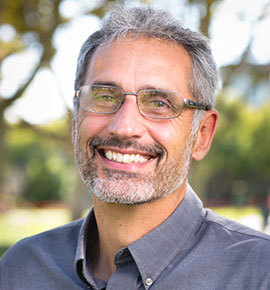
Rick Langer
Rick Langer is a Professor of Biblical Studies and Theology and the Director of the Office of Faith and Learning at Biola University. He specializes in the integration of faith and learning, and has also published in the areas of bioethics, theology and philosophy. He has a passion for helping Christians of all ages understand the connection between the Gospel and all the diverse facets of the created order in which we live. Prior to coming to Biola, he served for over twenty years as a pastor at Trinity Evangelical Free Church in Redlands, California.

Timothy Muehlhoff
Tim Muehlhoff (Ph.D.) is the Senior Director of Biola’s Winsome Conviction Academy that seeks to reintroduce compassion and civility into our disagreements. He is the co-host of the Winsome Conviction Podcast where people with differing viewpoints are brought on for engaging dialogue. Tim has written extensively in the area of cultural engagement and conflict including I Beg to Differ, Winsome Persuasion, Winsome Conviction, and his newest book (co-written with Sean McDowell) is End the Stalemate: Move Past Cancel Culture to Meaningful Conversations.

Jada Edwards
Jada Edwards is an author, speaker, Bible teacher and mentor. Studying and teaching the Bible to women is one of her greatest passions, along with discipleship and living on mission. While she is a lively and sought-after speaker, the local church is her home. She and her husband, Conway, planted One Community Church in Plano, TX, where she leads a regular women’s Bible study and serves as the Creative Services Director and Women’s Director. Jada enjoys spending time with Conway and their two children, Joah and Chloe, particularly around the dinner table. Her most recent book is A New Way to Love Your Neighbor.